
Boydes Exterminating Co
Carpenter Bee Control in Columbus, OH
Carpenter bee control in Columbus, OH means treating the tunnels inside the wood, waiting until activity stops and then sealing the holes, in that order. Boydes Exterminating Co handles this alongside the rest of our stinging insect removal in Columbus work, for decks, porch rails, fascia and pergolas.
- Serving Columbus since 1990
- 4.5★ from 55 Google reviews
- Owner-run, based on Dunning Rd
- One-time or recurring service
These bees look alarming and cause slow damage, not sudden damage. Treat them in the right season and the work is quick. Seal the holes too early and you trap bees that chew back out.
Carpenter bees in a deck or fascia: how to tell it is them
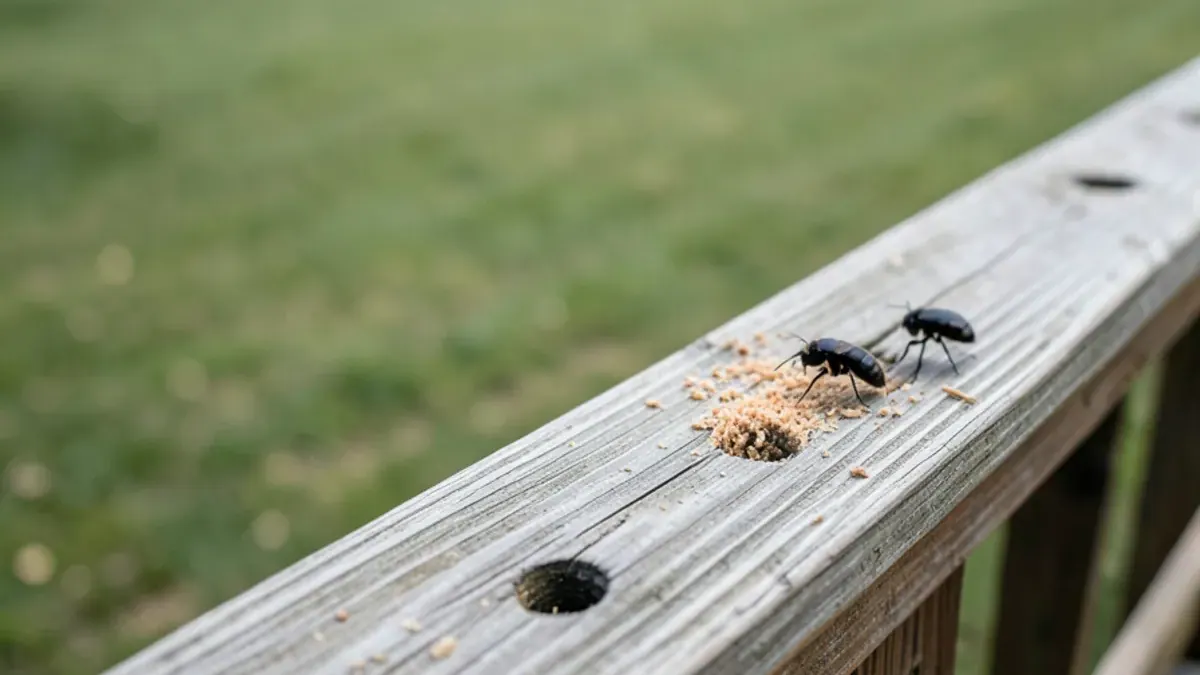
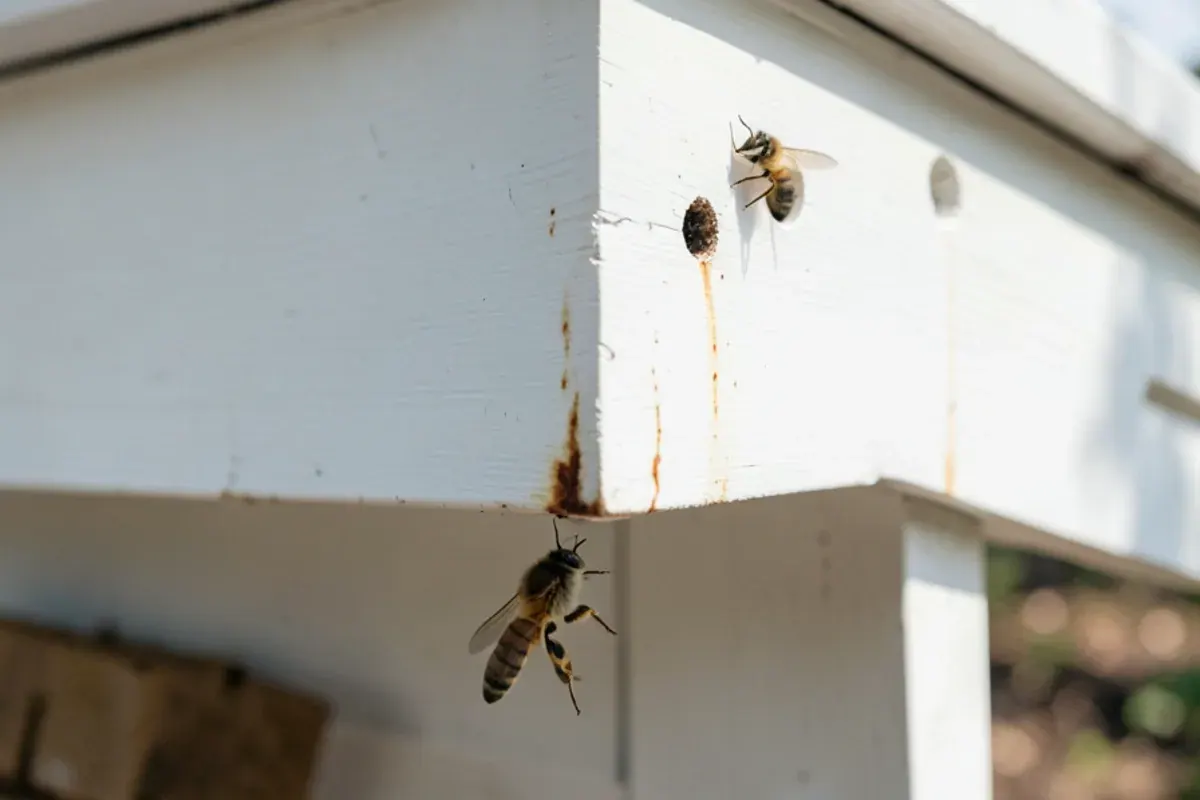
Carpenter bees are big, shiny black and yellow bees that hover near wood in spring. Unlike bumble bees, the top of the abdomen is bare and glossy instead of fuzzy. You often notice them before you notice the damage.
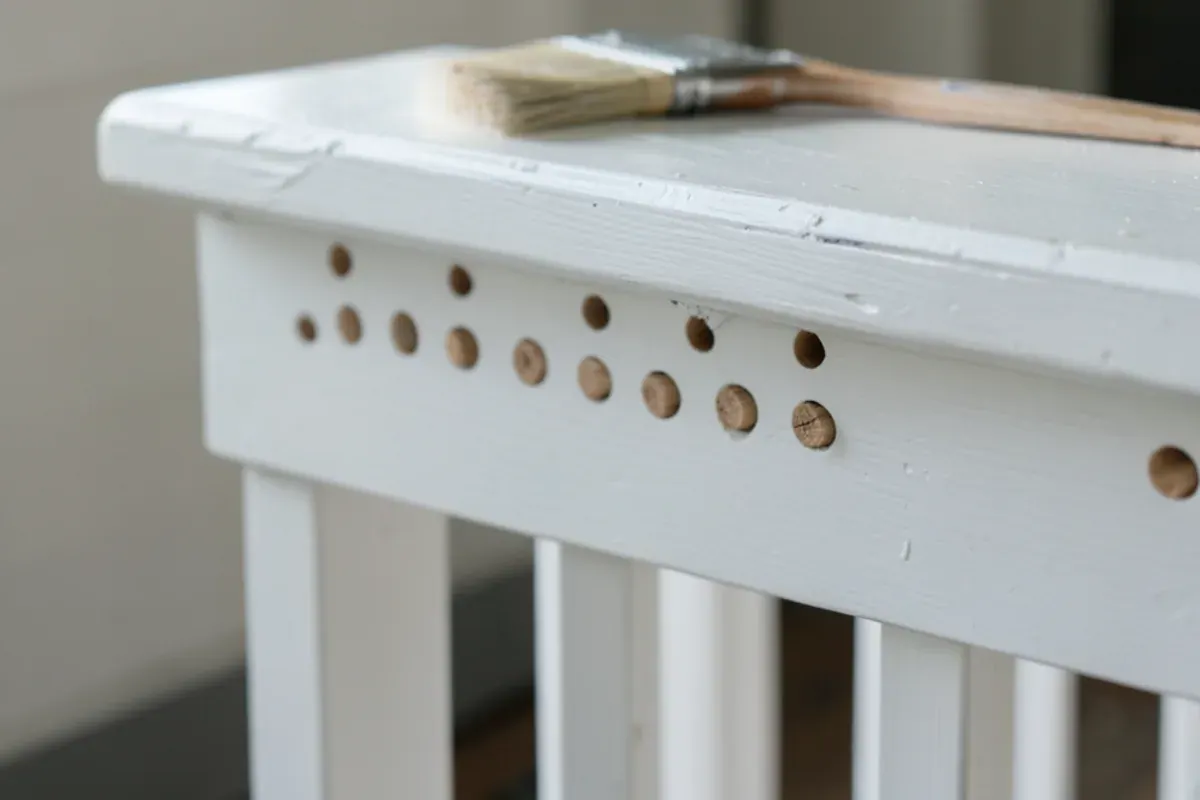
- A perfectly round hole about half an inch wide in a deck board, rail, post, eave or fascia
- A small pile of coarse sawdust on the ground or on the surface below the hole
- A yellow-brown streak running down the wood from the hole
- A buzzing or scratching sound inside the board
- Large bees hovering and darting at you near the eaves

Bees drilling holes in wood: why your deck and why every spring
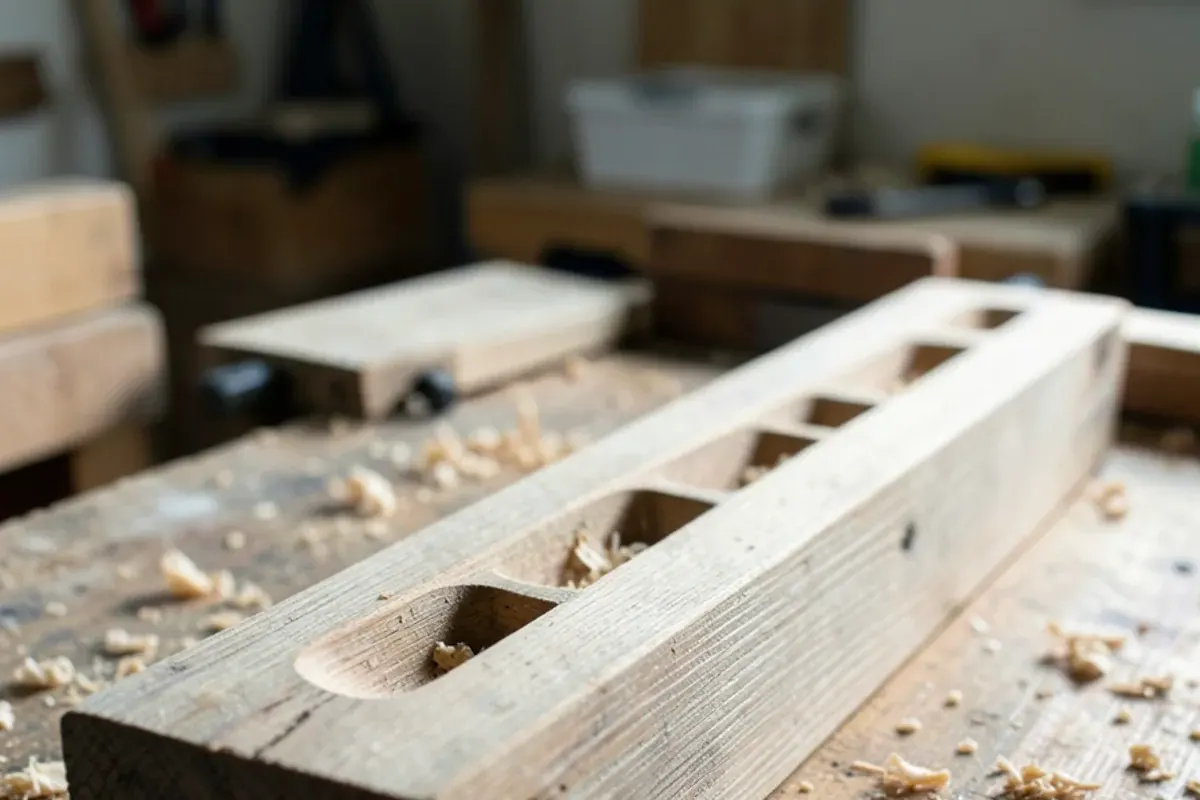
A female carpenter bee chews a hole, then turns and tunnels along the grain to make a gallery with small chambers. She stocks each one with pollen, lays an egg and seals it in. The sawdust you see is the wood she removed.
Bare, weathered or thinly painted softwood is her favorite, which describes plenty of Columbus decks, pergolas and older porch trim. Bees reuse and extend old tunnels year after year, so a small problem this spring can become a bigger one by the third summer.
Sawdust under your deck rail?
Send a photo of the holes. We will tell you if it is carpenter bees and which season suits the treatment.
- Serving Columbus since 1990
- 4.5★ from 55 Google reviews
- Owner-run, based on Dunning Rd
- One-time or recurring service
Prefer to write it down?
Calling is fastest. The form comes to the same desk, and we call you back during business hours.
Call (209) 563-1650Carpenter bee treatment in Ohio: what works and what does not
| Method | How it works | Trade-offs |
|---|---|---|
| Dust or labeled product into each hole | Reaches the tunnel and the bees inside, applied per label directions | Needs a repeat look, because new holes appear and bees return |
| Surface treatment on exposed wood | Leaves a residual on the board bees chew | Weather wears it down and it does not reach tunnels |
| Plugging the holes | Seals the tunnel with a dowel, putty or caulk | Only works after activity ends, or bees chew back out |
| Oil-based or polyurethane paint | Covers bare wood, which bees tend to avoid when it is well painted | Helps prevention only, needs touch ups as it weathers, and does not clear existing tunnels. Stain alone does not prevent damage |
Most jobs combine the first and third steps, then refinish the wood. Products are applied per the label, and the label gives the re-entry time. We also ask about pets, kids and allergies and plan around the answers.
How much damage can carpenter bees do?
One tunnel is cosmetic. Many tunnels in the same board, year after year, weaken it. Fascia, deck rails, support posts and the ends of rafters are the places worth watching, because a weakened board in the wrong spot is a repair bill.
Damage is usually slow, which gives you time to act in the right window. If you have never had a bee problem, check the underside of rails and the ends of boards each April, because bees often pick out the same few spots.
How long can a carpenter bee tunnel get?
Ohio State University Extension reports that a gallery can reach about ten feet as generations add to it. The entrance stays a clean, round hole a little under half an inch wide, so the real damage hides inside the board. Yellow-brown staining under a hole is a sign that tunnels run out of sight.
Why is a woodpecker tearing up my fascia?
Woodpeckers and flickers can riddle wood with holes while hunting carpenter bee larvae and overwintering adults, according to Ohio State. If the holes are ragged and large instead of round and neat, bees may be the cause and the birds the symptom. Treat the bees and the birds usually lose interest.
What does a carpenter bee visit look like, step by step?
- You show us the holesPoint out the holes and the sawdust, and tell us how long this has been going on. We count the entry points.
- We confirm they are carpenter beesRound holes with sawdust point to carpenter bees. Other wood damage points to different insects, and we say so.
- We treat each tunnelLabeled product goes into every active hole, and exposed surfaces are treated as the plan calls for.
- We tell you when to sealOnce activity stops, the holes can be plugged. We explain the timing and the materials.
- We plan the follow-upA return visit is part of the plan when new holes or late bees show up.
Timing the season: treat, wait, then seal
Adults come out of old tunnels in April and May to mate and nest. A second wave of young adults appears in late summer, feeds on pollen and heads back into tunnels to spend the winter. Spring treatment catches the nesting adults. Late summer or early fall treatment catches the new generation.
Sealing belongs at the end of the sequence. If you plug a hole while a bee or larva is still inside, the adult can chew a new exit right beside the old one. Our carpenter bee holes in your deck guide explains how to time it and what to use.
Why dusk, and why wait a few days before plugging?
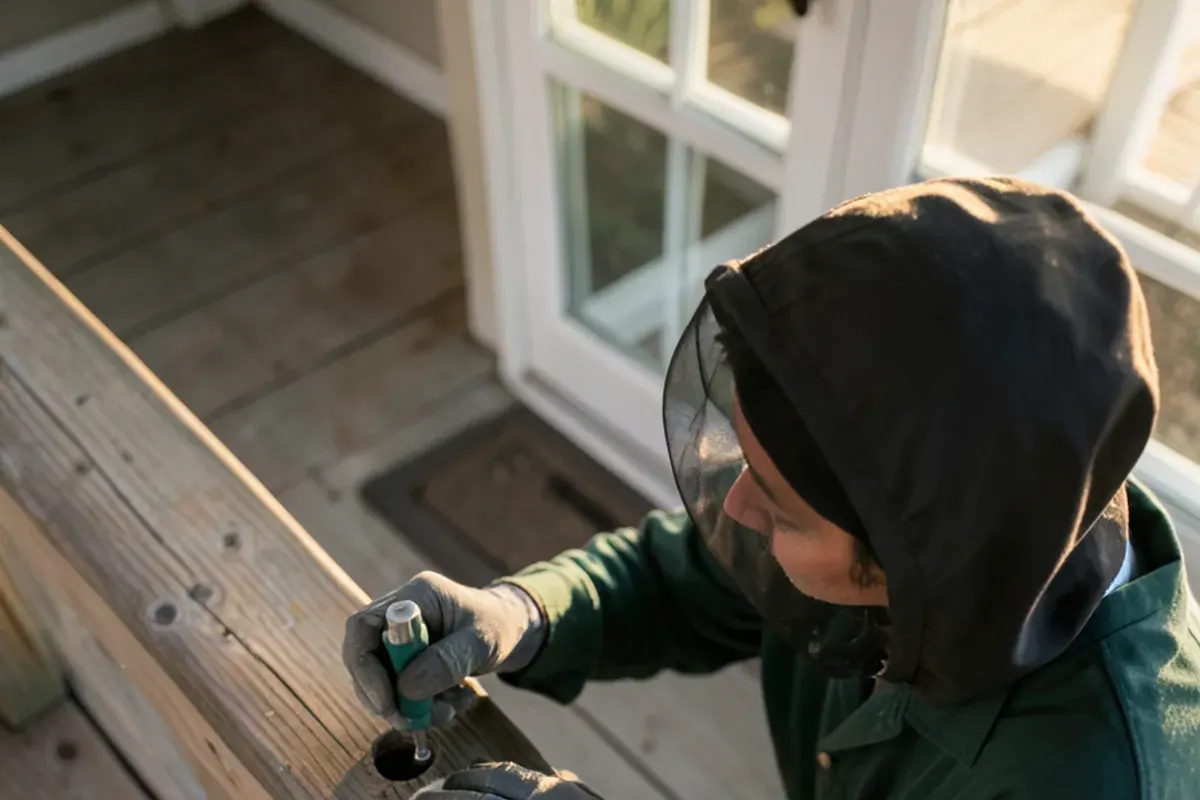
Ohio State advises treating at dusk or after dark on cool evenings, when the adults are inside the tunnels. A pyrethroid dust goes deep into each hole and onto the nearby wood. Then you wait a few days so bees moving through the gallery spread the dust and take a full dose before the holes are plugged.
Paint, stain or vinyl: what keeps carpenter bees from coming back?
Ohio State University Extension says bees avoid well-painted wood and wood covered with bark, and prefer straight-grained softwoods such as cedar, pine and fir. It suggests polyurethane or oil-based paint, inspected on a schedule, because a weathered coat exposes bare wood. Stain does not prevent damage.
Surface insecticide on bare wood, put on in early spring, gives short-term protection and has to be repeated. For a rail or fascia that keeps getting hit, the lasting fix may be material. Aluminum, vinyl and similar trim are not damaged by these bees.
The trade-off is cost and look. Repainting is cheap compared with swapping trim, and a board that is badly weakened should be replaced instead of treated. Ohio State says to replace wood once bee damage reduces the strength of posts, rails or other structural members.
How much does carpenter bee control cost?
We price carpenter bee work by the number of holes, the structure and how hard it is to reach. A single deck rail is a short visit. Fascia and rooflines at height take longer.
You hear the price before work starts. Past customers describe the pricing as fair. Replacing badly damaged boards is carpentry, and we will tell you if a board looks too far gone to treat.
Dusting carpenter bee holes in Ohio: Ohio State's method and the label rule
Ohio State University Extension names a pyrethroid dust, injected deep into each entrance hole and onto adjacent wood, as the usually most effective control. It advises doing it at dusk or after dark in protective clothing. Each dust is an EPA-registered product, and under EPA rules the label sets where it may go and how long to keep people and pets away.
If you hire the work, Ohio requires the company to hold an ODA Pesticide Business License, which ODA's public business search lets you check by name. Ask which product goes in the holes, whether the plan includes a return look and when the holes may be plugged.
Why Boydes Exterminating for this work
Round half inch holes with sawdust point to carpenter bees. When the damage looks like something else, we say so.
Treat, wait, then seal is the order that works. We tell you the timing for your holes instead of leaving you to guess.
Allergies, children and pets come up at every visit and shape how the work is planned.
You hear the price first, and reviewers describe it as fair with no surprise charges.
Mr. The shop goes back to 1990, when Robert Boyde opened it. Robert J. Boyde Jr. owns it today. Payment can be cash, check or card. Fifty-five reviews, 4.5 stars on Google.
Where we do this work
- Powell Median homes date to 2001 and only 11% are rented, so owners tend their own decks and trim.
- New Albany A median 2005 home and only 11% rented, so owners carry their own deck, rail and trim upkeep.
- Dublin Median homes date to 1996 and only 23% are rented, with decks and trim aging past the first refinish.
- Pickerington Median homes date to 2002, so original decks and fascia are reaching the age when paint wears thin.
- Canal Winchester Median homes date to 2000 and 18% are rented, so owners face aging decks and rails.
- Hilliard Median homes date to 1997, which puts original decks and fascia at the stage where paint has weathered.
- Gahanna Median homes date to 1985, so older porches, rails and fascia have had decades of weathering.
- Upper Arlington Median homes date to 1959, with older porch trim and fascia that have been repainted many times.
- Worthington A median home built in 1963 and only 17% rented, so owners handle porch and fascia upkeep.
We treat carpenter bees in Columbus, Gahanna, Worthington, Upper Arlington and Powell, where wood decks and pergolas are common in backyards. Our base on Dunning Rd covers the east side closely. See all of our service areas.
Carpenter Bee Control: common questions
Why are bees drilling perfect holes in my deck?
Carpenter bees chew a round entrance, then tunnel along the grain to make nest chambers for their young. Bare or weathered softwood is their favorite. The sawdust underneath is the wood they dug out. They reuse tunnels yearly, so the damage grows if nothing is done.
Do carpenter bees sting?
Males cannot sting, and they are the ones that hover and dive at you. Females can sting, but they seldom do unless handled or squeezed. Still, anyone with a known bee allergy should keep away. Call 911 if anyone has trouble breathing or facial swelling after being stung.
When should the holes be sealed?
After activity has stopped, not before. Plug holes while a bee or larva is inside and the adult can chew out again. In practice that means treating first, waiting, then sealing with a dowel, putty or caulk and refinishing the wood. We explain the timing for your holes.
Will painting my deck keep carpenter bees away?
Good paint helps, stain alone does not. Ohio State University Extension says bees avoid well-painted wood, and it suggests oil-based or polyurethane paint that you inspect often, since weathered coats expose wood. Paint does not clear existing tunnels. Treat existing holes first, seal them, then repaint, with extra coats on bare board ends.
Are carpenter bees the same as bumble bees?
No. Bumble bees have fuzzy, yellow and black abdomens and nest in the ground or in dense cover. Carpenter bees have a shiny, bare abdomen and tunnel into wood. If you see round holes with sawdust, you have carpenter bees, not bumble bees.
Sources
What customers say
4.5 stars from 55 Google reviews, checked November 2026. Read more reviews · Leave a review
They got rid of our Carpenter Bees and Ants in ONE DAY
Mr. Boyde’s company is responsive and honest. They answer phone calls, give estimates, and come to your home quickly. Pricing is true to market price with no surprise charges.
Great service. Super dependable. Calls right back. This time he was able to come out same day.
Protect the deck this season
Tell us where the holes are and we will explain the treatment, the sealing timeline and the price.
- Serving Columbus since 1990
- 4.5★ from 55 Google reviews
- Owner-run, based on Dunning Rd
- One-time or recurring service
Boydes Exterminating Co, 1967 Dunning Rd, Columbus, OH 43219