
Stinging Insect Removal
Wasp, Hornet or Yellow Jacket? How to ID the Nest
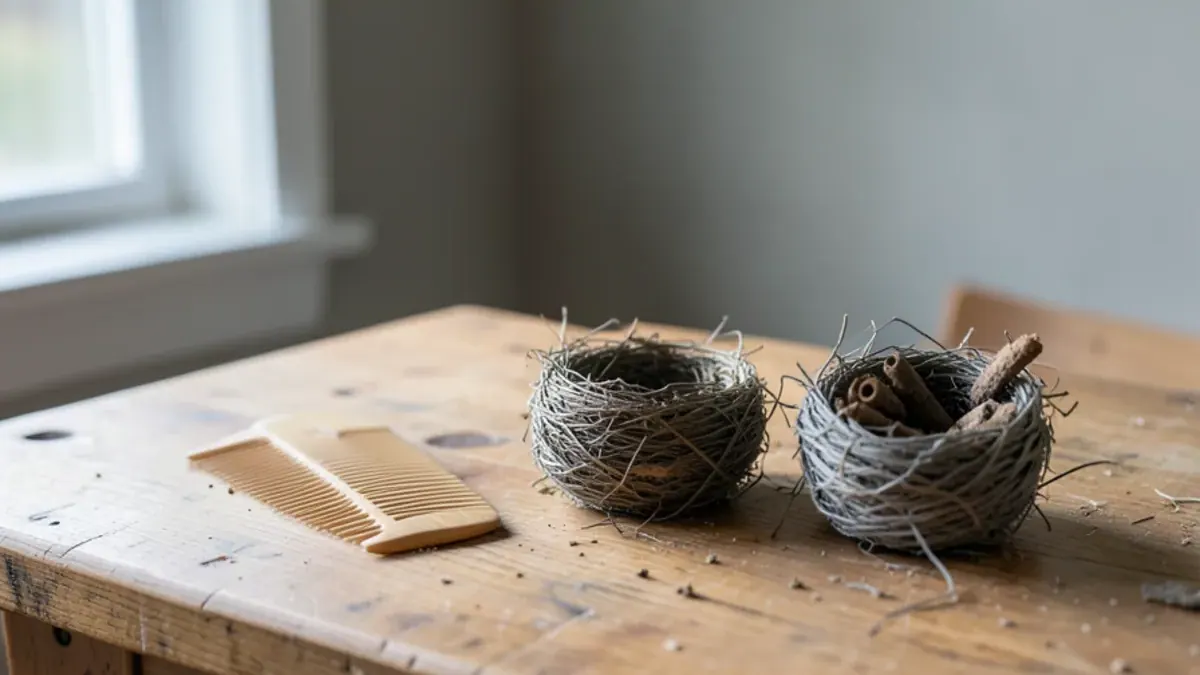
Wasp vs hornet vs yellow jacket mostly comes down to the nest. Paper wasps build an open, umbrella-shaped comb with the cells showing. Hornets build a closed gray ball with one opening at the bottom. Yellow jackets usually hide the nest underground or inside a wall, so you notice traffic before you notice a nest.
- Serving Columbus since 1990
- 4.5★ from 55 Google reviews
- Owner-run, based on Dunning Rd
- One-time or recurring service
Below is how to read each nest, what the insects look like, and what the difference means for the plan.
What does each nest look like?
| Insect | Nest shape | Usual location | Tell |
|---|---|---|---|
| Paper wasp | Open comb like a small umbrella, hexagonal cells visible | Eaves, porch ceilings, shed rafters, playsets | You can see inside from below |
| Bald faced hornet | Closed gray ball or teardrop of papery layers | Tree limbs, tall shrubs, building eaves | One entrance near the bottom |
| European hornet | Papery nest, often hidden | Hollow trees, wall voids, sheds, attics | Active after dark, drawn to lights |
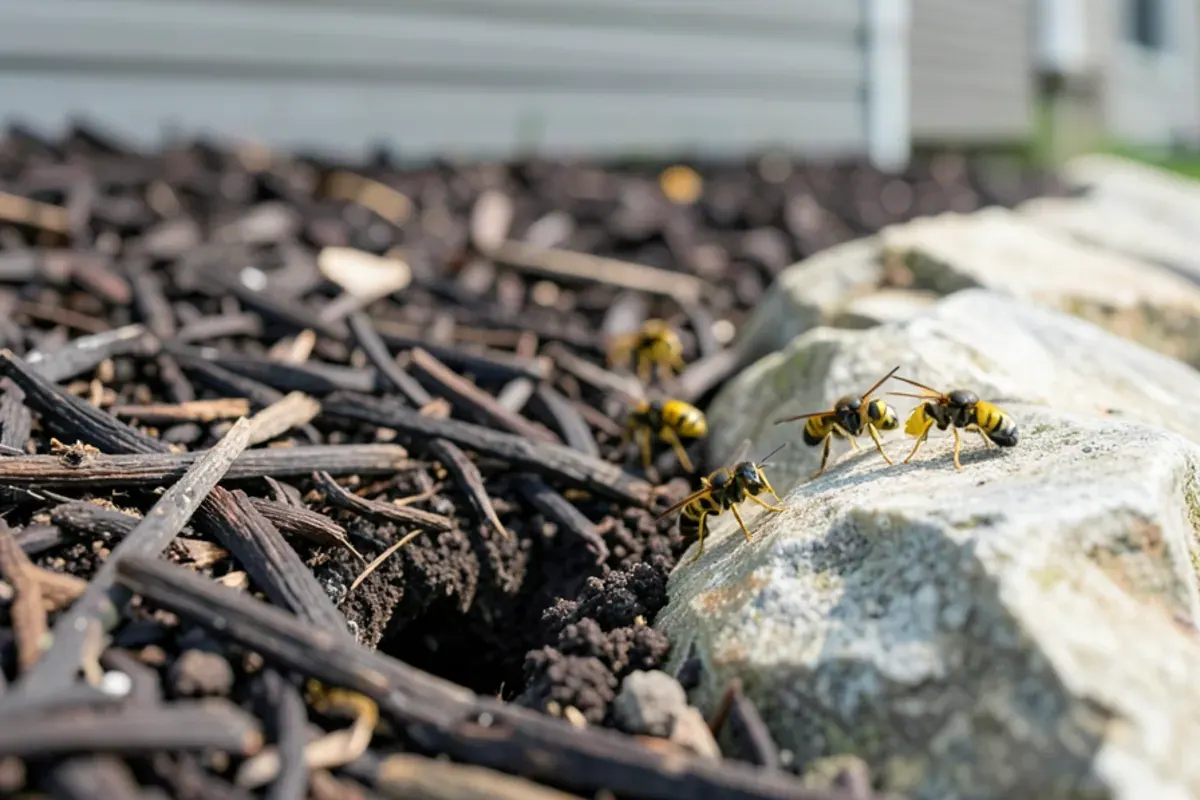
| Yellow jacket | Enclosed paper nest, normally out of sight | Ground burrows, foundation gaps, wall voids | A steady line of insects at one small hole |
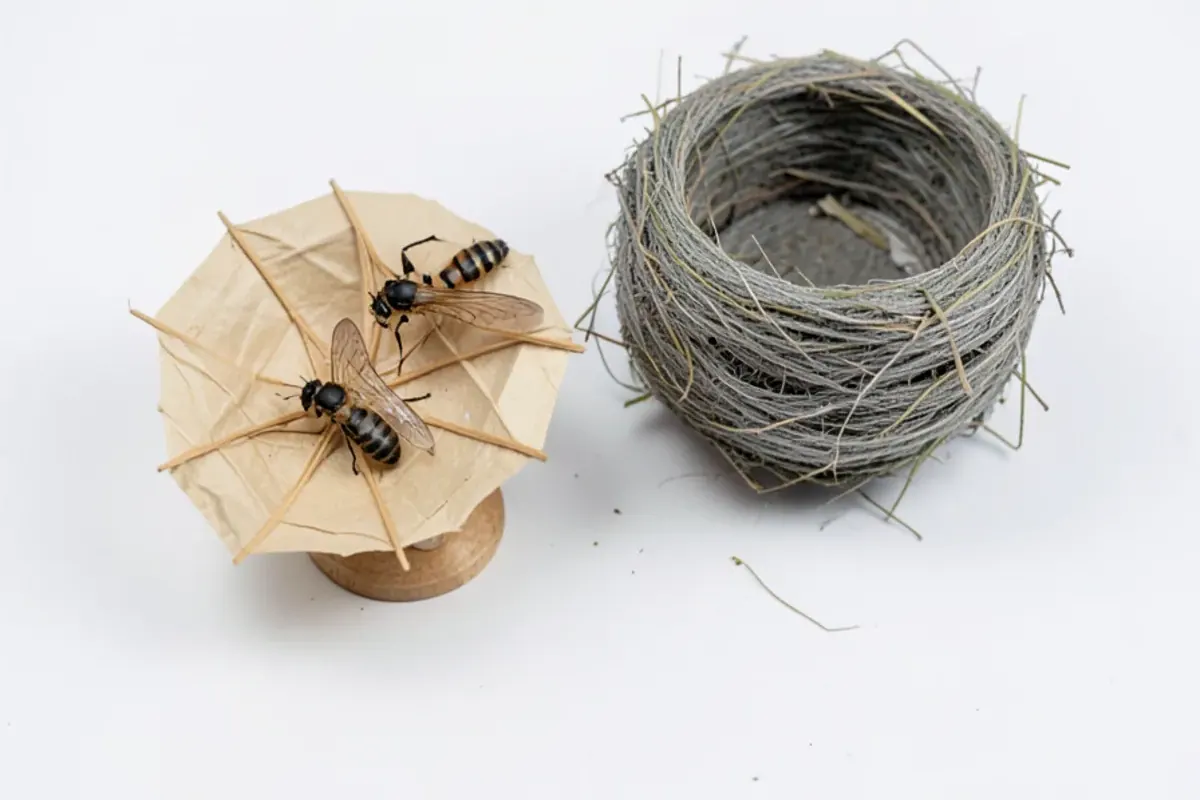
Have a photo of the nest?
Send it with a note about where it sits. We will tell you what built it and how soon it needs attention.
- Serving Columbus since 1990
- 4.5★ from 55 Google reviews
- Owner-run, based on Dunning Rd
- One-time or recurring service
How do you tell the insects apart?
If you see the insect but not the nest, the body helps. Look from a distance and do not swat.
- Paper wasps are slender with a narrow waist and long legs that dangle in flight. Colors run brown to reddish with yellow markings.
- Bald faced hornets are black with ivory markings on the face and on the tip of the body.
- European hornets are larger, with brown and yellow bands and a reddish tint.
- Yellow jackets are compact and bright yellow and black, with a quick, jittery flight low over the ground or around food.
One oddity: the bald faced hornet is technically a large yellow jacket, not a true hornet. In Ohio the European hornet is the only true hornet. Everyone uses the common names anyway, and the nest shape matters more than the label.
How do these insects behave when you get close?
Behavior is a second clue, and it tells you how much distance to keep. Watch from across the yard.
| Insect | Typical response | What it means for you |
|---|---|---|
| Paper wasp | Hovers, faces you, may flick its wings before stinging | Back away at the first warning; it is the least defensive of the three |
| Bald faced hornet | Guards the nest in numbers and attacks anything that moves close | Keep well away; the nest is large by late summer |
| Yellow jacket | Defends a hidden hole, then pursues and stings more than once | Stay off the lawn near the hole, and keep mowers away |
Any of them can sting when handled or trapped against skin, so never swat. Move away in a calm, steady line.
Is it a stinging insect or a lookalike?
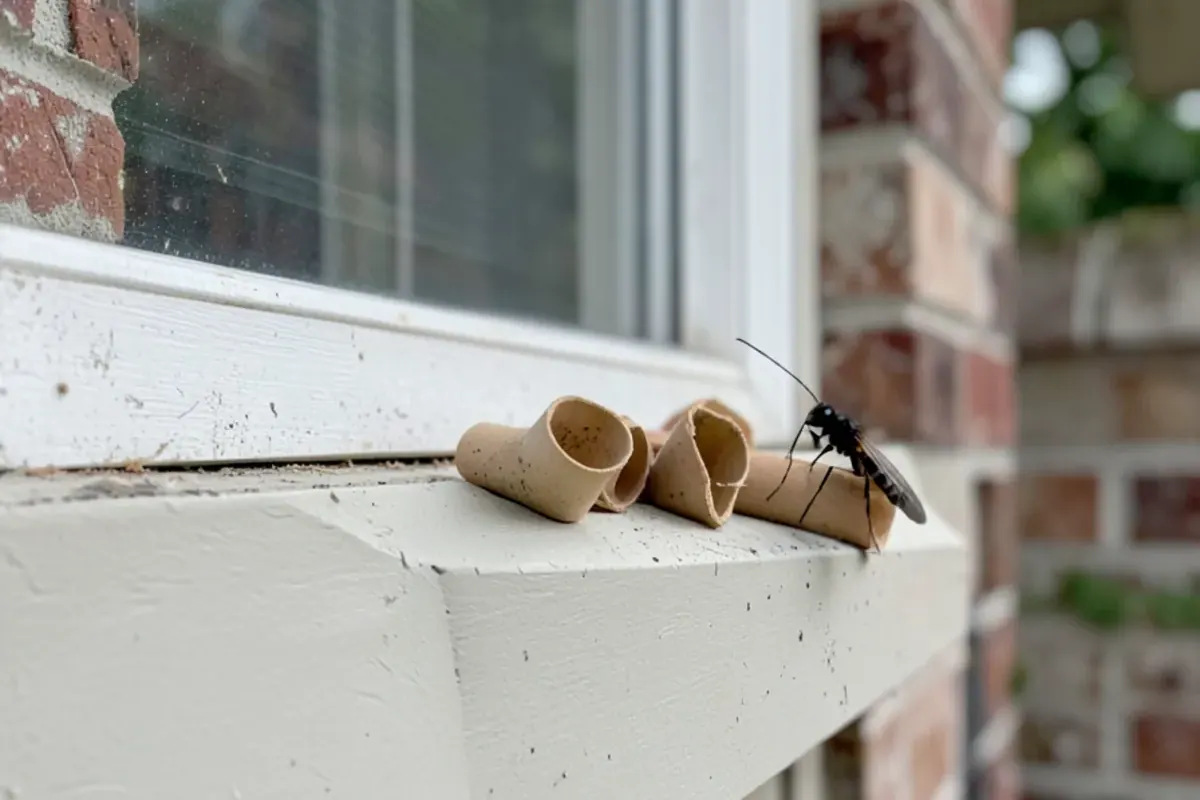
Not every flying insect near a wall is trouble. Mud daubers have a thread-thin waist and build small tubes of mud, and they seldom sting. Bumble bees nest in sheltered cavities and are round and fuzzy. Carpenter bees bore round holes in wood, and the males hover and dart without a stinger. Our post on round holes in a deck covers those.
If you are unsure whether it is a bee or a wasp, treat it as a stinging insect and keep your distance until you know. Honey bees are a separate topic, and our bee swarm and hive help page explains how those calls differ.
What about big wasps digging holes in sandy soil?
Eastern cicada killers are large wasps that dig burrows in sandy, bare soil in midsummer and leave a mound beside each hole. The males are territorial and loud, but they have no stinger, and the females rarely sting. A mound and a big, slow wasp point to a cicada killer. A bare hole with fast, small insects points to yellow jackets.
When do these nests get dangerous?
A queen starts each nest alone in spring, and a new nest begins as a ball the size of a walnut or smaller. Workers hatch, add more paper and more defenders, and the colony peaks in late summer. A nest you ignore in June can be the size of a basketball by August.
A hard freeze ends the colony. Only new queens survive the winter, and the old nest is never reused. That is why late-season nests need a different decision than early ones, and why late summer is when most calls reach us.
What does the nest calendar look like in Ohio?
| Month | What is happening | What to do |
|---|---|---|
| April to May | A queen starts a nest alone | Look under eaves and rafters; a small nest is easy to deal with |
| June to July | Workers hatch and the nest grows | Watch the traffic and note where it goes |
| August to September | Colony at full size, workers chasing sugar | Treat nests near doors and paths, and keep drinks covered |
| First hard freeze | The colony dies; new queens leave | An empty nest can come down; seal gaps before spring |
What does the difference change about the plan?
Quite a lot. Paper wasps nesting low and in the open are the least complicated. Hornets defend a big nest hard and often sit high. Yellow jackets sting repeatedly, and the hidden entrance is the real problem, because treating the wrong hole does nothing.
So we always start by naming the insect. Our pages on wasp nest removal, hornet nest removal and yellow jacket removal each describe the method. In newer Dublin neighborhoods, where the median home dates to about 1996 (U.S. Census ACS 2019 to 2023), young landscaping, retaining walls and mulch beds all give a queen cavities to choose from, so check the edges of beds when you see traffic and no visible nest. Yellow jackets are often the answer.
What if someone gets stung while you work out what it is?
Move away from the nest first, then wash the sting and cool it. Watch the person for the next several minutes.
Hives that spread, dizziness, nausea, a sting in the mouth or a history of severe reactions deserve a doctor's attention too. Once everyone is clear, a photo from a distance is all we need to start.
How do you take a photo that helps?
- Stay as far away as your phone's zoom allows, ideally across the yard.
- Shoot the whole nest and its surroundings, then a second shot close on the entrance.
- Note the height and what the nest is attached to.
- Do not use flash or approach after dark.
- Send it with a short description when you call.
How we read a nest from a photo
Most identifications take seconds. We look at whether the cells are showing, whether the nest is closed or open and where the traffic goes. A ball with one bottom hole points to hornets, a visible comb to paper wasps and a hole in the grass to yellow jackets.
The photo cannot tell us everything. A nest inside a soffit shows nothing but entering insects, and we confirm on arrival. When it is close to a door, a play area or an allergic family member, tell us on the call.
Naming the insect has limits. A photo shows what is visible, and a nest tucked inside a soffit or a wall can fool a first guess. We confirm on arrival, and we tell you if the first call changes. Dead insects on a windowsill do not reliably point to a nest outside, either.
Identification is also not always worth the time. If a nest sits by a door or a play area, or if someone in the home has a sting allergy, skip the guessing and call. The plan starts with distance and speed. The exact species can wait for the visit.
Related questions
Are hornets and wasps the same thing?
Not quite. Hornets are a type of wasp, but people use the word for the larger, more defensive species that build enclosed paper nests. Paper wasps build open combs and are generally less defensive. The common name matters less than where the nest is and how many insects guard it.
Can I identify the insect from the nest alone?
Usually. An open comb points to paper wasps, a closed gray ball to hornets and a hole in the ground with steady traffic to yellow jackets. Nests in walls and soffits are harder, since you only see insects entering, so a photo of the entrance helps.
Are yellow jackets the same as ground wasps?
Ground wasp is a common name, and in Ohio it almost always means yellow jackets nesting in burrows. Mining bees also nest in the ground, but they leave small soil mounds and rarely sting. A bare hole with steady traffic is the yellow jacket signature.
Why are wasps at my table in September when I see no nest?
Late in summer, yellow jacket workers shift from hunting protein to chasing sugar, so soda, fruit and trash draw them from nests you cannot see. In newer Dublin neighborhoods, with young landscaping and mulch beds, a hidden ground nest is a common answer. Watch where the wasps fly when they leave, and look for a hole along that line.
Once you know what built the nest, the next step is a plan. Read our stinging insect removal overview, or call (209) 563-1650 with a photo and a description. We serve Dublin and all of Columbus, and we will tell you what you most likely have.
Sources
Questions about this? Call the shop.
Tell us what you are seeing and we will tell you what happens next.
- Serving Columbus since 1990
- 4.5★ from 55 Google reviews
- Owner-run, based on Dunning Rd
- One-time or recurring service
Boydes Exterminating Co, 1967 Dunning Rd, Columbus, OH 43219