
Stinging Insect Removal
Carpenter Bee Holes in Your Deck: What to Do
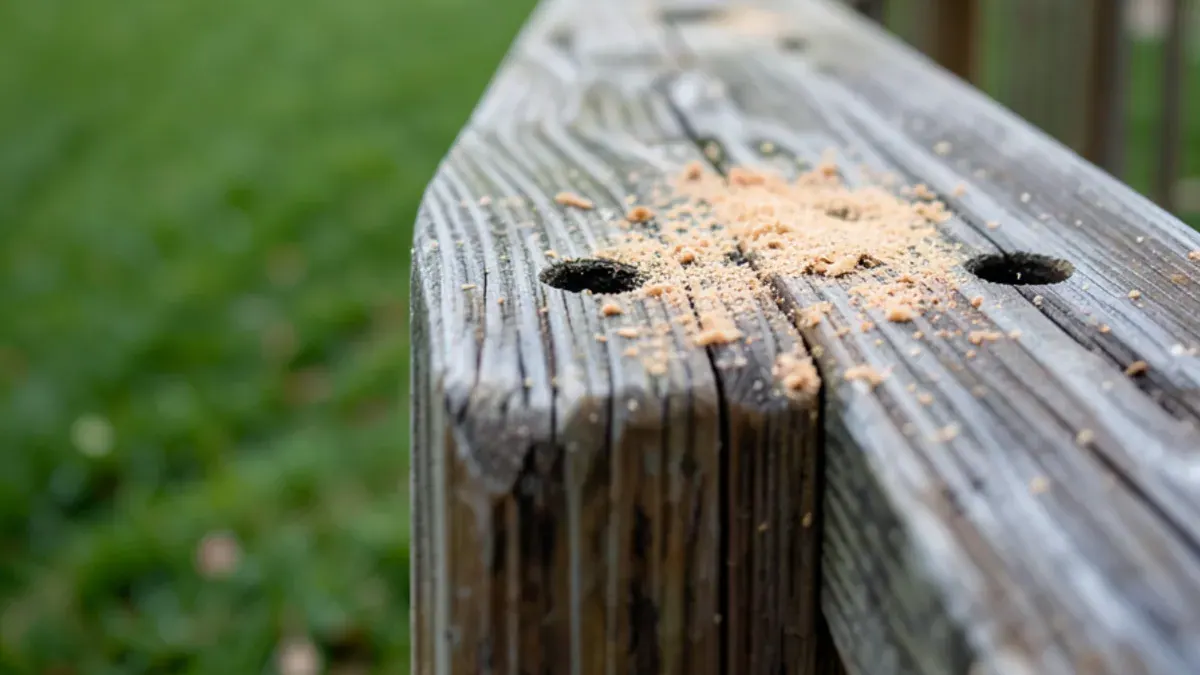
Carpenter bee holes in a deck are perfectly round, about half an inch across, with a trail of coarse sawdust below. The fix runs in a set order: treat the tunnels, wait until the activity stops, then seal the holes and refinish the wood. Plug a hole too early and the bee inside chews a new exit next to it.
- Serving Columbus since 1990
- 4.5★ from 55 Google reviews
- Owner-run, based on Dunning Rd
- One-time or recurring service
The damage is slow, so you have time to do this properly. Below is how to confirm the culprit, what to do this month and how to keep the holes from coming back.
How do you know the holes came from carpenter bees?
Several signs show up together. If you see two or three of them, you almost certainly have carpenter bees.
- A clean, round entrance hole roughly the width of your finger, drilled straight into the face of a board.
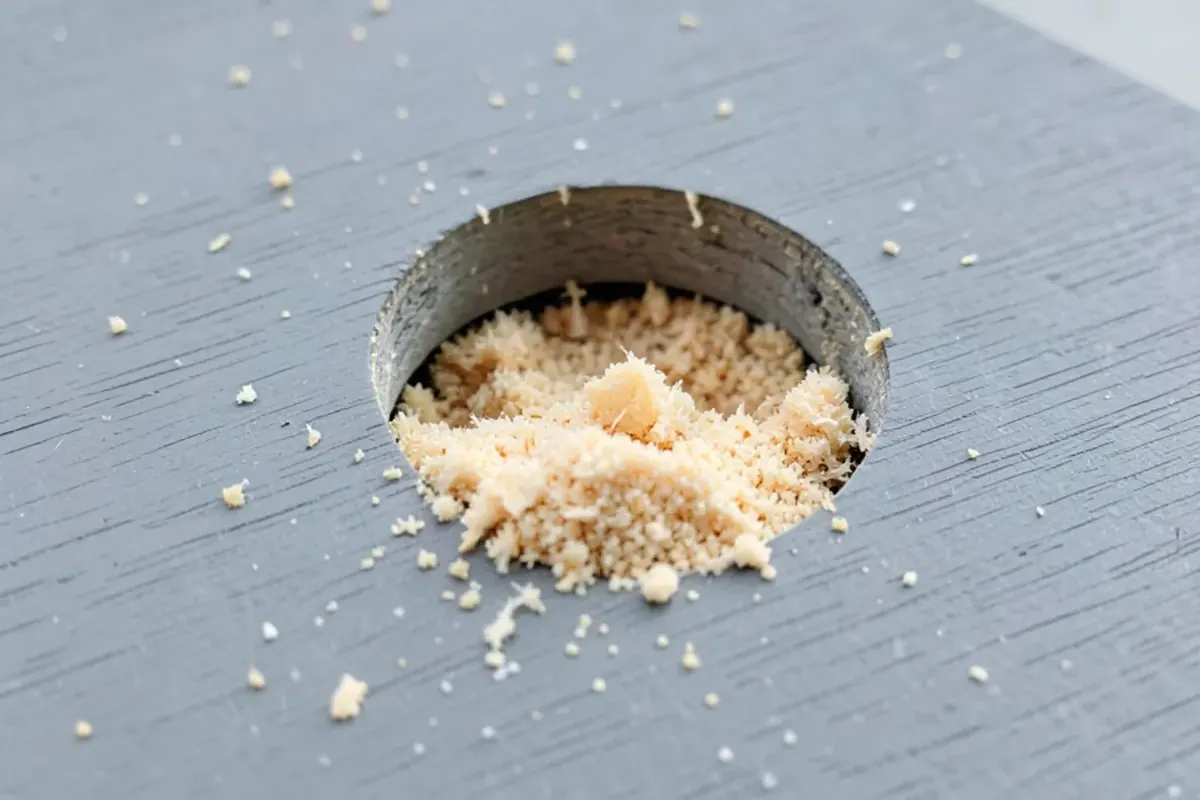
- Coarse, pale sawdust piled on the deck surface, the ground or a lower rail.
- A brown or yellow stain streaking down the wood below the hole.
- Large bees hovering near the eaves in spring. The males dart at you but cannot sting. Females can sting, though they rarely do unless handled.
- A faint scratching sound from inside a post or rail on a quiet afternoon.
Holes in the deck rail?
Tell us how many you count and whether you see fresh sawdust. We will tell you whether to treat now or wait.
- Serving Columbus since 1990
- 4.5★ from 55 Google reviews
- Owner-run, based on Dunning Rd
- One-time or recurring service
Is it carpenter bees, beetles or ants?
Other insects chew wood too, and the hole tells them apart. Getting it right matters because the fix for one will not touch the others.
| Culprit | Hole or damage | What falls out |
|---|---|---|
| Carpenter bee | Round hole about half an inch wide | Coarse sawdust, often in a neat pile |
| Wood-boring beetle | Tiny exit holes, far smaller than a pencil | Fine powder |
| Carpenter ant | No clean round hole; smooth, tunneled galleries | Shavings with bits of insect |
Bumble bees do not drill wood at all. If the hole is the size of a finger and the wood is bare, assume carpenter bees until someone shows you otherwise.
Why do carpenter bees pick your deck?
A female chews in across the grain, turns, and digs along it to build a tunnel with small chambers. In each chamber she leaves pollen and one egg. The sawdust you sweep up is the wood she removed.
She prefers softwood that is bare, weathered or thinly stained, which describes many decks, pergolas and older porch rails around Columbus. Worthington's older neighborhoods are a good example, since the median home there dates to about 1963 (U.S. Census ACS 2019 to 2023) and decades-old trim has had decades to dry out. Bees reuse old tunnels and extend them, so a small problem this year grows by the third summer.
How much damage does a tunnel really do?
One year of one tunnel is mostly cosmetic. The entrance hole and the first few inches of gallery take little strength out of a board. The trouble builds when later generations extend the same tunnel and new females drill beside it. A rail or a post with several tunnels loses strength, and moisture follows the holes into the wood.
That is why the third summer matters more than the first. A joist, a post or a ledger board with many tunnels is worth having a carpenter look at.
What should you do about carpenter bee holes this month?
Match the work to the season. Adults come out in April and May to mate and nest, and a second wave of young adults appears in late summer.
- Count the holesCheck rails, posts, the underside of the deck and the fascia. Note which holes have fresh sawdust, because those are active.
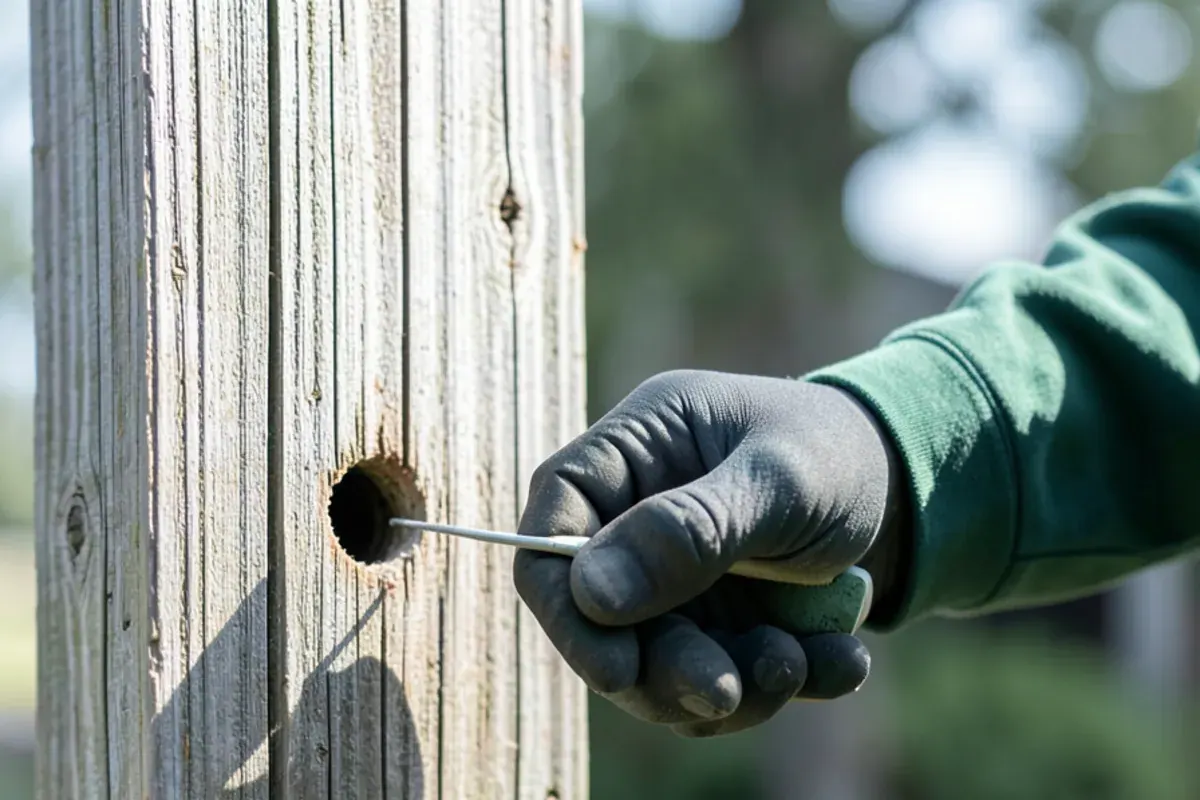
- Treat each active tunnelA product labeled for the job goes into the hole, applied per label directions. Dust formulations travel along the tunnel better than a spray on the surface.
- Leave the holes open for a whileBees need to travel through treated tunnels, and a hole plugged on day one can trap a live bee that tunnels out sideways.
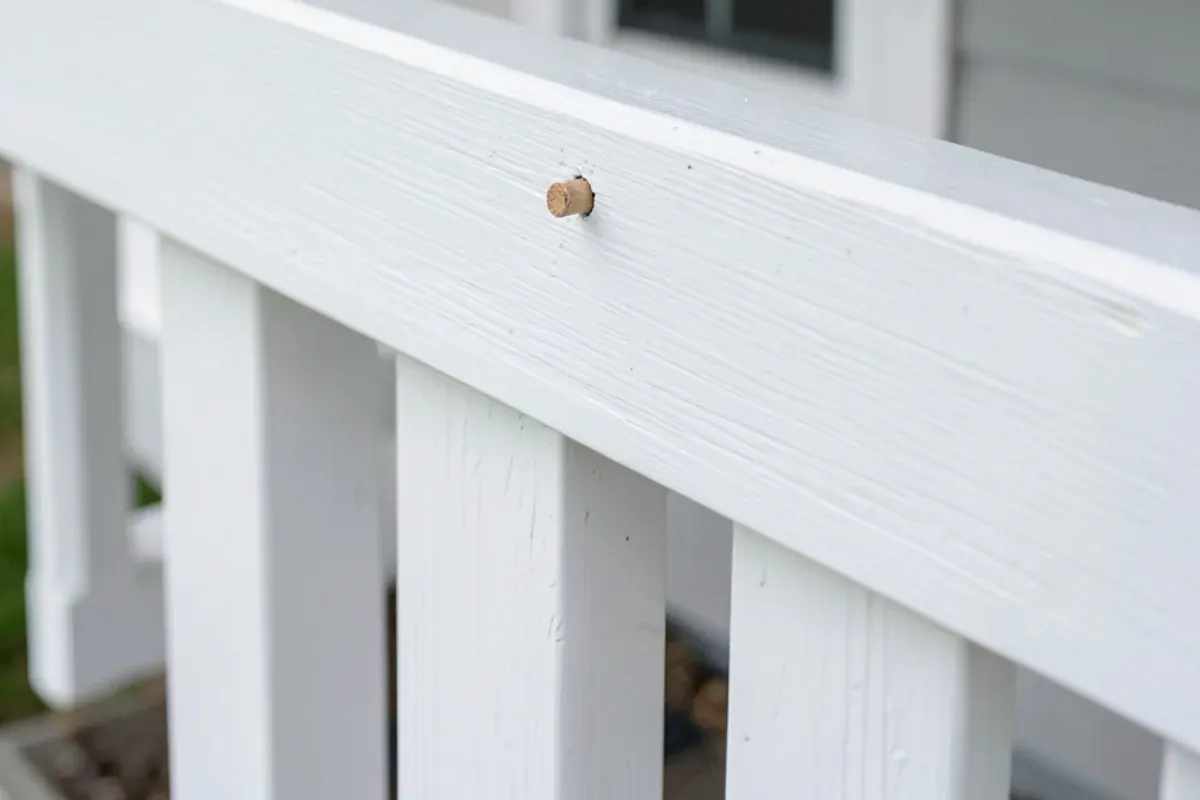
- Seal once activity clearly stopsUse a wood plug, dowel or filler pressed into each hole, then caulk and refinish the surface.
- Check again in late summerNew adults emerge from tunnels you missed. Anything fresh gets the same treat, wait and seal sequence.
Which wood do carpenter bees pick, and which do they skip?
The bees look for bare, soft, dry wood. Wood that is painted, varnished or heavily stained gives them less to bite into. Use this as a guide for what to refinish first.
| Surface | How attractive | What to do |
|---|---|---|
| Bare cedar, pine, cypress or fir rails and posts | High | Treat any holes, then paint or stain |
| Weathered gray decking and fascia | High | Refinish after sealing, including the undersides |
| Thickly painted trim | Lower | Check the unpainted ends and the underside |
| Composite decking boards | Rarely drilled | The wood framing and railings nearby still count |
Bees often start at the underside of a rail or the end grain of a board, where the paint is thinnest. Look there first.
When should you seal carpenter bee holes?
Seal after the treatment has had time to work and you see no new sawdust or bee traffic at the hole. For most decks that means later in the season, not the same week as the application. Sealing early is a common mistake.
Once the hole is plugged, finish the wood. Paint or a good exterior stain leaves the bees less to like about the surface, and a coat of finish also protects the plug. Our carpenter bee control page explains the whole sequence in more detail.
How do you keep carpenter bees from coming back?
- Keep wood painted or stained. Bare boards are the main draw.
- Walk the property each April and look at the undersides of rails and the ends of boards.
- Replace boards that are riddled with tunnels instead of patching them.
- Fill old, abandoned holes after treatment so no one reuses them.
- Do not wait on a bad year. A few tunnels this spring is a smaller job than a dozen next spring.
If you are not sure whether another stinging insect is nesting nearby, our stinging insect removal overview shows what each one looks like.
Do traps and surface sprays help?
Wooden box traps catch some bees and can lower the number returning in spring. They do not treat the tunnels already drilled into your deck, so they work as a supplement, not a fix. A spray on the surface of the wood rarely reaches the tunnel, which is why a product labeled for the job goes into the hole itself.
What we tell people with bee holes
Most people with bee holes need a schedule more than a rescue. We ask how many holes there are, whether the wood is bare and when the bees were last active. That tells us whether to treat now or wait for the late summer wave.
We also tell people honestly when the wood is past saving. A board with a dozen tunnels is carpentry, not pest control, and we say so. Price depends on the number of holes, the structure and how hard it is to reach, and you hear it before work starts.
Treatment has limits. A tunnel behind a finished rail cap, or one bent around a corner in a thick post, may not take product all the way, and a second look in late summer finds what the first treatment missed. We say so up front, so a return visit is no surprise.
Calling is not always worth it. A single hole in a board you plan to replace this year does not need a visit. Treat nothing, watch the spot and replace the board. Call when holes keep appearing, when sawdust shows up in several places or when the wood is a structural piece.
Related questions
Can I fill carpenter bee holes right away?
Not right away. A bee or larva still inside will chew a new exit beside the plug. Treat the tunnel first, wait until you see no sawdust or bee traffic, then seal it. Rushing this step is the most common reason the holes come back.
Should I worry about getting stung by a carpenter bee?
Rarely. The males hover and dive at you but have no stinger. Females can sting, but they only do so if grabbed or pressed. If you are stung and have trouble breathing or swelling of the face, call 911, since a few people react badly to any bee sting.
Will painting my deck stop carpenter bees?
It helps, but it does not make the wood immune. Bees prefer bare, weathered softwood and tend to skip a well-painted surface. Cover the underside and the ends of boards too, since bees often go there, and treat any holes already present before you paint over them.
Do carpenter bees come back to the same deck?
Yes. New adults often return to the tunnels they hatched in and extend them. That is why one year of holes becomes three. Treating, sealing and refinishing the wood in the same season is the best way to break the cycle.
Can carpenter bees damage the structure of my deck?
Over several years, yes. One year of tunnels is mostly cosmetic, but later generations extend them and the wood weakens, especially in posts and rails. Worthington's older homes, with a median build year around 1963, often have decks with years of weathering behind them. Have any heavily tunneled post or joist checked by a carpenter.
If you have round holes and sawdust, send us a photo and tell us how many holes you can see. Read about carpenter bee control, or call (209) 563-1650. We cover Worthington and the rest of Columbus, usually about 20 minutes from our Dunning Rd base.
Sources
Questions about this? Call the shop.
Tell us what you are seeing and we will tell you what happens next.
- Serving Columbus since 1990
- 4.5★ from 55 Google reviews
- Owner-run, based on Dunning Rd
- One-time or recurring service
Boydes Exterminating Co, 1967 Dunning Rd, Columbus, OH 43219