
Boydes Exterminating Co
Rodent Proofing in Columbus, OH
Rodent proofing in Columbus, OH means sealing every gap that mice and rats use to get into your house, garage or crawlspace, with materials they cannot chew through. It is the last step of our rodent control in Columbus plan and the one that decides whether the problem stays solved.
- Serving Columbus since 1990
- 4.5★ from 55 Google reviews
- Owner-run, based on Dunning Rd
- One-time or recurring service
Trapping removes the animals that are inside. Proofing stops the next ones. A house with a clear foundation, tight vents and a good garage door seal asks less of every trap.
What is rodent exclusion, and what does it cover?
Exclusion is the trade term for keeping rodents out by sealing entry points instead of killing them. It is physical work: finding the gaps, choosing a material that rodents cannot gnaw through, and fitting it so it stays in place.
Under Columbus Health Code §221.03, dwellings must be kept free of rodents and insects, and Columbus Public Health says gaps of half an inch or more within 48 inches of the ground should be sealed. Our proofing goes beyond that line, because mice use smaller gaps and many entries sit higher than 48 inches. The work covers:
- Foundation cracks and gaps where pipes, cables and gas lines pass through
- Garage door bottom seals and the corners where the door meets the frame
- Vents, including dryer, crawlspace and foundation vents
- Gaps around door frames, sill plates and where siding meets the foundation
- Roofline openings, soffits and attic vents where mice climb in
Where are the most common rodent entry points in a Columbus house?
Older houses collect them. A foundation settles, utility lines go in over the decades and each new pipe leaves a ring of gap around it. This table shows where we look first and what usually fixes each spot:
| Entry point | Why rodents use it | Typical fix |
|---|---|---|
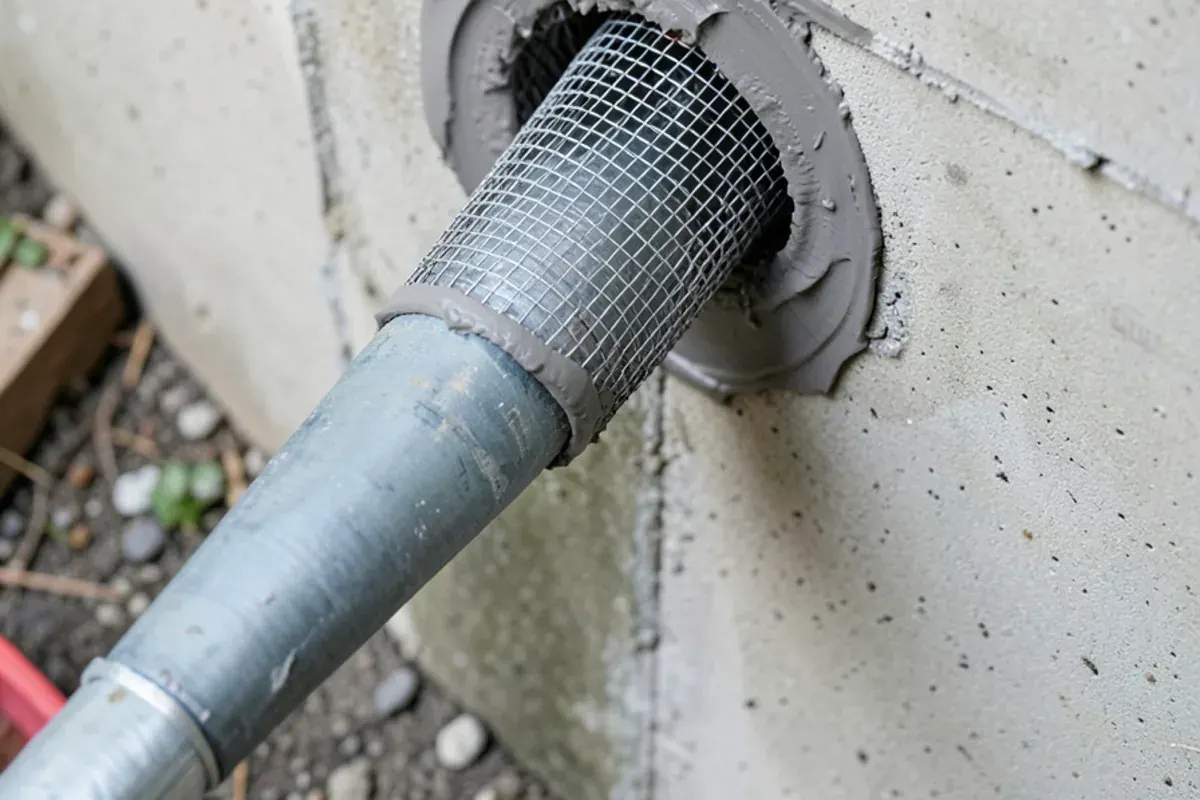
| Pipe and cable penetrations | Gap around the pipe where it passes through the wall | Metal mesh packed in, then sealant or mortar over it |
| Garage door bottom edge | Worn rubber leaves a gap along uneven concrete | New bottom seal and corner seals |
| Foundation and crawlspace vents | Torn or bent screens | Heavy hardware cloth fastened over the opening |
| Dryer vent | Flap stuck open, loose screen | Vent cover that closes and holds |
| Siding and sill plate joint | Shrinkage and rot open a seam at the bottom | Metal flashing or repair, depending on the damage |
| Roofline and soffit | Mice climb brick and siding to reach it | Mesh or metal over the opening |
Our guide on finding where mice get in shows how to check the outside of your own house before a visit.
Know where they are getting in?
Tell us the spot and what you see. We will say what fits and how to plan the job.
- Serving Columbus since 1990
- 4.5★ from 55 Google reviews
- Owner-run, based on Dunning Rd
- One-time or recurring service
Prefer to write it down?
Calling is fastest. The form comes to the same desk, and we call you back during business hours.
Call (209) 563-1650Which materials seal mouse holes, and does steel wool work?
Steel wool is the folk answer, and it is a half answer. Fine steel wool rusts when it gets damp, can be pulled out by a determined rodent and leaves rust stains on masonry. It works for a quick patch inside a dry cabinet. For anything that has to last, use something harder.
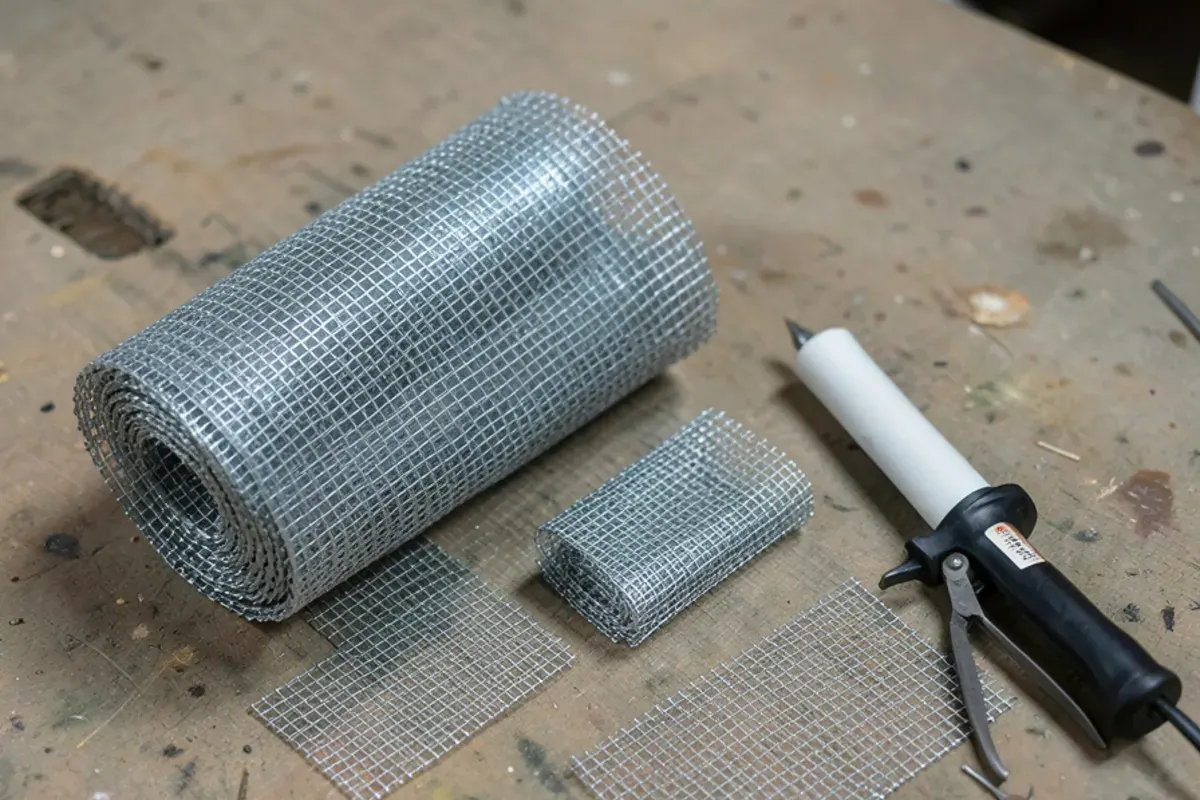
- Metal mesh, in stainless steel or copper, packed tightly into small gaps and sealed over
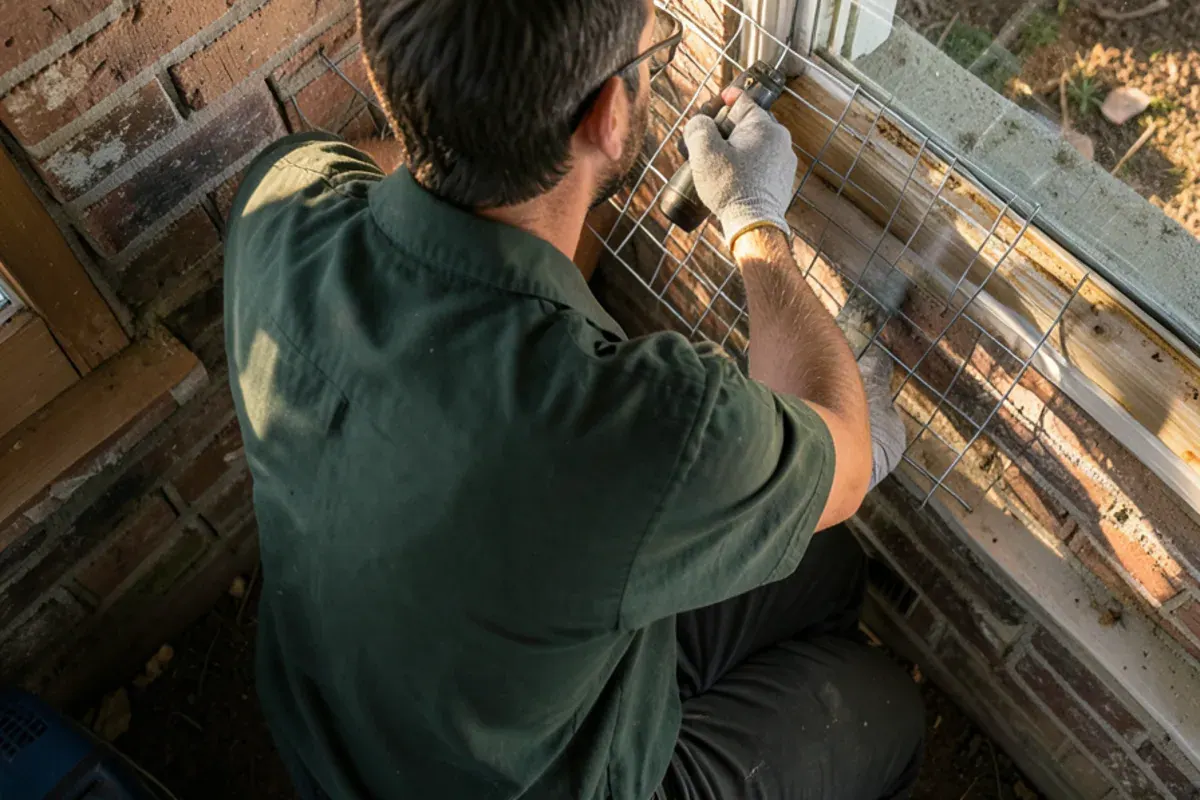
- Hardware cloth, a stiff galvanized wire grid used over vents and larger openings and screwed down
- Sheet metal and flashing for the bottom edge of siding, soffits and corners
- Mortar or concrete patch for cracks and holes in masonry and poured foundations
- Sealant, applied over mesh to hold it in place and block drafts
Foam from a can is not enough alone, since rodents chew it. It can work as a backer when mesh is embedded inside. We choose the material by the gap, the surface and whether weather reaches it.
Garage doors, vents and foundation gaps in detail
Garage door rodent seal
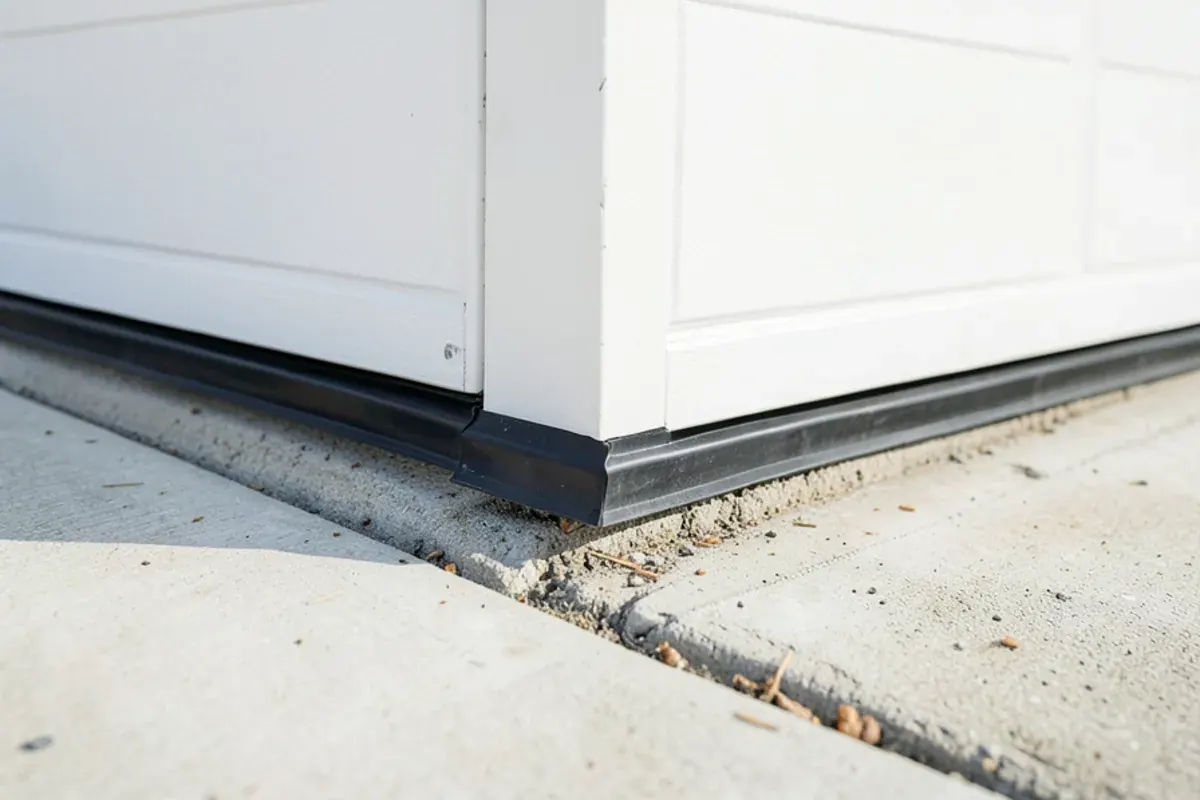
A garage door is a long gap with a rubber strip on it. Concrete slopes, seals wear and the corners curl. Rodents find a quarter-inch of daylight faster than most people do. A fresh bottom seal and corner seals close it. If the door itself is bent or the floor is badly out of level, a door company may need to fix that first. Our post on rodent-proofing a garage and basement goes through the steps.
Vents
Vents exist to let air through, so sealing them takes care. Hardware cloth over a crawlspace vent keeps rodents out and lets air move. A dryer vent needs a cover that closes tightly when the dryer is off.
Foundation gaps
A foundation gap for rodents is anything from a hairline crack near a pipe to a missing chunk of mortar. We pack, seal and patch them and note anything structural for a mason. Settling older homes show more of these, which is why older Columbus homes get mice every fall.
What does a rodent proofing visit look like?
- We make sure the animals are out firstSealing a gap with rodents still inside traps them in the walls. If there is active infestation, trapping or baiting comes first, as described on our mouse control and rat control pages.
- We walk the whole outside of the buildingFoundation, vents, doors, utility lines, siding and roofline get a close look, including spots hidden behind shrubs.
- You get a list of what we foundWe explain the gaps, the materials and what falls outside our work, such as rotted trim or a bent door.
- We seal each openingMesh, hardware cloth, metal, mortar and sealant go in according to the gap and the surface.
- We check the work and tell you what to watchWe review the finished spots with you and tell you what to look for over the next few weeks.
How big can a mesh opening be, and how do you know sealing worked?
University extension guidance on rodent exclusion points to quarter-inch woven or welded hardware cloth for vents and larger openings, because a wider weave can let the smallest mice pass. Holes of about three inches or more get the cloth first and a patching compound over it.
Signs the seal is holding
- No fresh droppings along the walls you checked before the work
- No new gnaw marks or shredded material at a patched spot
- Scratching in the walls stops within a couple of weeks
- Dust or light mortar lines around pipes stay undisturbed
Signs a gap was missed
New droppings in the same cabinet, a trap catching again after weeks of quiet, or fresh chewing at a corner mean mice found another way in. Call and tell us where. The answer is usually higher on the building than people think, at a roofline, a soffit or an unscreened vent. Exclusion lowers the odds a great deal, but extension sources are clear that no building is ever fully sealed forever.
Should rodent proofing be done before winter?
Yes, if you can. Mice start looking for warmth as nights cool in October, and the ones that get in early often stay all winter. Sealing in late summer or early fall closes the door before the rush. That said, proofing in winter still pays off. Frozen ground only makes the foundation work harder to reach.
If you are already hearing noise, do not wait for the season. Call, and we will plan trapping and sealing together.
What does rodent proofing cost?
The price depends on how many openings there are, how high or hard to reach they are, and what materials they need. A small house with a few pipe gaps is a different job from a large older home with a worn garage door, several vents and a long foundation. We explain the price before work starts.
Work we do not do, such as rebuilding a rotted sill plate or replacing a garage door, gets listed so you can hire a carpenter or door company. Proofing then lasts longer and costs less than repeating the problem.
Rodent proofing in Columbus: what Health Code §221.03 says about sealing
Sealing is the one part of rodent work that the Columbus Health Code names directly. Section 221.03 expects dwellings to be rodent-free, and Columbus Public Health says openings of half an inch or more within 48 inches of ground level should be sealed. In a building with two or more units, the owner carries that duty.
Get the scope in writing. List each opening, the material for it and the repairs that belong to another trade, such as a mason, a carpenter or a garage door installer. If the company will also place bait, Ohio requires an ODA Pesticide Business License for applying pesticides for hire, and ODA's public search lets you check it.
Why Boydes Exterminating for this work
Founded in 1990 by Mr. Robert Boyde and run by Robert J. Boyde Jr., from the shop at 1967 Dunning Rd on the east side of Columbus. The person who quotes the job is the person you can call after.
We sequence the work so animals are removed first and gaps closed after, which avoids sealing rodents inside.
You get an explanation of each opening, the material chosen and what needs another trade.
Pricing comes before the work begins, and reviewers describe it as fair with no surprise charges.
Check Google: 4.5 stars, 55 reviews. Cash, checks and cards are all fine.
Where we do this work
- Bexley Median build year 1944, so brick foundations have decades of added pipe, cable and vent openings.
- Upper Arlington A planned suburb begun in 1913 with a median home built in 1959 and many original foundations.
- Worthington Founded in 1803, with a median build year of 1963 and older masonry houses to inspect.
- Grandview Heights The median home dates to 1954, and tight lots put foundations and vents close to neighboring yards.
- Marble Cliff Some homes were built with quarry stone, and stone foundations need patching rather than a simple caulk line.
- Blacklick Estates Median build year 1966, beside Blacklick Creek, so foundation lines and vents need a full walk.
- Huber Ridge Median home built in 1969, with Alum Creek along part of its edge and many original garages.
- Whitehall About 61% of homes are rented and the median dates to 1961, so owners often seal several units.
- Gahanna Median build year 1985 with Big Walnut Creek running through town, so garage seals and vents matter.
- Minerva Park Houses built from 1927 around Minerva Lake, with a median build year of 1960.
We seal houses across Columbus and the suburbs, including Bexley, Upper Arlington, Worthington and Grandview Heights, where older brick and stone foundations call for careful patching. See all service areas.
Rodent Proofing: common questions
What materials keep mice from chewing back in?
Stainless steel or copper mesh packed tight, galvanized hardware cloth screwed down over vents, sheet metal on edges and mortar or concrete patch on masonry. Sealant over mesh holds it. Fine steel wool rusts, and foam alone is chewable. We choose by the gap size, the surface and whether weather reaches it.
Where are the most common rodent entry points?
Gaps around pipes and cables where they enter the foundation, worn garage door seals, torn vent screens, dryer vents and the seam where siding meets the foundation. Mice also climb to roofline gaps. Columbus Public Health says openings of half an inch or more within 48 inches of the ground should be sealed.
Should proofing be done before winter?
Ideally yes, in late summer or early fall, before nights cool in October and mice head indoors. Sealing early keeps them from settling in for the winter. If you already hear activity, do not wait. We can trap and seal in the same plan, and you will not need to restart in spring.
Does proofing replace trapping?
No. Proofing keeps new rodents out, while trapping and baiting remove those already inside. If we seal first, animals stay in the walls. We trap or bait first when there is activity, then seal. For a house with no activity, proofing alone is a reasonable way to prevent a problem.
Can I seal the holes myself?
You can handle small, reachable gaps with mesh and sealant, and our post on rodent-proofing a garage covers the basics. The hard parts are finding every opening and sealing roofline and vent gaps. If you do it yourself, make sure no rodents are left inside the walls. Call us if you hear noise afterward.
Will sealing trap mice inside the walls?
It can if the work is done while animals are active. That is why we remove them first. A trapped mouse in a wall will chew a new exit, often into your living space. We confirm activity has stopped before the last gaps are closed, and we tell you what we checked.
Sources
- Columbus Public Health, Columbus Health Code §221.03 (dwellings rodent-free and insect-free; openings of half an inch or more within 48 inches of ground level)
- University extension guidance on rodent exclusion (Wildlife Damage Management, Rodent Exclusion Methods): quarter-inch hardware cloth, backing larger holes before patching
What customers say
4.5 stars from 55 Google reviews, checked November 2026. Read more reviews · Leave a review
Mr. Boyde’s company is responsive and honest. They answer phone calls, give estimates, and come to your home quickly. Pricing is true to market price with no surprise charges.
Great service. Super dependable. Calls right back. This time he was able to come out same day.
Excellent service, very easy to schedule appointments. No inspection needed to get the job done sooner and very forward about the cost.
Shut the door on mice and rats
Call to talk through the gaps in your house. We will explain the materials, the work and the price before we start.
- Serving Columbus since 1990
- 4.5★ from 55 Google reviews
- Owner-run, based on Dunning Rd
- One-time or recurring service
Boydes Exterminating Co, 1967 Dunning Rd, Columbus, OH 43219