

Rodent Control
Why Older Columbus Homes Get Mice Every Fall
Mice in an old house in Columbus turn up every fall because the building has more gaps than a newer one, and cold nights send mice looking for them. Settled foundations, original vents, patched utility holes and open wall cavities give mice a way in and a warm place to stay.
- Serving Columbus since 1990
- 4.5★ from 55 Google reviews
- Owner-run, based on Dunning Rd
- One-time or recurring service
The pattern repeats on schedule. Once overnight temperatures drop in October, outdoor food thins out and mice move toward heated walls. Here is what makes older houses easy targets, a fall checklist, and which repairs are worth doing before the first cold snap.
Why do mice pick older houses first?
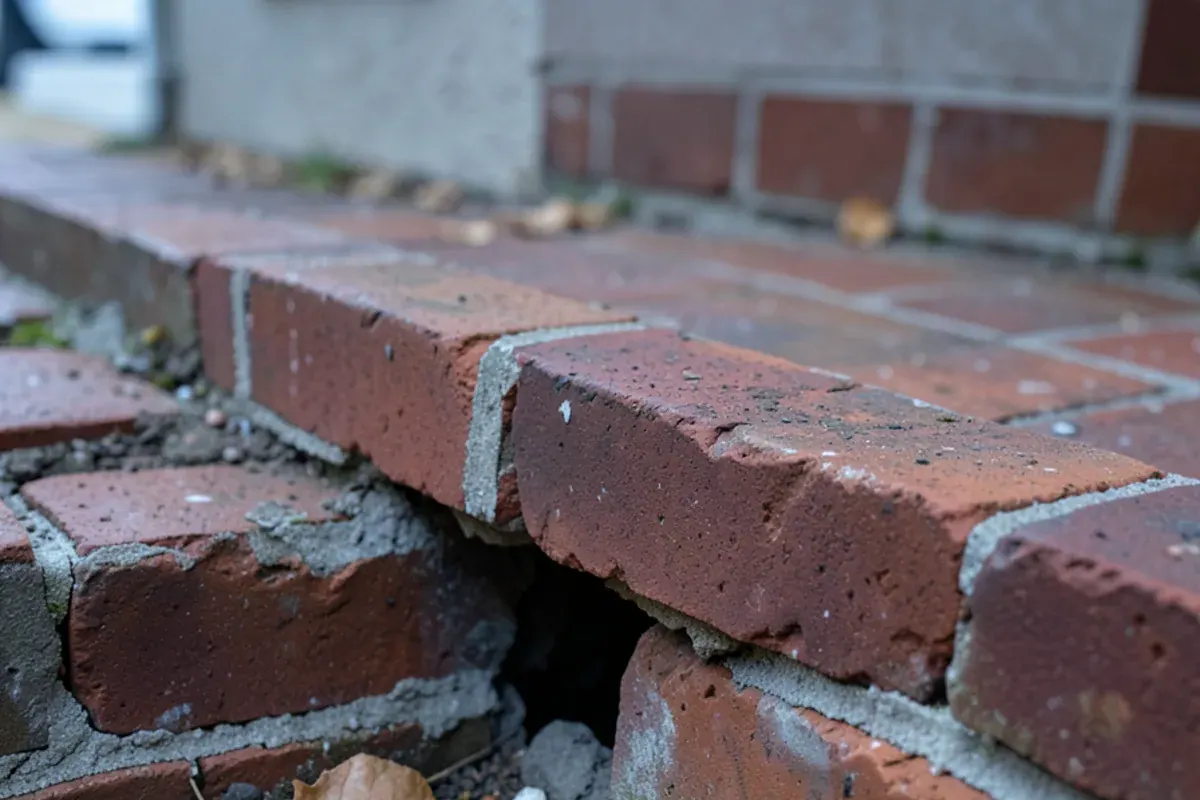
Age adds openings. A house that has stood for decades has gone through freeze and thaw cycles, shifting soil, new wiring and replaced plumbing. Each repair often left a gap behind the work, and nobody sealed the ring around the pipe.
The housing stock explains why this is a local issue. The median home in Bexley dates to 1944 and in Whitehall to 1961 (ACS 2019-23), well before modern air sealing. Columbus overall sits around 1980. The older the shell, the more small paths mice find, and they only need about a quarter inch.
Hearing scratching already?
If mice are in the walls now, trapping comes before sealing. Tell us what you hear and where, and we will plan the visit.
- Serving Columbus since 1990
- 4.5★ from 55 Google reviews
- Owner-run, based on Dunning Rd
- One-time or recurring service
What features of old houses let mice in?
| Feature | Why mice use it | What helps |
|---|---|---|
| Cracked or crumbling mortar | Gaps open between bricks or block at ground level | Repoint or patch with mortar |
| Original vents and louvers | Rusted or missing screens | Hardware cloth cut to fit |
| Old coal chutes and cellar windows | Loose frames, unused openings | Seal or replace the panel |
| Radiator and plumbing holes in floors | Large cuts around old pipes | Metal collars and mesh |
| Open wall cavities | Some older framing runs open from foundation to attic | Seal at the bottom and the top |
| Cracked chimney flashing | A gap at the roof line | A roofer or chimney sweep |
The wall cavity issue matters most. In some older framing styles, the space between studs runs unbroken from the basement to the attic. A mouse that gets in low can climb inside the wall to the top floor, which is why scratching may seem to come from the ceiling.
Why does the trouble start in the fall?
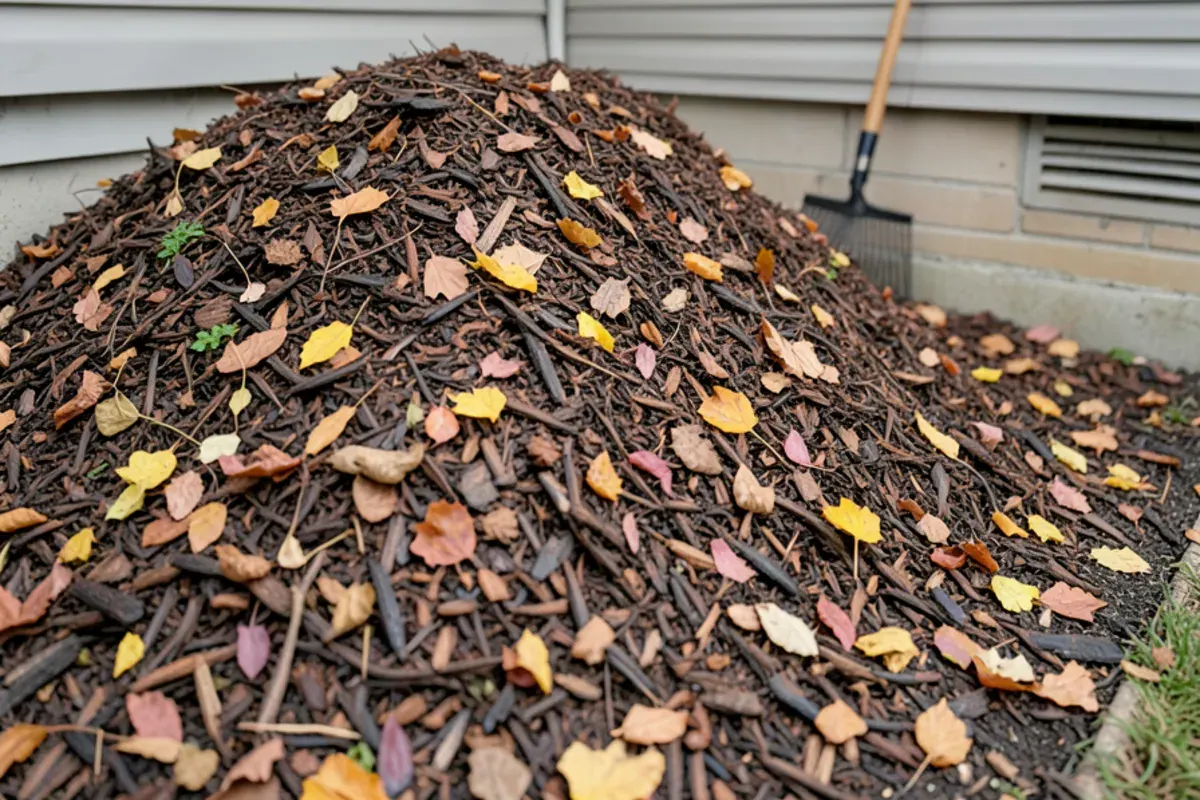
Mice stay outdoors while seeds, grass and insects are plentiful. When nights cool and harvest ends, food gets scarce and nesting sites get cold. A house that is warm and smells like groceries becomes a target. Leaf piles and mulch against the foundation give them cover for the last stretch of the trip.
Once inside, they are tough to dislodge. A single mouse can start a family quickly, and a wall void gives it warmth through winter. Mice that get in during October are often still there in March.
How fast does one mouse become many?
UC IPM reports that a female house mouse may have 5 to 10 litters of 5 or 6 pups, and that young mice are sexually mature 5 to 6 weeks after birth. Outdoors, mice mostly breed in spring and fall. Indoors, with steady food and warmth, UC IPM says they can reproduce year-round. A pair that moves into a wall in October can be a family by Christmas.
Mice also stay close to home. Extension sources put a mouse's daily range at an area 10 to 30 feet across. If you find droppings in the pantry, the nest is probably within a room or two of it, not across the house.
What should an older-house owner do before the first cold snap?
- Late summer: walk the foundation and note every cracked joint, loose vent and gap around a pipe.
- September: pull mulch and leaves back from the house, trim shrubs that touch siding and stack firewood away from the wall.
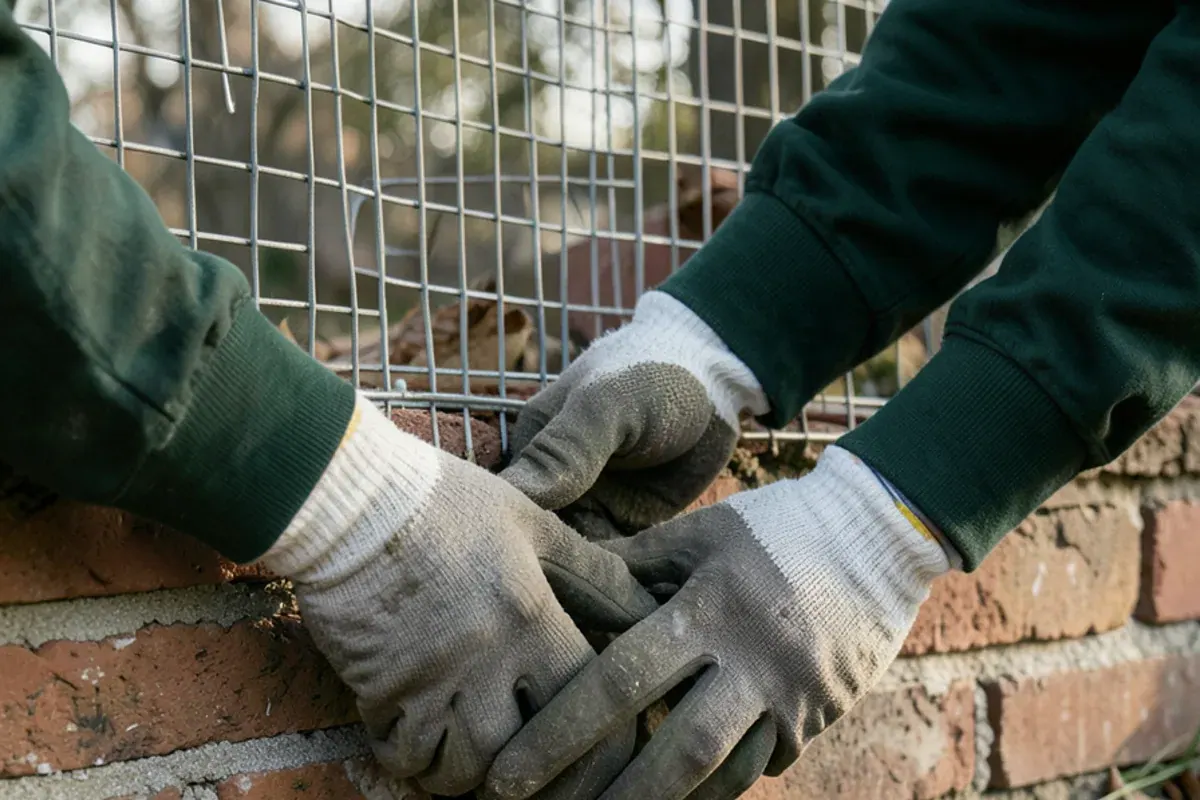
- Early October: replace worn garage door seals, repair vent screens and pack small gaps with metal mesh and sealant.
- Mid October: inspect the basement and attic with a flashlight for droppings, gnawed insulation and runways along baseboards.
- Throughout: store pantry food in hard containers and keep pet food off the floor overnight.
Do the outdoor work first. Interior repairs only help if the exterior is tight. If the work is higher than a ladder can reach, such as soffits or a chimney, hire a roofer or schedule our rodent proofing so someone with the right equipment can handle it.
What should you know before repairing a pre-1978 house?
Many of the fixes in the table disturb old paint. Repointing brick, replacing a vent louver or cutting back trim around a pipe can all kick up dust from a painted surface. If the house was built before 1978, that paint may contain lead.
EPA's Renovation, Repair and Painting rule covers paid work in homes built before 1978. It applies once a job disturbs more than 6 square feet of painted surface inside a room or more than 20 square feet outside. At that point EPA requires the contractor to be a firm certified in lead-safe work practices. Smaller jobs fall below the line, but window replacement and demolition of painted surfaces stay covered at any size.
- Ask any contractor you hire for exterior masonry or trim work whether the job triggers the rule.
- Wet-wipe dust instead of sweeping it, and keep children and pets out of the work area until it is cleaned up.
- Patch small gaps with mesh and sealant instead of scraping or sanding painted edges.
None of this is a reason to leave a gap open. It is a reason to ask one question before the work starts.
Rentals, landlords and older buildings
Whitehall has a high share of renters, about 61% (ACS 2019-23). Under Columbus Health Code, according to Columbus Public Health, the owner of a dwelling with two or more units is responsible for eliminating pests. If you rent in such a building, report mice to the landlord in writing and keep a copy.
Tenants can still help. Clean up crumbs, store food in sealed containers and report holes you can see. Owners and managers of older buildings can call us about a plan that covers common areas and neighboring units, since a mouse in one apartment often has a route to the next.
How we approach an older house
Old houses reward patience. We look at the outside first, because that is where the openings are, then the basement, the attic and the kitchen. Droppings and rub marks inside tell us where the mice travel, and the outside tells us how they got in.
Our usual message is that trapping and sealing belong together. Traps remove the mice that are there, and sealing stops the next group. If we see a problem we do not handle, such as crumbling brick or a rotted sill, we say so and suggest you call a mason or carpenter.
Here is where an old house plan goes wrong. Owners seal the foundation first, then hear scratching a week later. They sealed mice in. Trap first, seal second. The other common failure is patching only the gaps they can reach from the ground and leaving the roofline open.
Some fall problems do not need a visit. If one new droppings pile turns up near a door you left open, clean it, close the door and set a couple of traps. If the evidence comes back, or you hear movement in the walls, that is the time to call.
You also get the price explained before work starts. A house with one obvious gap is a short job, while a century-old brick home with a dozen openings and a crawlspace takes longer. Read our mouse control page for how the visits run.
Related questions
Is it normal to get mice every year in an old house?
It is common, but it is not inevitable. Mice return when the same gaps stay open and the same food stays available. Sealing the exterior, cutting back leaf cover and storing food in hard containers breaks the cycle for most houses, and a follow-up walk each fall catches new cracks.
When is the best time to mouse-proof an old house?
Late summer through early October, before nights turn cold. Sealing then closes the door before mice start moving indoors. Winter work still helps, though mice already inside need trapping first. If you hear noises now, do not wait for a season, because the animals are already in.
Will mice damage the wiring in my older home?
They can. Mice chew constantly to wear down their teeth, and wire insulation, insulation batts and wood are all targets. Gnawed wiring is a fire risk, so call an electrician if you see exposed conductors. Removing the mice and sealing the entry points is the way to prevent more chewing.
Do mice in an old house die off in winter?
Not in a heated house. UC IPM says house mice live 9 to 12 months, yet with steady food and shelter they breed year-round, so the population replaces itself. A warm wall cavity near a kitchen keeps the colony going through January. That is why waiting for spring does not solve a fall problem.
Do I need to worry about lead paint when sealing mouse holes?
Possibly, in a house built before 1978. EPA's rule covers paid work that disturbs more than 6 square feet of painted surface in a room or 20 square feet outside, and calls for lead-safe practices by a certified firm. Ask your contractor, and avoid dry scraping or sanding painted edges around a gap.
An older house does not have to mean an annual mouse visit. Seal the outside in early fall, keep cover away from the foundation and check again each year. For help, read about our rodent control in Columbus or call (209) 563-1650. We serve Bexley, Whitehall and the neighborhoods around them.
Sources
- U.S. Census Bureau, American Community Survey 2019-23, median year built and housing tenure for Bexley, Whitehall and Columbus
- Columbus Public Health, Columbus Health Code, owner responsibility for pests in dwellings of two or more units
- U.S. Centers for Disease Control and Prevention, Rodents
- UC IPM, House Mouse (litters, maturity, year-round breeding, lifespan)
- ICWDM, House Mouse Biology (daily range of 10 to 30 feet; gestation)
- U.S. EPA, Renovation, Repair and Painting Program (pre-1978 homes; 6 and 20 square foot thresholds)
Questions about this? Call the shop.
Tell us what you are seeing and we will tell you what happens next.
- Serving Columbus since 1990
- 4.5★ from 55 Google reviews
- Owner-run, based on Dunning Rd
- One-time or recurring service
Boydes Exterminating Co, 1967 Dunning Rd, Columbus, OH 43219