
Rodent Control
Mice in the Walls: How to Find the Entry Points
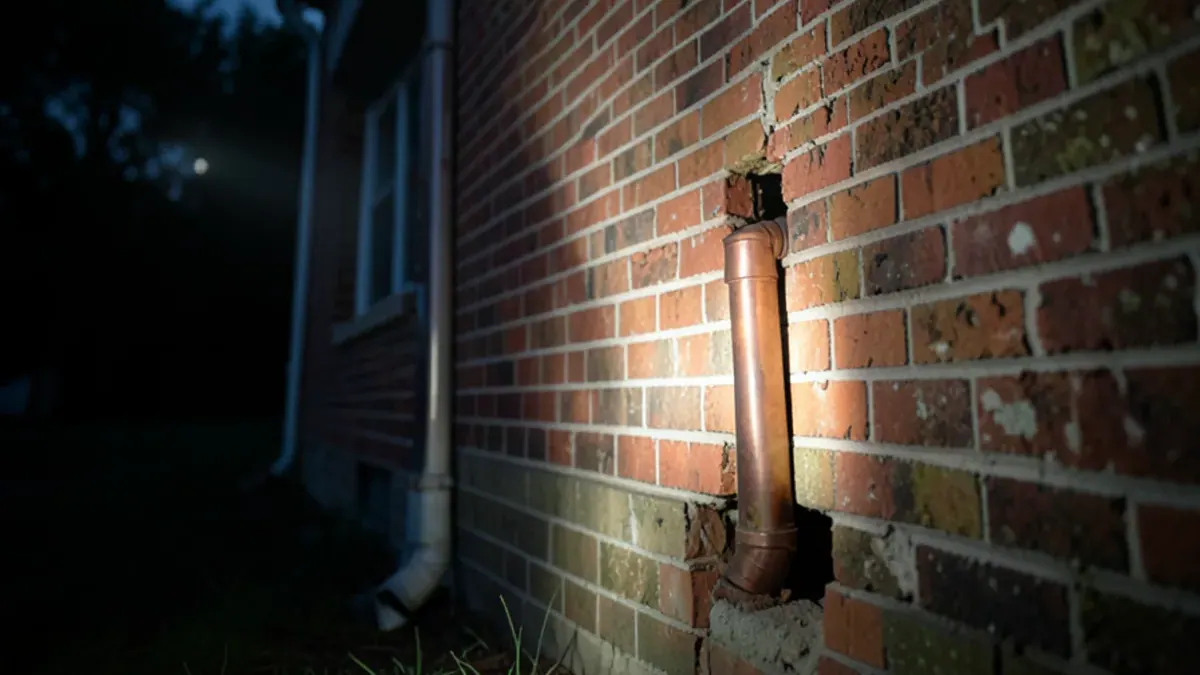
To find where mice are getting in, start outside at ground level and work upward: pipes, cables, vents, the garage door and the line where siding meets the foundation. A mouse needs a gap of only about a quarter inch, narrower than your little finger, so the opening you are hunting is smaller than most people expect.
- Serving Columbus since 1990
- 4.5★ from 55 Google reviews
- Owner-run, based on Dunning Rd
- One-time or recurring service
If you already hear scratching in the walls at night, the mice are inside and the hole exists. This guide covers the usual spots, a simple search you can do on a weekend, and why you should not seal anything until the mice are out.
Where do mice usually get into an Ohio house?
Mice follow edges and warmth. They run along a wall, find a gap and test it with their whiskers, then squeeze through if their skull fits. Most entries sit low, but mice climb brick, siding and wiring with ease, so do not rule out the roofline.
- Utility penetrations. Every pipe, gas line, cable and spigot that passes through the foundation leaves a ring of space around it, and the original filler shrinks over the years.
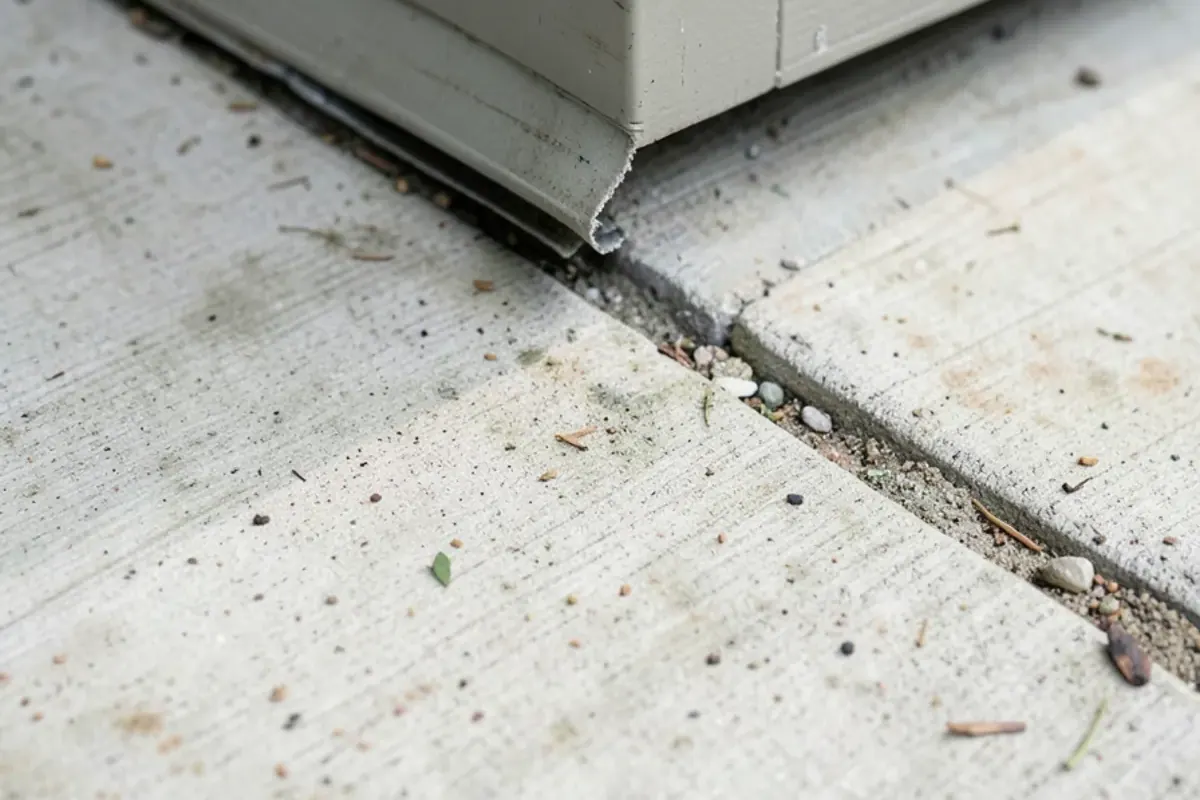
- Garage door corners. A bottom seal that has curled or cracked leaves a thin strip of daylight, and the lower corners are the worst spots.
- Vents. Dryer vents with a stuck flap, crawlspace vents with torn screen and bath fans that exit through a soffit all invite mice in.
- Siding and sill gaps. Where the wood framing sits on the foundation, a small gap often runs for several feet behind the trim.
- Door sweeps and thresholds. A door you can slide a business card under is a door a mouse can use.
Which entry points do people miss?
Most searches stop at eye level. The CDC lists spots that get skipped: the roof among the rafters, gables, eaves and soffits, the gap between the foundation and the ground, and the vents to the attic and crawl space. Inside, it points to floor drains in a basement or laundry room, the space under and behind kitchen cabinets, and the area around a fireplace.
Found a gap you cannot reach?
Roofline and crawlspace entries are hard to check from the ground. Tell us what you see and we will plan a look.
- Serving Columbus since 1990
- 4.5★ from 55 Google reviews
- Owner-run, based on Dunning Rd
- One-time or recurring service
How do you search for mice entry points yourself?
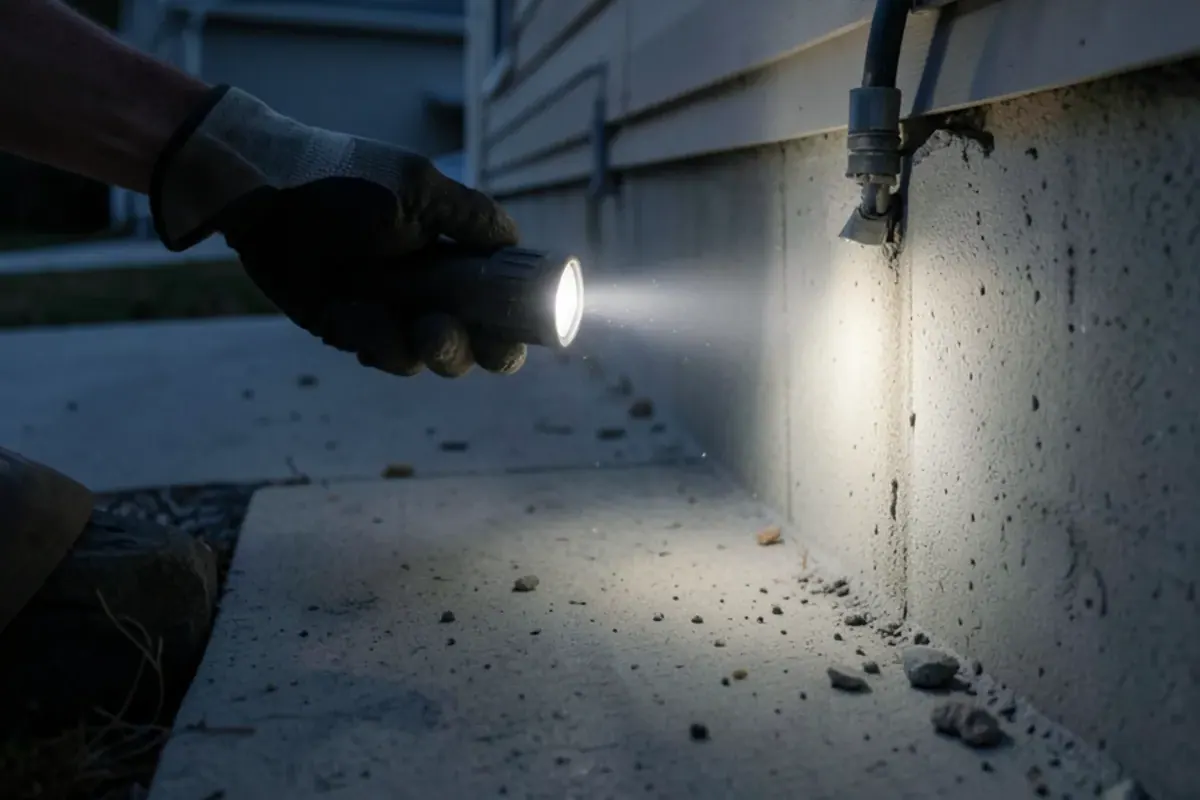
You do not need special tools. A flashlight, a mirror on a stick and an hour of patience will find most of what a quick look misses. Go in the evening or at dawn, when low sunlight shows daylight through gaps and fresh grease marks stand out.
- Walk the foundationCircle the house slowly and look at the bottom two feet of every wall. Check where pipes and wires enter and look for gaps around them.
- Crouch and look upGet low at the garage door and look along the bottom edge from inside with the light off. Any daylight you can see is a path a mouse can use.
- Check the ventsOpen the dryer vent flap, look at crawlspace screens and make sure every cover is tight with no bent or torn edges.
- Look for rub marksDark, greasy smudges on a brick edge, pipe or door frame show where bodies pass night after night. Those marks sit right at the opening.
- Read the floorInside, dust a thin line of flour along a wall where you suspect activity. Tiny footprints and a tail drag in the morning tell you the route.
- Write it downSketch the house and mark every suspect gap. A list keeps the sealing job organized and shows what is left.
What does scratching in the walls tell you?
Scratching and scurrying after dark means mice are traveling inside the wall cavity, which is hollow space between studs. Mice are mostly active at night, and the noise is loudest when the house goes quiet. A sound in the ceiling often means they used a wire or pipe chase to climb, which hints that the entry is somewhere below.
Follow the sound in the daytime by tapping along the wall. The activity often centers near the kitchen, a bathroom or the laundry, because those rooms have food, water and warm pipes. Droppings under the sink or behind the stove give away the same trail from the other direction.
Heavier thumping, gnawing that echoes or a smell like ammonia may point to rats or a larger nest. Our guide on telling a mouse from a rat explains how to sort that out before you buy anything.
Entry point checklist: what to look for and who fixes it
| Spot | What to look for | Typical fix |
|---|---|---|
| Pipe or cable through foundation | A gap or dried filler ring | Metal mesh packed in, then sealant or mortar |
| Garage door corner | Daylight, a curled or cracked seal | New bottom seal and corner seals |
| Dryer or crawlspace vent | Torn screen, stuck flap | Hardware cloth or a tight-closing cover |
| Siding meeting the foundation | A dark gap behind trim | Flashing or metal mesh with sealant |
| Roofline and soffit | Rub marks, bent vent screens | Pro work on a ladder or from the roof |
Columbus Public Health points to Columbus Health Code §221.03, which expects dwellings to stay free of rodents and says openings of half an inch or more within 48 inches of the ground should be sealed. Treat that as the floor. Mice use smaller gaps and higher ones.
How big does a gap have to be to matter?
The CDC puts it plainly: a mouse can fit through a hole the width of a pencil, about a quarter inch. Its hantavirus guidance tells homeowners to close gaps larger than a quarter inch inside and outside the house. Keep a pencil in your pocket on the walk and test every gap with it.
Columbus sets a looser line in its health code, half an inch within 48 inches of the ground. A mouse does not read it, so use the pencil.
How do you tell which holes mice are using now?
Old holes and active ones look alike in daylight. A short test sorts them out without sealing anything yet:
- Loosely pack a wad of crumpled paper into each suspect gap. Do not press it in hard. You want to see whether anything moves it.
- Dust the floor or ledge just inside with flour or baby powder, as in the evening search above.
- Check the next morning. Paper pushed out or pulled in, and tracks in the dust, mark a live route.
- Mark the live holes on your sketch. Repeat for two or three nights, since mice do not use every route every night.
The EPA lists droppings near food and under the sink, shredded nesting material, chewed packaging and stale smells from hidden areas as signs of an infestation. A pile that keeps growing is a pile still in use.
Should you seal the holes as soon as you find them?
Not before the mice are gone. If you plug the only entry while animals are inside, they are shut in with your walls and will chew through drywall or find a new route toward food. Set traps first, confirm the activity has stopped for a while, then close the gaps.
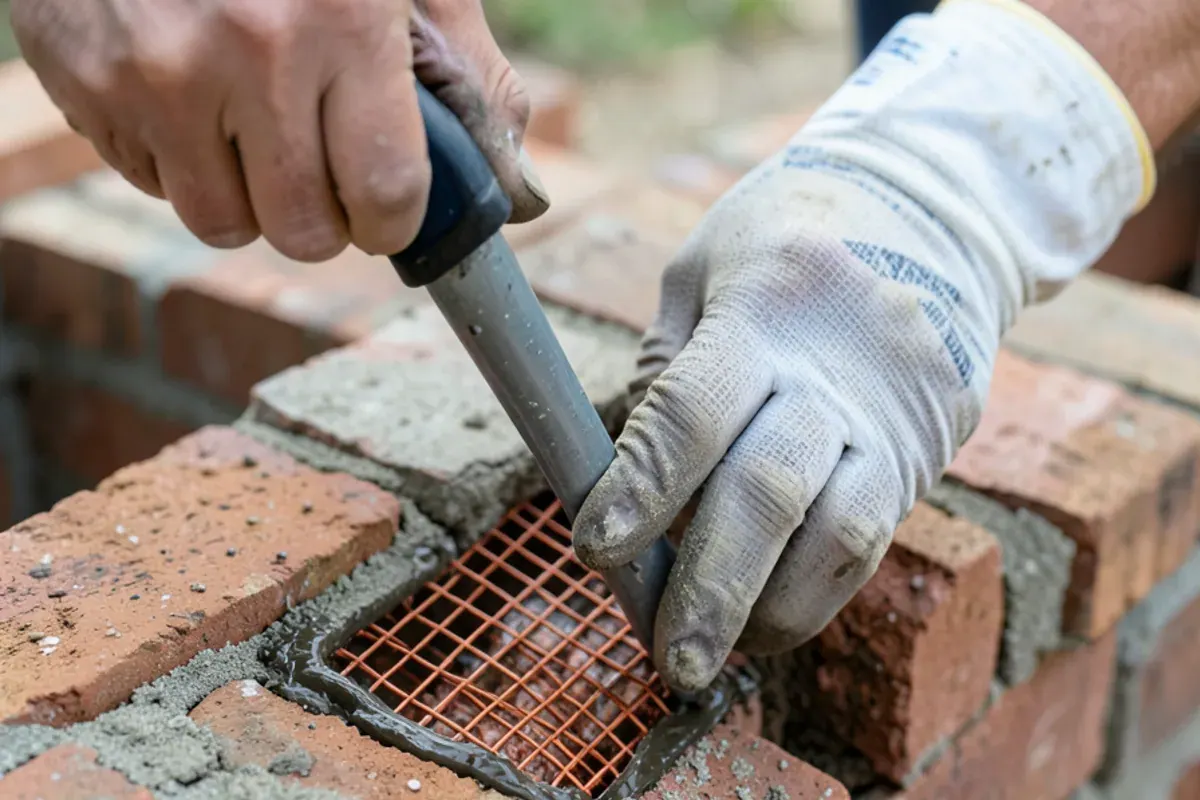
When you do seal, pick a material a mouse cannot chew. Foam from a can alone does not hold up, since mice gnaw it. Pack stainless or copper mesh into small gaps and cover it with sealant, and use hardware cloth for vents. Mortar patches suit brick and block. Steel wool rusts and gets pulled out.
What materials does the CDC recommend?
The CDC says to fill small holes with steel wool and hold it in place with caulk or spray foam. For larger holes it lists lath screen or metal, cement, hardware cloth and metal sheeting. Mesh openings wider than a quarter inch let mice straight through.
Larger or higher jobs are where help makes sense, particularly at rooflines and where a pipe run crosses a tight crawlspace. That is the work described on our rodent proofing page.
What we tell customers about finding the hole
The first mistake we hear about is looking only where the mice were seen. A droppings pile under the sink tells you where they ate, not where they came in. Work from the evidence outward until you reach the outside wall.
The second is stopping after one gap. Houses with one entry usually have four. If you find a hole behind the dryer vent, assume the garage door and the pipe at the water heater also need a look.
Here is where the do-it-yourself job stops paying off. Anything past the first story, including soffits, gable vents and rooflines, is slow, risky work for a person without the right ladder. A gap behind a finished wall or under a slab also needs a trade. We would rather tell you that on the phone than watch you spend a weekend on it.
You may not need a call at all. If you walked the house and found one torn dryer vent screen, no droppings and no noises, replace the screen and watch for a month. A single cracked seal does not need a service visit. Call when the noises continue after the obvious holes are closed, or when droppings keep appearing.
We walk a house the way this article describes, at ground level and then up, and we tell you what we find even when it is a repair for someone else, like a mason or a door company. If you would rather not climb a ladder, call us and we will look. Trapping, sealing and sanitation work as a set, which is why our mouse control visits cover all three.
Related questions
Can mice really get through a hole that small?
Yes. A mouse has a flexible rib cage and a skull no wider than a quarter inch, and if its head fits, the body follows. That is why a gap you can barely slide a pencil into still counts as an entry. Look for any gap wider than a pencil lead around pipes and doors.
Do mice leave once they have nested in my walls?
Not on their own. A wall cavity gives mice shelter, warmth and a short trip to food, so they tend to stay until something changes. Sealing outside gaps without removing the mice just traps them in, so trapping comes first and sealing follows once activity has stopped.
Should I use steel wool or foam to plug mouse holes?
Neither works well alone. Steel wool rusts in damp spots and can be dragged out, and foam is soft enough to chew. Packing metal mesh into the gap and sealing over it holds longer, and hardware cloth suits vents and larger openings. Pick materials by the size and location of each hole.
How long should I wait to seal after the scratching stops?
Wait until the traps have stayed empty and no fresh droppings show up, with a clean flour line to confirm it. We tell customers to treat quiet nights as a hint, not proof, since mice can go silent for a few days. Sealing too early traps animals inside the wall, where they gnaw toward food and water.
Does Columbus require me to seal mouse holes?
Columbus Public Health points to Columbus Health Code §221.03, which expects dwellings to be kept free of rodents and says openings of half an inch or more within 48 inches of the ground should be sealed. For a building with two or more units, the owner is responsible for eliminating pests. Mice fit through much smaller gaps, so treat the code as a minimum.
A careful walk around the outside of your house will find most entry points, and a flashlight at dusk makes the job easier. If you would like a second set of eyes, read about our rodent control in Columbus or call (209) 563-1650. We cover older neighborhoods like Bexley, where settled foundations tend to hide the gaps, and homes across Columbus. If you are still sorting out what you heard, our guide to telling a mouse from a rat comes first.
Sources
- Columbus Public Health, Columbus Health Code §221.03 (dwellings kept rodent-free; openings of half an inch or more within 48 inches of ground level)
- U.S. Centers for Disease Control and Prevention, Rodents
- U.S. Centers for Disease Control and Prevention, How to Seal Up to Prevent Rodents
- U.S. EPA, Identify and Prevent Rodent Infestations
Questions about this? Call the shop.
Tell us what you are seeing and we will tell you what happens next.
- Serving Columbus since 1990
- 4.5★ from 55 Google reviews
- Owner-run, based on Dunning Rd
- One-time or recurring service
Boydes Exterminating Co, 1967 Dunning Rd, Columbus, OH 43219