
Boydes Exterminating Co
Termite Treatment in Columbus, OH
Termite treatment in Columbus, OH stops subterranean termites from feeding on your house by cutting off their path to the wood or removing the colony behind them. Boydes Exterminating Co will look at the structure, explain the options, such as baiting or liquid treatment, and give you the price before any work is booked.
- Serving Columbus since 1990
- 4.5★ from 55 Google reviews
- Owner-run, based on Dunning Rd
- One-time or recurring service
Termites are slow and quiet, which is what makes them expensive. By the time most people notice, the colony has been eating for months or years. Here is how to confirm what you have, how treatment works and what to ask any company you are considering. Our overview of pest control in Columbus covers the rest of what we do.
Do termites really live in the Columbus area?
Yes. Subterranean termites are native to Ohio and live in soil across the Columbus region. Orkin ranked Columbus No. 50 on its 2025 list of termite cities, so the pressure here is real even if it is lower than in the Deep South.
A colony lives underground and builds mud tubes to reach wood above the soil. Anything that gives them a path helps: a crack in a slab or block foundation, wood touching the ground, a porch post set in dirt, or a damp crawl space. Older Columbus homes have plenty of these, and finished basements can hide them completely.
What are the signs of termites in an Ohio home?
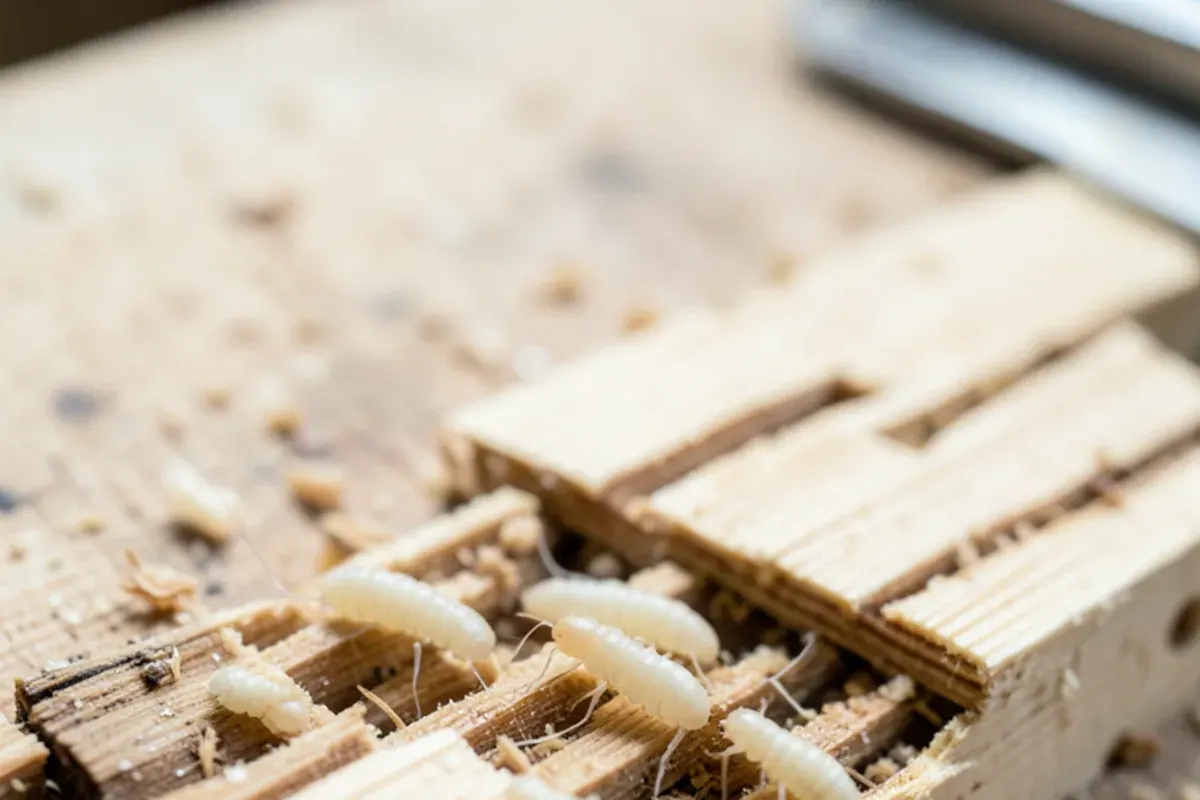
Termites rarely show themselves. Look instead for the evidence they leave:
- Pencil-width mud tubes on foundation walls, piers or sill plates
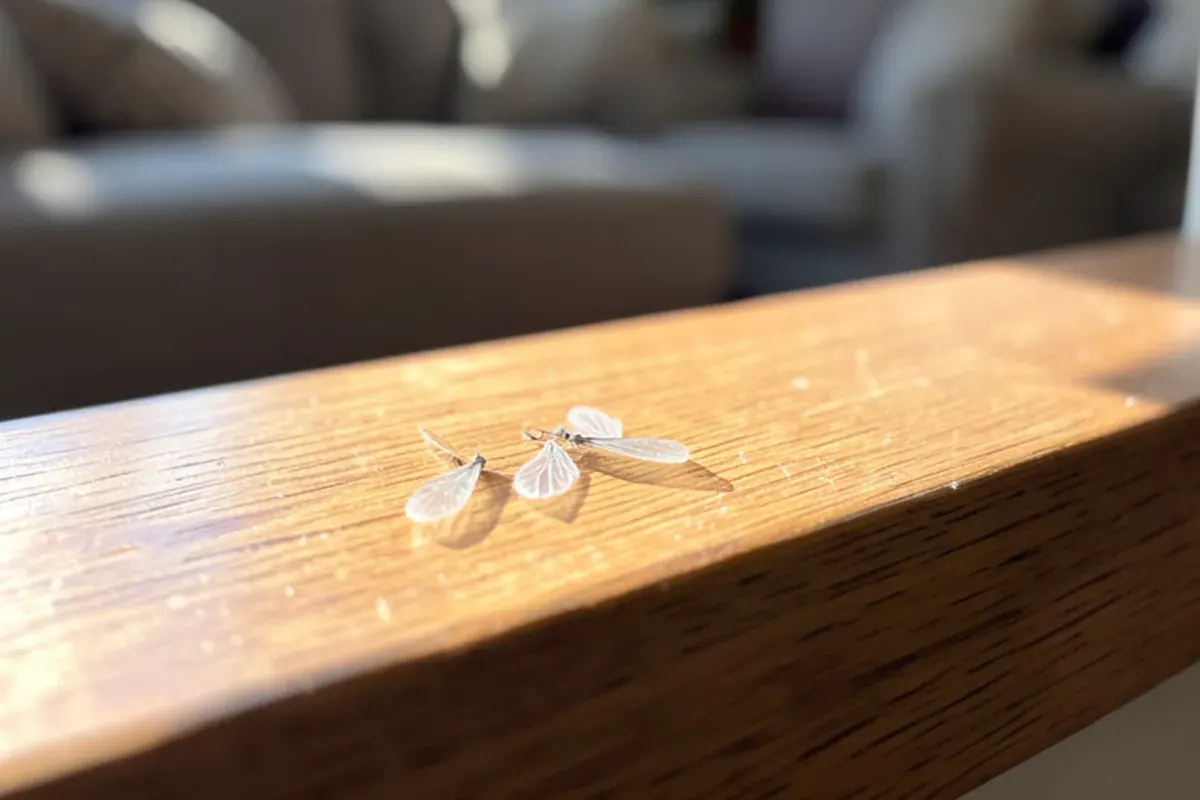
- Swarmers, which are winged termites that appear indoors in spring, or piles of discarded wings on sills and in spider webs
- Wood that sounds hollow when tapped, or a floor or baseboard that feels soft
- Paint that bubbles or blisters over wood with no obvious water source
- Doors and windows that start sticking without a seasonal reason
Photograph what you see, leave it undisturbed and call. Scraping off mud tubes with a vacuum or a spray can scatter the colony and complicate the diagnosis.
Found a mud tube on the foundation?
Leave it alone, take a photo and call. A look at the wall tells us a lot before we ever open a toolbox.
- Serving Columbus since 1990
- 4.5★ from 55 Google reviews
- Owner-run, based on Dunning Rd
- One-time or recurring service
Prefer to write it down?
Calling is fastest. The form comes to the same desk, and we call you back during business hours.
Call (209) 563-1650Termite baiting vs liquid treatment: which fits a Columbus house?
Both methods work. The right one depends on the foundation, the soil, how far the termites have spread and what you can live with during treatment. We talk through these with you:
| Method | How it works | Fits best when | Trade-offs |
|---|---|---|---|
| Liquid soil treatment | Product is applied to the soil along the foundation, often by trenching and drilling, to form a treated zone termites must cross | The structure is accessible and soil can be treated all around | Needs digging, drilling through slabs or porches in some cases, and the label sets the application rates |
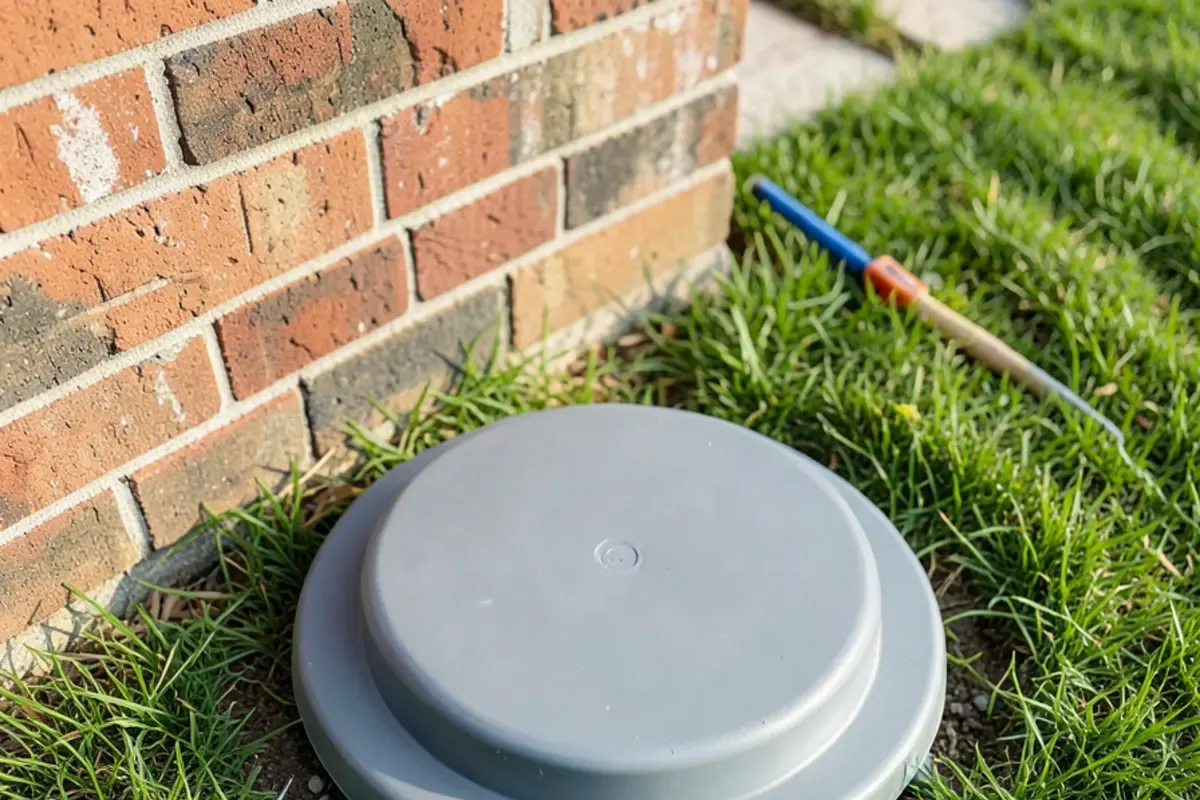
| Bait stations | Stations placed around the house are checked and refilled, and termites carry the bait back to the colony | You want less disturbance to landscaping, or the foundation is hard to treat with liquid | Works slowly over months and needs repeated monitoring visits |
| Targeted wood treatment | Product is applied or injected into infested wood and nearby voids | Activity is limited, or it supports a soil or bait program | Does not stop a colony in the soil by itself |
A common answer is a mix of methods. We would rather match the method to your house than sell you whichever one we use most.
What does a termite treatment visit look like, step by step?
- We confirm what you haveTermites, carpenter ants and wood borers need different fixes. We inspect first, so the treatment matches the pest.
- We find where they enterMud tubes, foundation cracks, utility penetrations, porches and areas where wood meets soil all get checked.
- We explain the plan and the priceYou hear the method, the number of visits and the cost before anything is scheduled.
- We ask about your householdPets, children, allergies, wells and fish tanks affect the plan. Products are applied per label directions, and you get the re-entry time.
- We treat and set the follow-upLiquid work is done in a visit or two. Baiting comes with monitoring visits, which we schedule with you.
How long until termites stop, and what about the damage?
Liquid treatment can start cutting the colony off from the structure soon after application, though live termites in the wood may linger for a short time. Bait programs take longer, often months, because the bait has to be found, eaten and carried back to the colony.
Treatment stops the feeding. It does not repair the damage. Weakened joists, sill plates and subfloor often need a carpenter. Ask your insurer too, since policies commonly handle termite damage in ways that surprise people. Our post on homeowners insurance and pest damage in Ohio explains what to check.
How long does a termite treatment last in Ohio?
National sources disagree on the numbers. Liquid soil treatments are commonly described as lasting around five years, and bait systems depend on someone servicing the stations. Product, termite pressure and your foundation all change the answer. Ask any company for the written terms: how long the method is expected to hold, whether renewal is required, and what each inspection covers.
How is termite treatment priced in Columbus?
We do not quote a number sight unseen. Pricing depends on the type and extent of the infestation and on a handful of details we can only see on site:
- Linear feet of foundation, and how much is slab, block or crawl space
- Whether decks, porches or attached garages need treatment too
- The method you choose, and how many monitoring visits it requires
- Access, such as finished basement walls or concrete that must be drilled
- How much follow-up is part of the plan
Reviewers describe our pricing as fair with no surprise charges, and we explain it before work starts so you can compare it against anyone else's.
How can you check a termite company in Ohio?
Applying pesticides for hire in Ohio falls under the Ohio Department of Agriculture. ODA requires a Pesticide Business License, at least one licensed commercial applicator, and liability insurance to apply pesticides for hire or to solicit that work. Termite treatment is a pesticide application, so the rule applies to it.
ODA keeps a public lookup, linked in the sources below, where you can search any company by name. Do it for every quote you collect. Ask for the treatment method, the product, the follow-up schedule and what is written down, then compare.
How to keep termites from coming back
- Keep soil and mulch several inches below siding and sills, and clear a gap between wood and dirt
- Point downspouts and sump discharge away from the foundation
- Fix leaks and condensation in crawl spaces and basements, and use a dehumidifier if the space stays damp
- Do not stack firewood or lumber against the house
- Book an annual termite inspection so a new entry point is caught early
If you want regular checks built in, ask about recurring pest control plans.
Termiticide label rules in Ohio: wells, drains and what to ask before trenching
A termiticide label is the legal instruction for that product, and applying it any other way breaks federal pesticide law. Liquid soil treatments can be barred or limited where a well, cistern or foundation drain sits under or near the house, according to NC State Extension, and Ohio adds its own rules on top.
For hire work, Ohio requires an ODA Pesticide Business License. ODA's public search shows who holds one. Tell every company about wells, cisterns, sump lines and drains before it quotes. Then ask which product it will use, where it will drill or trench, and what happens if the label rules out liquid at your house. Baiting is the usual alternative.
Why Boydes Exterminating for this work
We talk through baiting, liquid and targeted wood treatment, so the choice follows your foundation and not our habits.
You hear the cost and what drives it before work starts. Customers mention fair pricing with no surprise charges, and payment can be cash, check, debit or credit.
We ask about allergies, children and pets each time we visit and plan around the answers.
The business dates to 1990 and is run by its owner, Robert J. Boyde Jr., from 1967 Dunning Rd on the east side of Columbus.
Google shows 4.5 stars from 55 reviews, and reviewers keep mentioning honest, straight answers.
Where we do this work
- Columbus Median home built 1980, so half the housing is older and plenty of aging foundations need a close look.
- Bexley Median home built 1944 with Alum Creek on the east side, so old foundations and damp soil both matter.
- Grandview Heights A city of about 1.3 square miles with a median home from 1954, mostly mid-century foundations.
- Upper Arlington A 1959 median build year means mid-century porches, steps and foundations where wood meets soil.
- Worthington The median home dates to 1963 and the Olentangy River runs along the city, so soil moisture matters.
- Gahanna Big Walnut Creek runs through the city and the median home dates to 1985, so creekside soil is worth a look.
- Westerville The historic Uptown district and a 1982 median home make a mix of older and mid-age wood framing.
- Hilliard Sits between the Scioto River and Big Darby Creek, where soil moisture is part of the termite picture.
- Lincoln Village A planned community begun in 1955 with a median home from 1962, so foundations are over 60 years old.
- Pickerington Median home built 2002, so newer houses still get checked where wood, mulch and soil meet.
We handle termite concerns in Columbus and the suburbs around it, including Gahanna, Westerville, Grove City and Pickerington. See all of our service areas.
Termite Treatment: common questions
Do termites really live in the Columbus area?
Yes. Subterranean termites are native to Ohio and live in soil across the Columbus region. Orkin ranked Columbus No. 50 on its 2025 list of termite cities. They reach houses through mud tubes, foundation cracks and wood in contact with soil, and they often feed unnoticed for a long time before anyone sees signs.
What are the signs of termites in an Ohio home?
Look for mud tubes on foundation walls, swarmers or piles of discarded wings in spring, hollow-sounding wood, soft baseboards, blistering paint and sticking doors. Do not disturb the tubes. Take photos and call us, or request a termite inspection. Carpenter ants and moisture damage look similar, so an inspection confirms what you actually have.
How is termite treatment priced?
It depends on the extent of the infestation, the length of foundation, the method and how much follow-up is involved. We quote each job after we see it and explain the price before work starts. Third-party figures vary widely, so treat any online number as a rough guide and compare written quotes instead.
Is baiting better than liquid treatment?
Neither is better in every case. Liquid treatment creates a treated zone around the foundation and can act sooner, but it needs access for trenching or drilling. Baiting disturbs the property less and targets the colony, but it takes months and needs monitoring visits. The right choice depends on your foundation and what you can live with.
Do I need a termite treatment if I am buying a house?
Only if the inspection finds active termites or conditions that call for it. Start with a termite inspection, read the report, then decide. If activity is found, treatment is usually negotiated with the seller before closing. We can explain the findings and what the options would cost.
How do I confirm a company can apply termite treatment in Ohio?
Search the company in the Ohio Department of Agriculture's public pest business lookup. ODA requires a Pesticide Business License, a licensed commercial applicator and liability insurance to apply pesticides for hire. Check every company you are considering and ask them to put the method and follow-up plan in writing.
Sources
- Ohio Department of Agriculture, Pesticide Business Search (public lookup)
- Orkin, Top 50 Termite Cities, 2025 list
What customers say
4.5 stars from 55 Google reviews, checked November 2026. Read more reviews · Leave a review
Mr. Boyde’s company is responsive and honest. They answer phone calls, give estimates, and come to your home quickly. Pricing is true to market price with no surprise charges.
Great service. Super dependable. Calls right back. This time he was able to come out same day.
Excellent service, very easy to schedule appointments. No inspection needed to get the job done sooner and very forward about the cost.
Talk through your termite options
Call and tell us what you saw. We will explain which method might fit and how pricing works.
- Serving Columbus since 1990
- 4.5★ from 55 Google reviews
- Owner-run, based on Dunning Rd
- One-time or recurring service
Boydes Exterminating Co, 1967 Dunning Rd, Columbus, OH 43219