
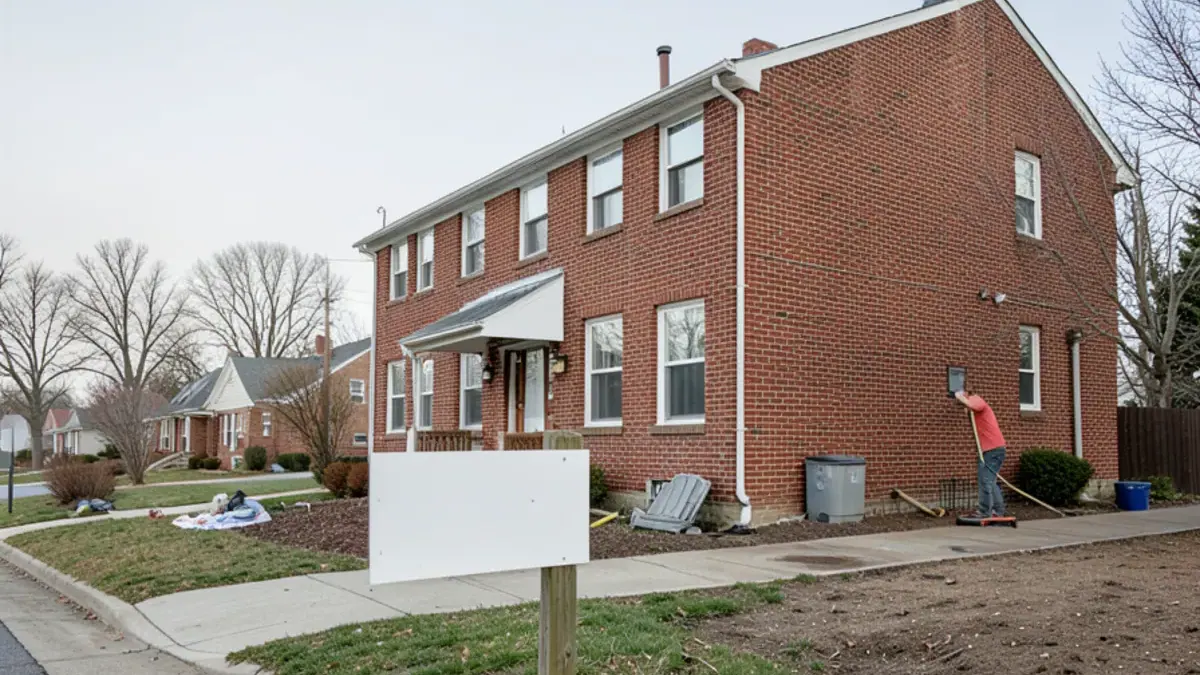
Pest Control Services
Termites in Ohio: What Columbus Home Buyers Should Check
A termite inspection is worth ordering on any central Ohio home you plan to buy, and the right time is during your contract's inspection window, before closing. Termites do reach this part of the state, and a home buyer who finds out afterward pays for it alone.
- Serving Columbus since 1990
- 4.5★ from 55 Google reviews
- Owner-run, based on Dunning Rd
- One-time or recurring service
The point of the inspection is simple. It tells you whether wood-destroying insects are active, whether past damage exists and what it might cost to deal with, while you still have room to negotiate.
Are termites really a problem in Columbus, Ohio?
Orkin placed Columbus at No. 50 on its 2025 list of termite cities. That is the bottom of the list, but it still means termites are a real concern here. The main wood-eaters in Ohio are subterranean termites. They live in the soil, reach a house through foundation cracks, mud tubes and wood that touches the ground, and can feed unseen for years.
Carpenter ants, carpenter bees, wood-boring beetles and fungal decay also damage wood, and a good report looks at all of them. That is why we call the service a timber-pest inspection, not a termite check alone.
Buying a home soon?
Tell us the address area and your inspection deadline. We will tell you when we can fit in the visit.
- Serving Columbus since 1990
- 4.5★ from 55 Google reviews
- Owner-run, based on Dunning Rd
- One-time or recurring service
What does a home buyer's termite inspection cover?
The inspector looks for evidence of wood-destroying insects and the conditions that invite them. The goal is a written record you can hand to your agent or lender.
- Foundation and sill plates: mud tubes, cracks, wood in contact with soil.
- Crawl space and basement: moisture, rot, damaged joists, stored wood and cardboard.
- Exterior wood: porch posts, decks, siding, fascia, door and window frames.
- Attic and garage: signs of carpenter ants, sawdust piles and old wings.
- Past treatment: stickers, drill holes in slabs or any sign the house was treated before.
The report is a snapshot of what could be seen on the day. It cannot see inside finished walls or under stored belongings, so clear access before the visit helps. Written documentation after an inspection is how you compare one house to another.
Who is allowed to do a wood-destroying insect inspection in Ohio?
For wood-destroying insect inspections tied to a home sale, the Ohio Department of Agriculture (ODA) requires a Pesticide Business License, at least one licensed commercial applicator and liability insurance. The same rule covers applying pesticides for hire and soliciting that work. That rule applies to any company, so check before you hire one.
The ODA lookup tool is linked in the sources below. Search the company name and read the result. You can also ask the company for proof of insurance. Doing this check before you book is quicker than discovering a problem with the paperwork at the closing table. Whoever you choose, keep a copy of the lookup result with the report.
What is the NPMA-33 form, and what should a buyer read on it?
Ohio Administrative Code rule 901:5-11-13 requires a complete record of each real estate wood-destroying insect inspection on form NPMA-33, signed by the applicator. Ohio State University Extension's Pesticide Safety Education Program adds that these inspectors hold a Category 12 commercial applicator license and complete OSU Extension training.
On the form, read three things. First, the findings: live insects, evidence of past activity or visible damage. Second, any signs of previous treatment. Third, the areas the inspector could not reach, since those are the gaps in the picture. Ask about each one before you close.
Which central Ohio homes need the closest look?
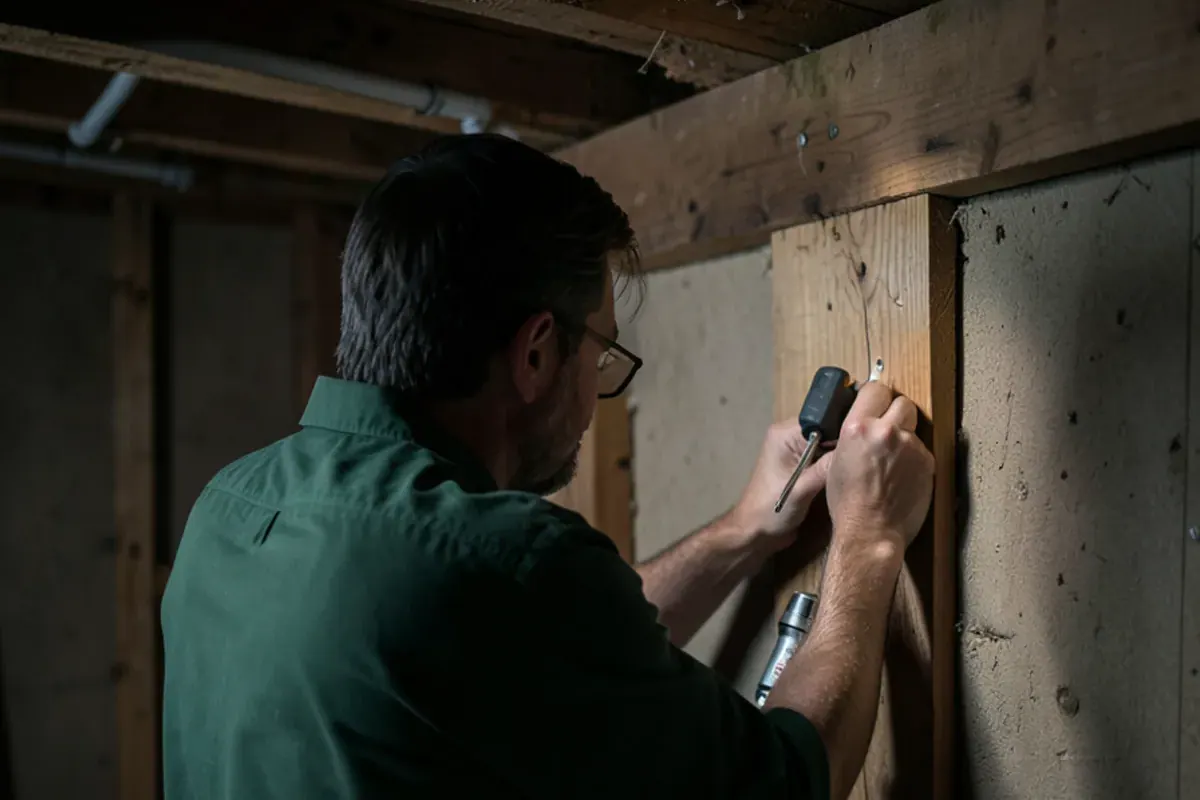
Age and moisture matter most. Columbus has roughly 188,000 homes built before 1978, about 45% of the city's units (Census ACS), and the city's median home was built in 1980. Older houses have had more years of settling, more wood near the soil and more chances for a leak. That link is our read from the trade, not a published finding.
Water is the other clue. In Gahanna, where the median home dates to 1985, Big Walnut Creek and its tributaries run through the city, so we look hard at grading, downspouts and basement dampness on lots near the water. The same goes for Franklinton, which sits behind a floodwall of about 7 miles and was laid out in 1797. Wet soil and old foundations are the combination to read closely.
Newer slab homes are not exempt. Termites reach a slab house through expansion joints and utility penetrations, so the report on a 1990s house matters as much as the one on an older brick house.
When should you order the inspection?
As early as your inspection contingency allows. Most purchase contracts give you a short window to inspect and respond, and termite inspectors can book up. Ask your agent for the exact deadline and whether your contract or loan calls for a wood-destroying insect report. Some do, and some leave it to you.
- Read your contract for the inspection deadline.
- Ask your lender whether a report is required.
- Book the inspector the same week you get the accepted offer.
- Ask the seller for access to the crawl space, attic and garage.
- Attend the inspection if you can, so the inspector can show you what they find.
What if the inspection finds termites or damage?
Do not panic, and do not walk away before you understand it. There is a difference between active termites, old inactive damage and conditions that could invite trouble later. The report should say which you have.
If there is activity, ask the seller to treat it before closing, or negotiate a credit so you can arrange termite treatment after you take possession. If there is old damage, a contractor or structural engineer can judge what needs repair. Homeowners insurance usually will not pay for either, so the negotiation is your leverage. Our post on whether insurance covers pest damage explains why.
Three kinds of finding come up, and each calls for a different question:
| Finding | What it usually means | What to ask |
|---|---|---|
| Active termites or live insects | Feeding is under way now | Who treats, when, and is the work in writing? |
| Old, inactive damage | Past feeding, no live activity seen | Who judges the repair, and what does it cost? |
| Conducive conditions | Wet wood, soil contact, a leaking gutter | Can the seller fix the cause before closing? |
What we tell buyers before they sign
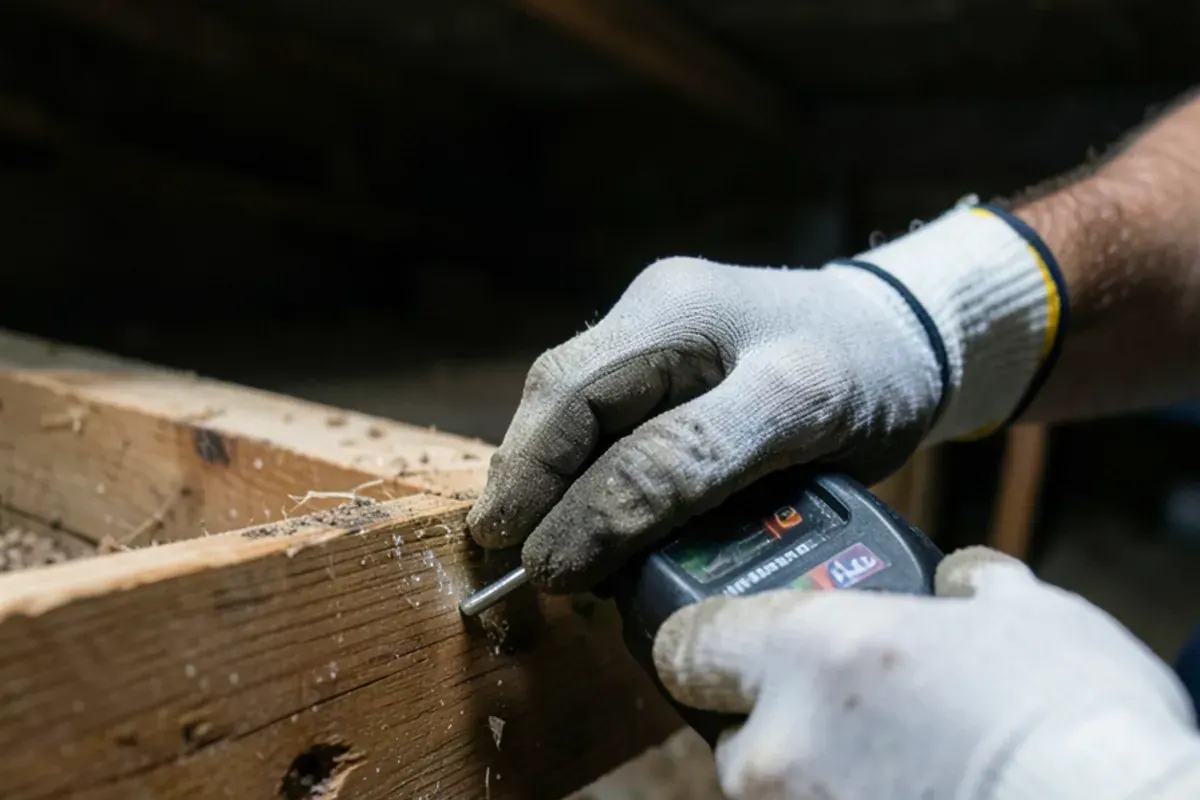
We do pre-purchase checks for termites, borers and wood decay, and the advice is the same for every buyer. Treat the inspection as a negotiating tool, not a formality. A clean report is good news, and a report with findings gives you a number to discuss.
Moisture matters as much as insects. Wet wood in a crawl space draws termites and carpenter ants, and fixing a downspout or grading can lower the risk more than any product. Ask us what we saw and where, because the notes are for you.
See our termite inspection page for how a visit works. If you are buying near Gahanna or elsewhere in Columbus, call before the inspection window closes.
Know what a report cannot do. It records one day, so a clean result does not rule out termites arriving next spring. Termite swarmers show up in spring, and a swarm inside the house after you move in is worth a call. Keep the report, check the foundation line each season and fix drainage problems before they feed the next problem.
Calling us is not always necessary. If the lender already requires a report and a company with a valid ODA lookup result has done it, a second inspection often repeats the first. We are most useful when you want a second opinion on a finding, a close look at borers or decay, or advice on what to do before the next purchase.
Related questions
How much does a termite inspection for a home sale cost in Ohio?
It varies with the size of the house, how many structures are involved and how hard they are to reach. We do not post a price because we explain the cost before the work starts, once we know the property. Ask each company what the fee includes, such as a written report and any follow-up.
Does a termite inspection find damage inside walls?
Only partly. An inspector sees visible evidence and probes accessible wood, but finished walls and covered areas hide damage. The report is a snapshot of what was reachable that day. If something looks suspicious, ask the inspector what further opening or testing would be reasonable before you close on the house.
Can the seller pay for termite treatment?
Often, yes, if you negotiate it. Findings in the report give you a basis to ask the seller to treat the home, repair damage or lower the price. Your agent knows what your contract allows. Get the treatment details in writing, including what was done and who did it.
Is a termite report required to buy a house in Columbus?
Not by law. Your purchase contract or your lender decides whether a wood-destroying insect report is required, and some loans call for one. Even when no one asks, a buyer can order one during the inspection window. Read your contract for the deadline, because a report ordered after it expires leaves you with no leverage.
A termite inspection is a small step compared to the size of a home purchase. If you are buying in the area, call (209) 563-1650 to book a look before your window closes. You can also read about pest control in Columbus, the termite inspection service and our coverage of Columbus.
Sources
- Orkin, Top 50 Termite Cities, 2025 list
- Ohio Department of Agriculture, Pesticide Business Search
- Ohio Administrative Code rule 901:5-11-13, recordkeeping for wood-destroying insect inspections for real estate transactions (form NPMA-33)
- Ohio State University Extension, Pesticide Safety Education Program, WDI inspection (Category 12)
- U.S. Census Bureau, American Community Survey 2019-23, median year built and pre-1978 housing
- City of Gahanna and Wikipedia, Big Walnut Creek and Gahanna geography
- Wikipedia, Franklinton, Columbus, Ohio (floodwall and settlement history)
Questions about this? Call the shop.
Tell us what you are seeing and we will tell you what happens next.
- Serving Columbus since 1990
- 4.5★ from 55 Google reviews
- Owner-run, based on Dunning Rd
- One-time or recurring service
Boydes Exterminating Co, 1967 Dunning Rd, Columbus, OH 43219