
Boydes Exterminating Co
Centipede & Millipede Control in Columbus, OH
Centipede control in Columbus, OH, and millipede control with it, starts with moisture and entry points, because both arthropods come inside for damp, dark places and a spray alone does not change that. Boydes Exterminating Co finds how they are getting into your basement, garage or crawl space and treats the cracks, thresholds and edges where they travel.
- Serving Columbus since 1990
- 4.5★ from 55 Google reviews
- Owner-run, based on Dunning Rd
- One-time or recurring service
Millipedes migrate in waves and do little harm. House centipedes are fast, long-legged and startling, and they hunt other bugs. This page belongs to our insect control in Columbus work and covers how to tell them apart and what actually helps.
Why do millipedes come into Ohio homes in summer and fall?
Millipedes live outdoors in damp soil, mulch and leaf litter, where they eat decaying plant material. According to Ohio State University Extension fact sheet HYG-2067A, millipedes usually enter homes in late summer and autumn, often after heavy rain or drought. Rain floods their soil homes, and drought dries them out, so in both cases they go looking for somewhere with moisture and shelter.
The same fact sheet notes that sprays do not prevent entry. That matches what we see on the ground, and it shapes our advice. A treatment can knock down the ones crawling on the foundation, but the lasting fix is to close the entry points and cut down the damp conditions near the house.
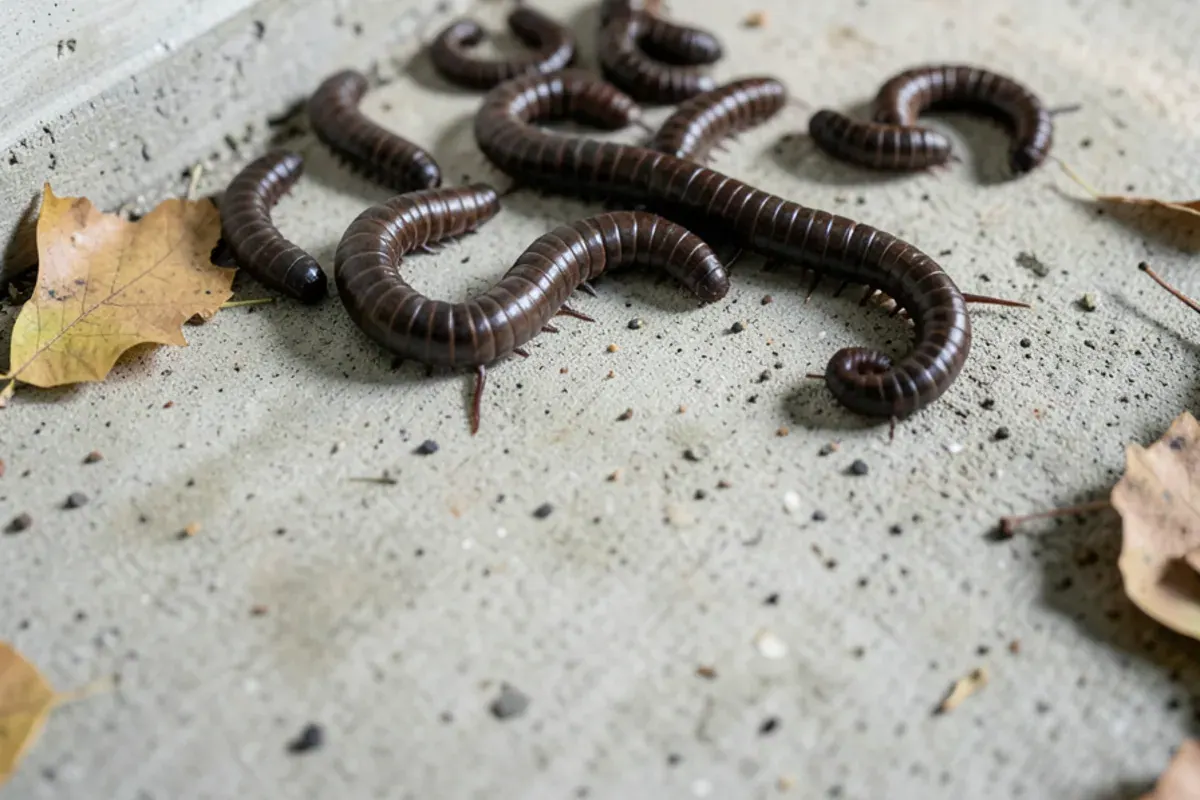
Most millipedes that make it inside die within a day or two, since a dry house does not suit them. They do not bite, and they do not chew on wood, food or fabric. Some species release a fluid that can irritate skin or eyes, so wash your hands after handling them and sweep or vacuum them up.
Centipede or millipede? How to tell them apart
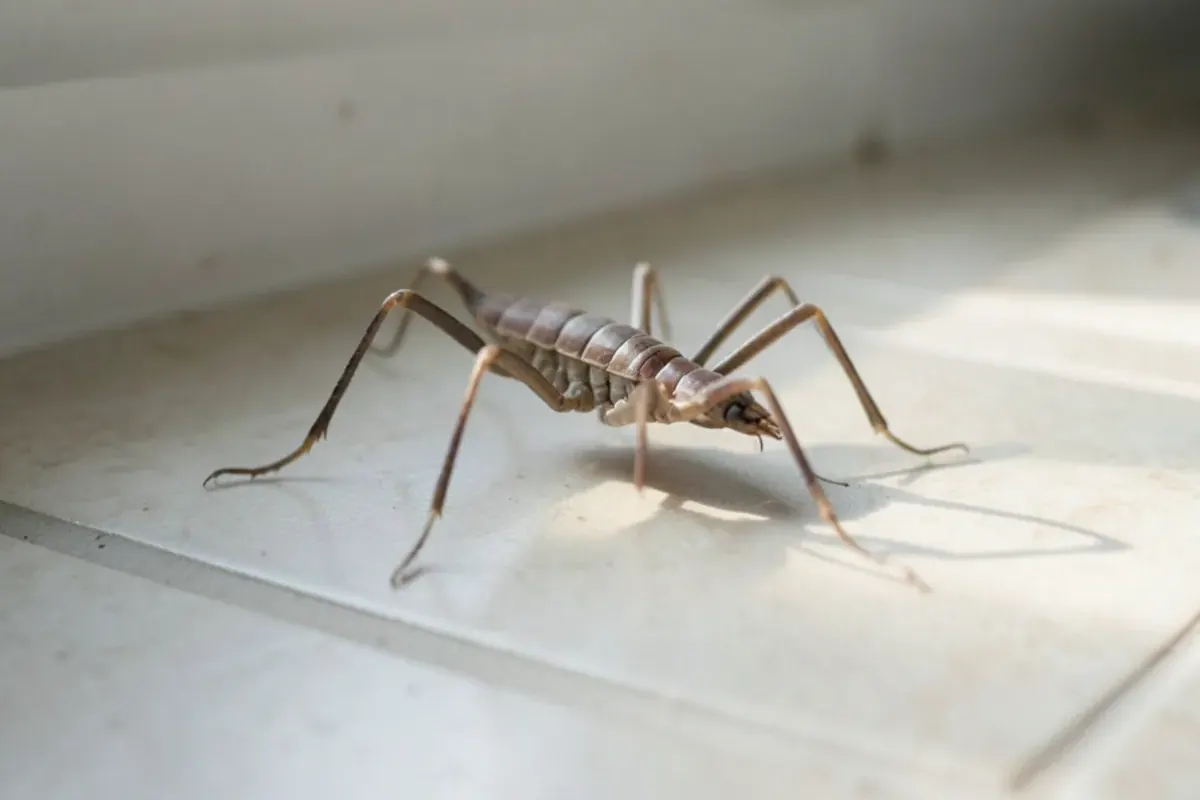
People mix them up because both have lots of legs. The differences are easy to spot once you look:
| Feature | House centipede | Millipede |
|---|---|---|
| Legs | One pair per body segment, very long and thin | Two pairs per segment, short, so the body looks smooth and tube-like |
| Speed | Fast and darting | Slow, often curls into a coil when touched |
| Diet | Hunts spiders, roaches, silverfish and other small insects | Decaying plant material outdoors |
| Where found | Bathrooms, basements, closets, often one at a time | In crowds on foundations, garages and basement floors in fall |
| Risk to people | Can bite if handled, a mild sting at worst | Does not bite, may leave irritating fluid |
If a bathroom centipede seems to keep appearing, it is eating something. That points to another pest in the house, such as silverfish, which are covered on our silverfish control page.
Basement full of crawling things?
Call us with a photo or a bug in a bag. We will tell you which one it is and what keeps it coming.
- Serving Columbus since 1990
- 4.5★ from 55 Google reviews
- Owner-run, based on Dunning Rd
- One-time or recurring service
Prefer to write it down?
Calling is fastest. The form comes to the same desk, and we call you back during business hours.
Call (209) 563-1650Are house centipedes harmful?
Not much. A house centipede can bite, but only if it is trapped against skin, and the bite is usually compared to a mild sting. It does not damage property and does not infest food. Many people tolerate the occasional one because it eats other insects.
The problem is appearance and numbers. One at a time in a damp basement is normal. Several in a month tell you that the room has humidity, hiding places and prey. The answer is to reduce the prey and the damp, then treat the cracks they use to move around.
Will spraying stop millipedes from coming inside?
On its own, no. OSU Extension says sprays do not prevent entry, and we would rather tell you that than sell you a repeat visit that cannot work. What helps is a short list of habits and fixes, with a treatment as a supporting step.
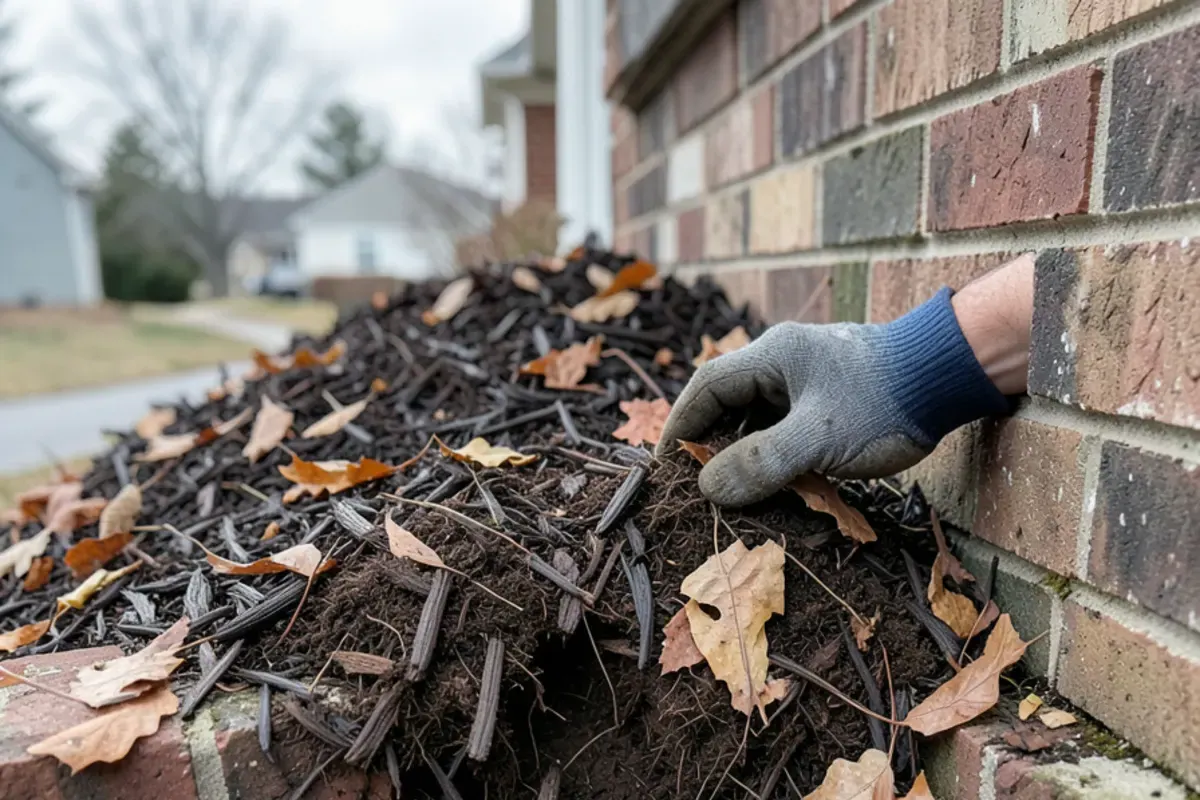
- Pull mulch, leaves and grass clippings back several inches from the foundation
- Replace worn door sweeps, especially on garage and basement doors at ground level
- Seal gaps around utility lines, basement windows and the sill plate with exterior-grade caulk or foam
- Direct downspouts and sump discharge well away from the wall
When we do treat, it is a perimeter treatment, a band of labeled product applied along the foundation and thresholds where millipedes travel. It reduces the number that reach the door during the weeks it holds. It does not replace sealing, and we tell you so.
Bugs in a damp Columbus basement: what is going on?
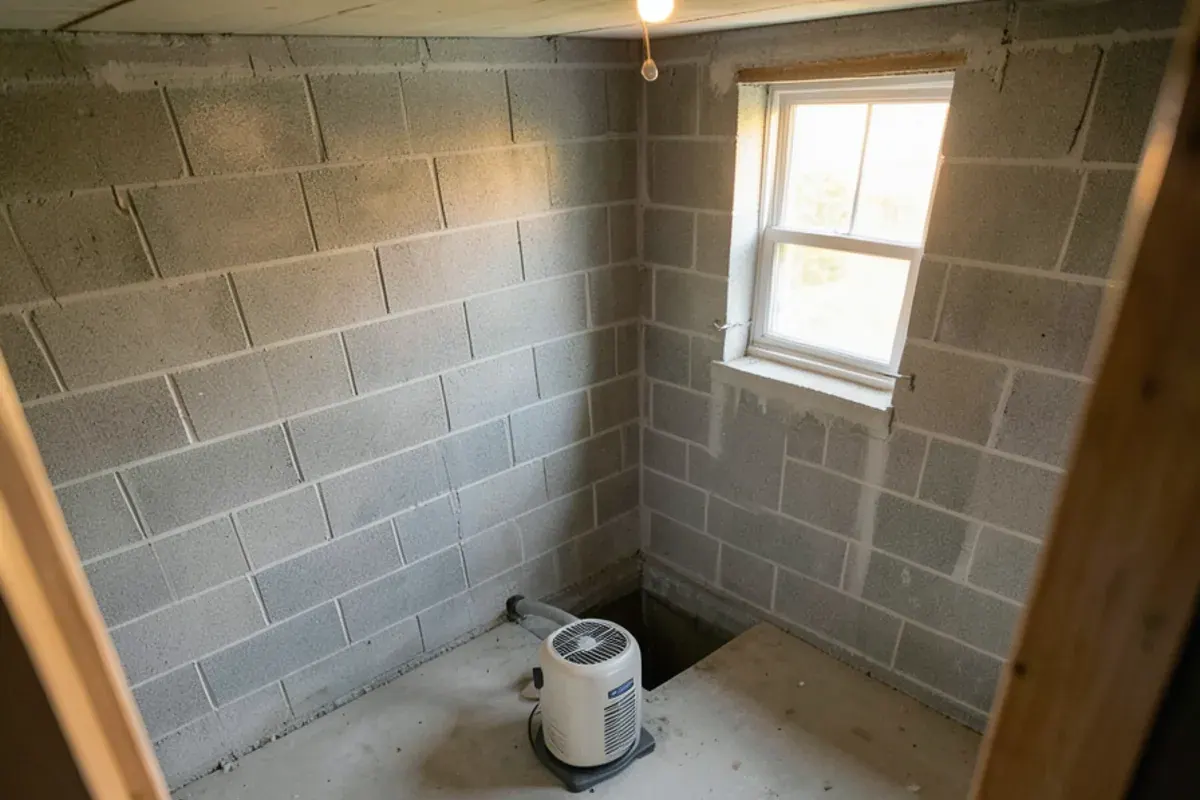
Central Ohio has a lot of clay-heavy soil, which holds water against foundations after a wet spell. Older block and stone basements across Columbus also have cracks, floor drains and window wells that let in both moisture and arthropods. Where the basement stays damp, you can expect centipedes, silverfish, spiders and more.
Lowering the humidity is the quiet fix that makes everything else easier. A dehumidifier running in a closed basement, working gutters, a floor drain with a clean trap and a dry crawl space all take away what these animals want. Fix leaks and standing water, and tell us if you see moisture on the walls.
What does a centipede and millipede visit look like?
- You tell us what you are findingWhich room, how many and what time of year. A bug in a sealed bag or on tape helps us name it.
- We ask about the householdPets, children, allergies and anyone with breathing concerns shape the plan. We ask at every visit.
- We inspect inside and outsideWe check the basement, garage, crawl space and window wells, then the foundation, mulch, grade and downspouts.
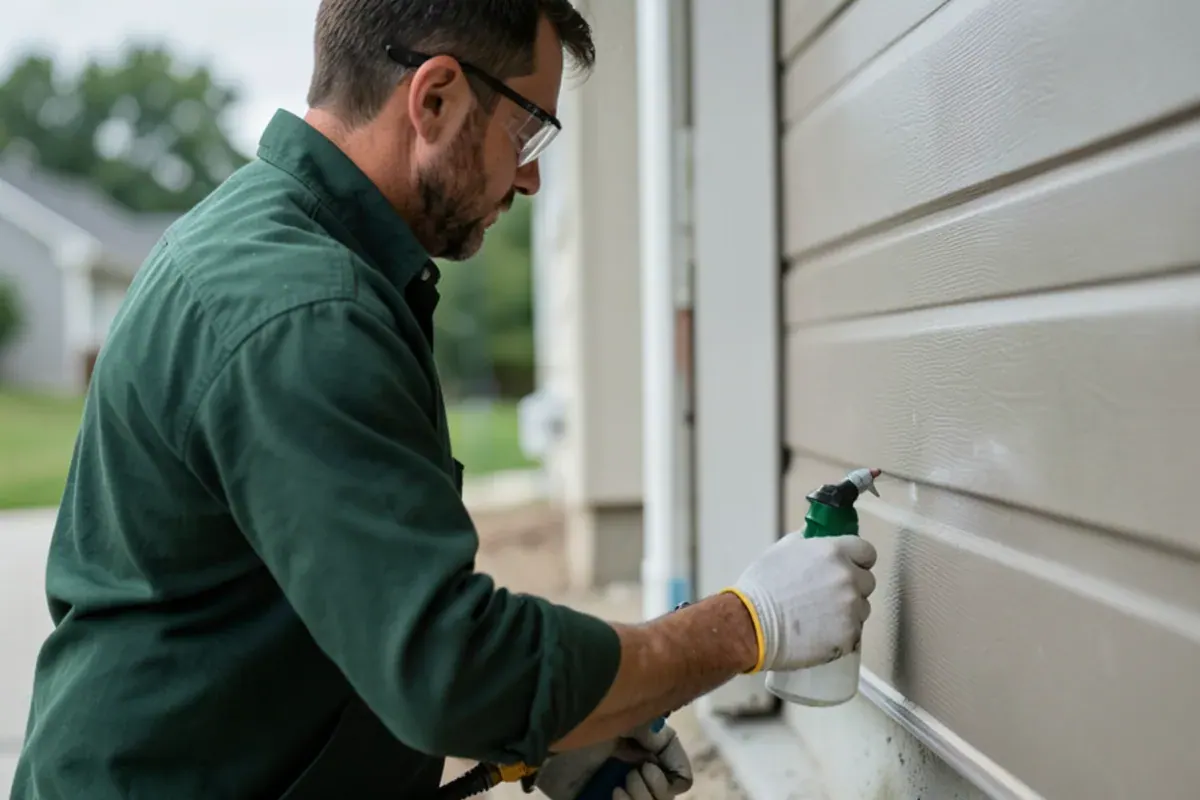
- We treat the cracks and the perimeterCrack and crevice treatment inside, where we put small amounts of labeled product directly into gaps, plus a perimeter band outside. You get the re-entry time from the label.
- We hand you the sealing and moisture listThat is the part that lasts. Follow-ups are scheduled as needed, usually after the next heavy rain or the next season.
What does centipede and millipede control cost?
Pricing depends on the type of pest and the extent of the problem. A few centipedes in a basement bathroom call for a small visit. A fall migration of millipedes onto a large foundation with several doors takes more product and often a second visit. We explain the price before work starts.
The factors that move the quote are the length of foundation, the number of doors and rooms, how damp the building is and how many follow-up visits make sense. Reviewers say our pricing is fair with no surprise charges.
Centipedes in a Columbus rental basement: whose job is it under the Health Code?
Under the Columbus Health Code, the owner of a dwelling with two or more units is responsible for eliminating pests (Columbus Public Health). A damp basement that sends millipedes into a tenant's unit is the owner's problem to fix, and a written notice with dated photos starts that conversation. Section 221.03 also asks that dwellings be kept insect-free.
If you hire a company for the outside treatment, Ohio requires an ODA Pesticide Business License, and ODA's public search lets you check one first. Ask what the label says about hard surfaces. Many exterior labels limit treating driveways and walks where rain can wash product toward a storm drain, so a perimeter band belongs on the foundation and soil edge.
Why Boydes Exterminating for this work
Ohio State University Extension says sprays do not prevent millipede entry, and we plan the visit around that fact.
The lasting fix is drier basements and tighter thresholds. We tell you what to change, in order of impact.
Robert J. Boyde Jr. runs the company that Mr. Robert Boyde established at 1967 Dunning Rd, and the questions you ask go to him.
Visits are biweekly, monthly, bimonthly or as needed, and we can tie a return trip to the next wet spell.
Pay by cash, check, debit or credit. Our 55 Google reviews average 4.5 stars.
Where we do this work
- Columbus About 56% of Columbus homes are rented, and older rental basements hold the moisture these animals want.
- Whitehall Median home built in 1961, with 61% rented and Big Walnut Creek running through the city.
- Bexley Median home built in 1944 with Alum Creek on the east side, so older foundations meet wet ground.
- Grandview Heights Median home built in 1954 on a 1.3 square mile grid of older basements.
- Marble Cliff A 0.28 square mile village with a median home from 1955, some built from quarry stone.
- Lincoln Village A planned community begun in 1955, with a median home from 1962 and 38% of homes rented.
- Valleyview A 0.15 square mile village with a median home from 1950, many with older basements.
- Riverlea Wooded lots beside the Olentangy River and a median home from 1952 mean leaf litter close to walls.
- Minerva Park Homes built around Minerva Lake since 1927, with a median home from 1960.
- Upper Arlington A planned suburb begun in 1913 with a median home from 1959 and mature beds along foundations.
We treat centipedes and millipedes at homes around Columbus, including Grove City, Hilliard, Canal Winchester and Pickerington. Look at all of our service areas for your address.
Centipede & Millipede Control: common questions
Why do millipedes come into Ohio homes in summer and fall?
Ohio State University Extension fact sheet HYG-2067A says millipedes usually enter homes in late summer and autumn, often after heavy rain or drought. Rain floods their soil homes and drought dries them out, so they head for moisture and shelter. Most die indoors within days, and they do not bite or damage the house.
Are house centipedes harmful?
Not seriously. A house centipede can bite if trapped against skin, usually a mild sting, and it does not damage property or contaminate food. It hunts other insects, so seeing several suggests prey in the house. Reduce the humidity and the bugs it eats, and seal the cracks it uses to travel.
Will spraying stop millipedes from coming inside?
Not by itself. OSU Extension says sprays do not prevent entry. A perimeter treatment can reduce the number reaching the door for a few weeks, but sealing gaps, replacing door sweeps and pulling mulch back from the foundation do more. We pair any treatment with a sealing list for that reason.
How do I get rid of centipedes in my basement?
Lower the humidity with a dehumidifier, fix leaks and clear clutter and cardboard where they hide. Seal cracks and gaps in the walls and floor drains. Then reduce the prey they hunt, such as silverfish and spiders. We add a crack and crevice treatment in the places they travel if the problem continues.
Do millipedes damage my home or bite?
No. Millipedes do not bite, do not eat wood or food, and do not breed indoors. They can leave an irritating fluid if crushed or handled, so wash your hands afterward. Sweep or vacuum them up and empty the bag outside. The pile of dead ones in a basement corner is a nuisance, not a danger.
Why do I see so many bugs in my damp basement?
A damp basement offers moisture, dark corners and cracks, which suits centipedes, millipedes, silverfish and spiders. Clay-heavy soil and older block walls across the Columbus area hold water against foundations. Run a dehumidifier, fix drainage and seal entry points. If the numbers stay high, we inspect and treat the cracks.
Sources
What customers say
4.5 stars from 55 Google reviews, checked November 2026. Read more reviews · Leave a review
Mr. Boyde’s company is responsive and honest. They answer phone calls, give estimates, and come to your home quickly. Pricing is true to market price with no surprise charges.
Great service. Super dependable. Calls right back. This time he was able to come out same day.
Excellent service, very easy to schedule appointments. No inspection needed to get the job done sooner and very forward about the cost.
Dry out the welcome mat
Tell us which rooms and doors are involved, and we will explain the treatment, the sealing list and the price.
- Serving Columbus since 1990
- 4.5★ from 55 Google reviews
- Owner-run, based on Dunning Rd
- One-time or recurring service
Boydes Exterminating Co, 1967 Dunning Rd, Columbus, OH 43219