
Insect Control
Why Ants Keep Coming Back After You Spray
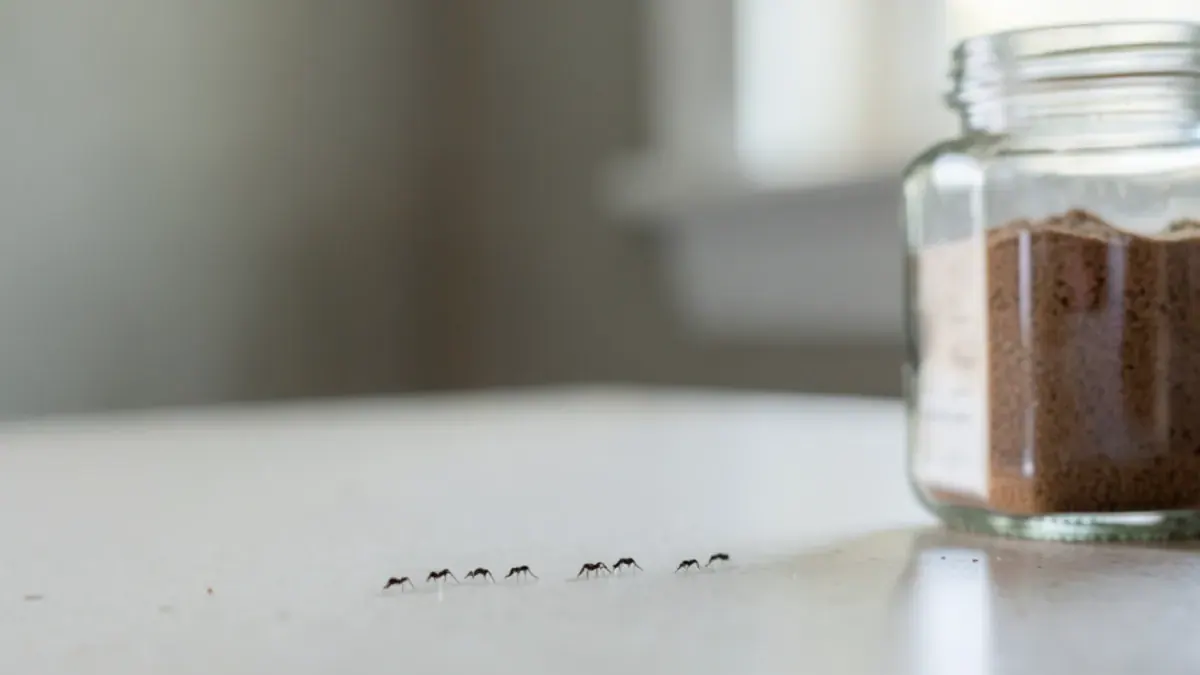
Ants keep coming back after you spray because the spray only kills the workers it touches. The colony, with its queen and young, sits in a nest you cannot see, and it sends out replacements within days, often on a new route.
- Serving Columbus since 1990
- 4.5★ from 55 Google reviews
- Owner-run, based on Dunning Rd
- One-time or recurring service
Some sprays make it worse by scattering the colony into several smaller ones. This post explains why ants return every spring, what bait does differently, and what to do and avoid while you wait for a real fix.
Why do ants come back after you spray?
The ants on your counter are foragers, a small part of a much larger group. A typical colony keeps most of its ants, plus the queen and the brood, in a nest outside or inside a wall. Kill the foragers and the nest sends out new ones to find the food source again.
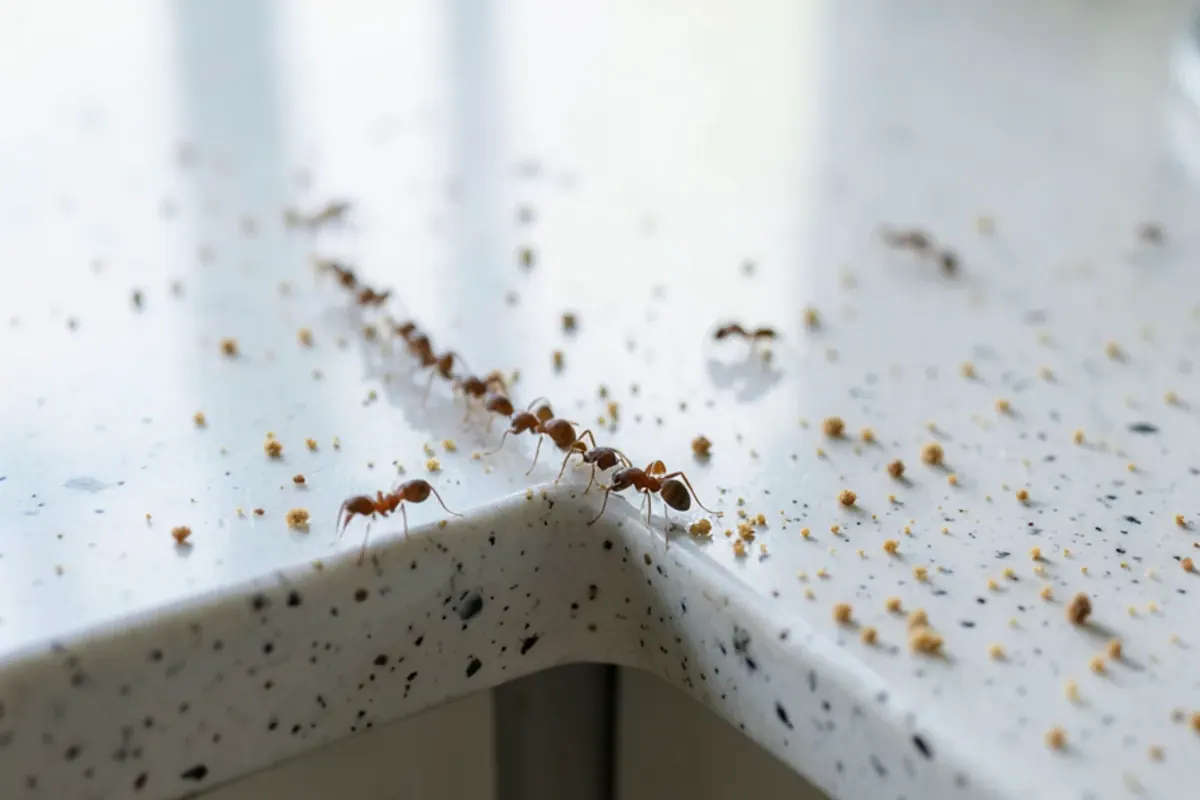
A contact spray also leaves a repellent film on the surface. Foragers avoid it, change their route and find a new way in. You see fewer ants for a few days, then a new trail appears a few feet away, which feels like the spray worked and then failed.
Scent trails are the other piece. Ants lay a chemical trail from the nest to the food, and spraying does not erase it. Scouts that survive follow the same line back, and the colony reads that as a green light.
How much of the colony do you actually see?
Oregon State University Extension estimates that the ants you can see are 10 percent or less of the nest's population. Kill every one on the counter and you have removed a sliver of the colony. The rest are in the nest, in the wall or under the slab, and they replace the lost foragers as long as food keeps showing up.
Same ants, third month running?
Tell us where the trail starts and what you have tried. We will explain how we would approach the colony before you book.
- Serving Columbus since 1990
- 4.5★ from 55 Google reviews
- Owner-run, based on Dunning Rd
- One-time or recurring service
Can spraying actually make an ant problem bigger?
Sometimes, with certain species. Odorous house ants and pavement ants are two common Ohio kitchen ants, and odorous house ants have several queens and can split into linked subcolonies through budding, according to Utah State University Extension. Pest professionals often see new trails appear after a repellent spray.
Instead of one trail along the baseboard, you get three, in different rooms. That is why a homeowner who sprays every week often ends up with more ants than they started with. The problem is the approach, not the effort.
If you are not sure which ant you have, a crushed odorous house ant gives off a smell some people compare to rotten coconut. Pavement ants are dark brown to black and tend to push sand up between pavers and along slabs. Large black ants in wood are a different matter, so read about carpenter ant control before assuming it is a kitchen problem.
Ant bait vs spray: which fixes the source?
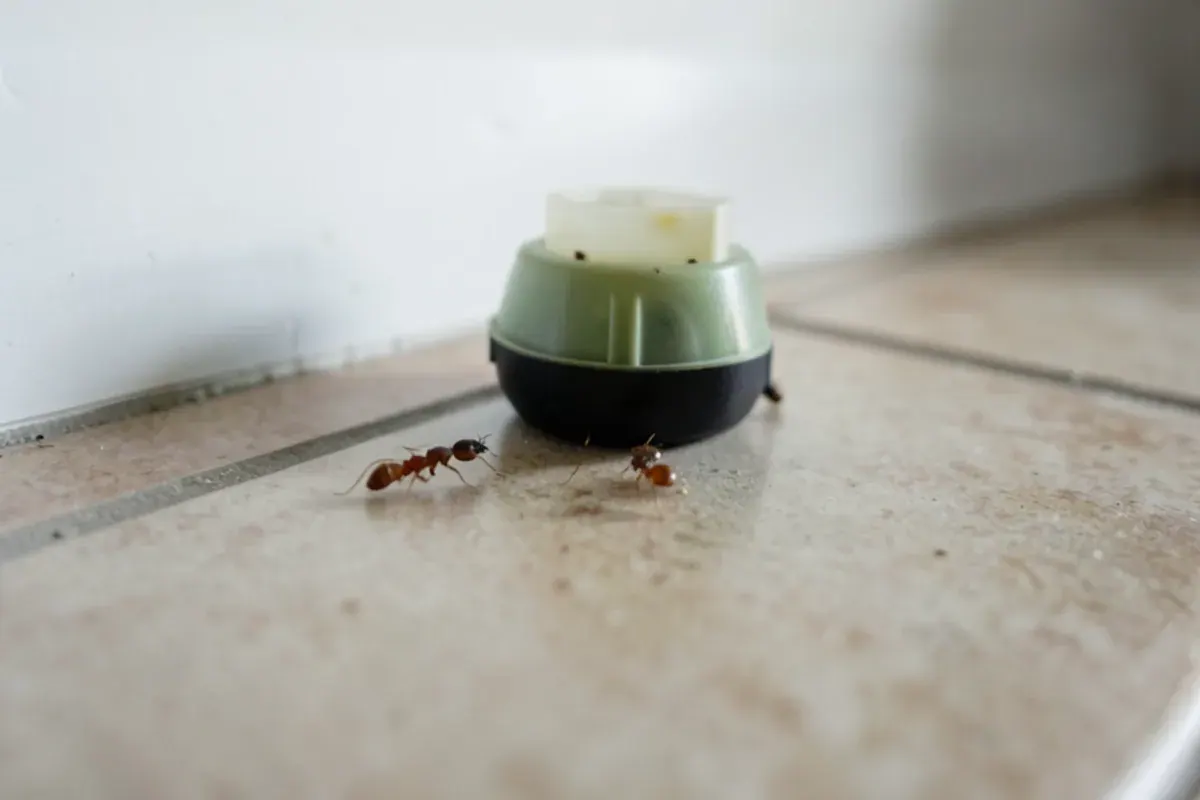
Bait works by being taken home. Foragers eat the slow-acting bait, carry it to the nest and share it with the queen and the young. Because it works slowly, ants keep feeding on it, and the colony declines over days or weeks. That is why more ants can appear at first, and why wiping them away is the wrong move.
| Bait | Contact spray | Perimeter treatment | |
|---|---|---|---|
| Target | The nest, through the foragers | The ants it touches | Ants crossing the foundation |
| Speed | Slower, over days to weeks | Immediate, on contact | Builds as ants cross it |
| Colony effect | Reaches the queen and brood | Rarely reaches the nest | Reduces ants entering the house |
| Main risk | Wiped away or competing food | Scatters colonies | Missed gaps or rain |
| Where it fits | Indoor trails and sweet-feeding species | Spot kill, not a plan | Outside, as part of a plan |
Different species like different foods, so bait that works on a sweet-feeding ant may be ignored by one that wants grease. We identify the ant first, then choose the bait. A perimeter treatment, meaning a band of product around the outside of the house, deals with the ants crossing into the building. All of it follows label directions.
Why do ants return every spring?
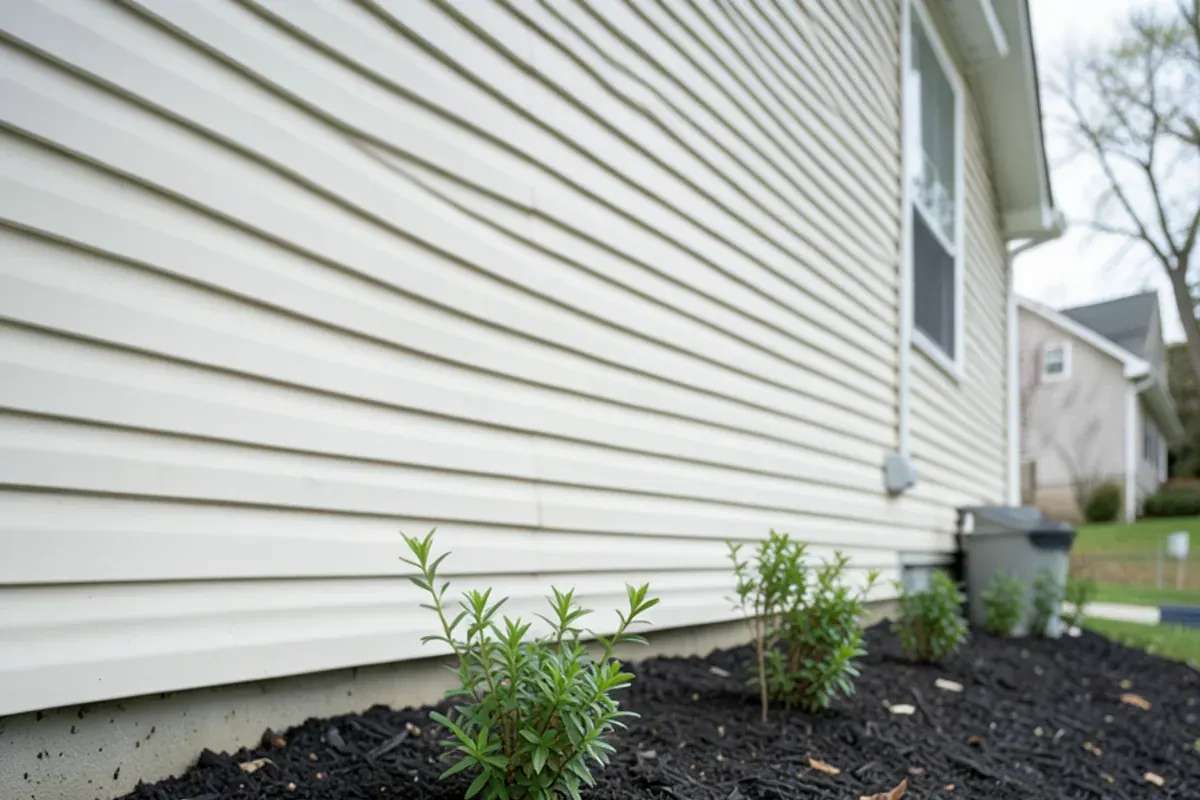
Colonies that survived winter wake up when the soil warms, and they go looking for water and food. Ants that nested under mulch, a patio slab or a foundation crack in October are in the same place in April. Unless the nest was dealt with, the kitchen trail returns right on schedule.
Grove City shows how this plays out. The median home there was built in 1993 (ACS 2019-23), so many yards have had decades of mulch beds, patios and foundation joints, and each gives a colony shelter against the wall. Homes beside Scioto Grove Metro Park and along the I-71 corridor are no different.
Spring is also when the cheapest prevention works best. Our spring ant and insect prevention checklist lays out the routine month by month.
How do you place ant bait so the colony takes it?
Placement decides whether bait works. University of Wisconsin Extension advises setting the bait near the foraging trails and keeping spray insecticides away from it, since sprays can reduce its effectiveness. Follow this order:
- Watch the trail for a few minutes and note where ants walk and where they stop to feed.
- Put the bait beside the trail, within an inch or two, and not on top of the ants.
- Wipe nothing near the bait and put the spray bottle away for the length of the treatment.
- Check the bait every day or two and add more when it runs low, because a hungry colony can empty a station quickly.
- Leave the bait down until the trail has stopped for a week or more, then pick it up.
What if ants ignore the bait?
Colonies change their tastes through the season. Sweet-feeding ants may turn to protein or grease, and the same bait gets passed over. If ants walk past it for two or three days, try a different bait type beside it and see which they favor. A mixed approach works well when the species is not clear.
What should you do while ants are active?
Small habits matter more than strong products. These steps help any plan, ours or a do-it-yourself one.
- Wipe the trail with soapy water to break the scent, but keep away from bait once it is down.
- Store sugary food, honey, cereal and pet food in sealed containers.
- Fix drips under sinks and dry out damp spots.
- Pull mulch a few inches back from the foundation and trim branches touching the house.
- Do not spray near bait stations, since the repellent keeps ants away from it.
- Follow the trail if you can, and tell us where it starts.
What we tell customers about ant trails
The trail tells us more than the ant. Where it enters, what it is feeding on and how quickly it comes back all point toward the nest. We follow it before we decide anything.
We also ask what has already been sprayed, because it affects what bait ants will accept. Honest answers save us a visit. If the colony is split, we plan for several trails, not one.
Bait does have limits. In a house with a leaking pipe, a pet bowl of food and a bag of sugar open on the counter, bait competes with easy food and loses. Outdoor ants that only wander in for a day or two after heavy rain rarely need treatment at all, and a wipe-down and a sealed gap handle them. The call is worth making when a trail returns for more than two weeks, shows up in more than one room, or runs from a wall you cannot open.
For many households, a recurring plan works better than a one-time call. Visits can be biweekly, monthly, bimonthly or as needed, and one-time service is available too. We explain which one fits and what it is likely to cost before work starts. Our ant control page covers the treatment in full.
Related questions
Why do ants keep coming back after I spray them?
Because the spray kills foragers and leaves the nest alive. The queen and brood keep sending out new ants, and the repellent film pushes them to a new route. Bait that foragers carry back to the nest is the better route to the source, with a perimeter treatment outside.
Is ant bait better than spray?
For colonies, yes. Bait is taken to the nest, where it affects the queen and young, while spray kills only the ants it touches. Bait takes days to weeks and needs patience, and you should leave the ants alone while they feed. Spray is fine for a spot kill but is not a plan.
How long does it take for ant bait to work?
Expect days to weeks, depending on the species and the size of the colony. You may see more ants at first because they are feeding. Resist wiping them away. If trails persist after a few weeks, the ant may not like that bait, and a different one can work.
Why are there ants in my kitchen every spring?
A colony survived winter nearby and is active again as the soil warms. Entry points, mulch against the foundation and an easy food source bring them to the same spot each year. A spring perimeter treatment and a tidy kitchen interrupt the cycle before the trail builds.
Should I spray the ant trail or leave it alone?
Leave it alone once bait is down. Foragers need to reach the bait and carry it home, and a repellent spray or a cleaner on the trail keeps them away. Before bait goes down, wiping with soapy water is fine. In Columbus, mulch and slab joints near the foundation are the usual starting points to check.
If ants return every few weeks, the nest is still there. Read our insect control overview, see how we handle ant control, or call (209) 563-1650 and tell us where the trail starts. We serve homes in Grove City and across Columbus.
Sources
- U.S. Census Bureau, American Community Survey 2019-23, median year built for Grove City
- Oregon State University Extension, ant management (visible ants are about 10 percent or less of the nest)
- Utah State University Extension, Odorous House Ant (multiple queens, budding)
- University of Wisconsin Extension, Odorous House Ants (bait near trails, no sprays near bait)
Questions about this? Call the shop.
Tell us what you are seeing and we will tell you what happens next.
- Serving Columbus since 1990
- 4.5★ from 55 Google reviews
- Owner-run, based on Dunning Rd
- One-time or recurring service
Boydes Exterminating Co, 1967 Dunning Rd, Columbus, OH 43219