
Insect Control
Spotted Lanternfly in Ohio: What Columbus Should Know
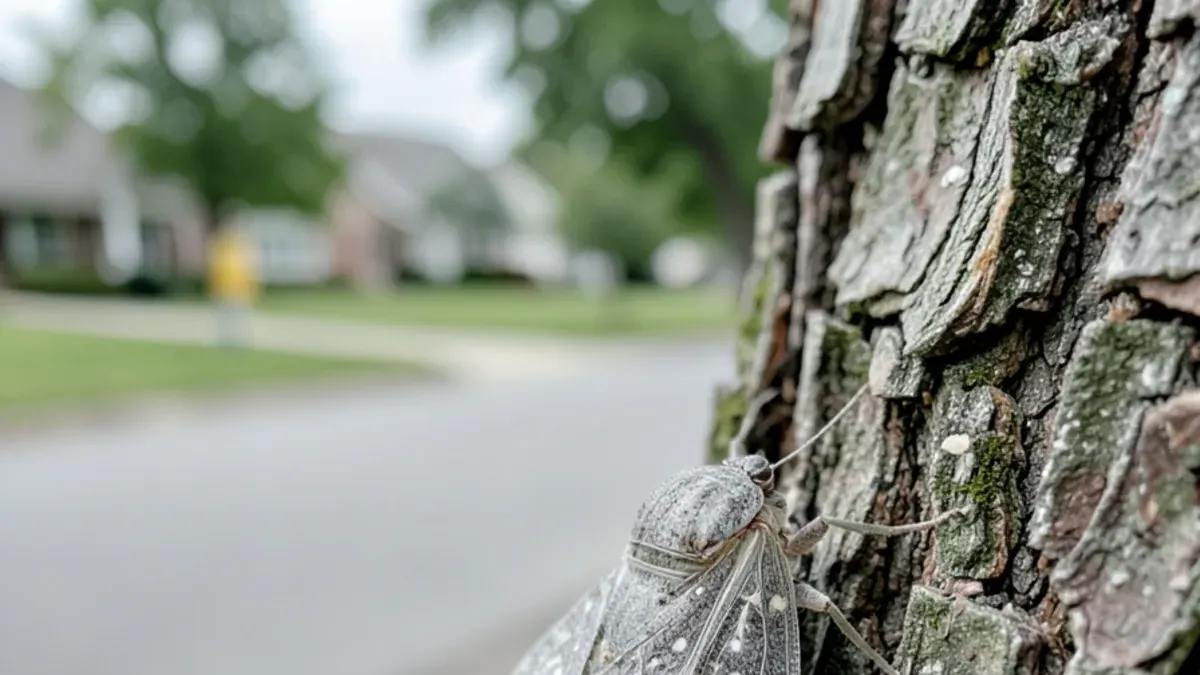
Spotted lanternfly in Ohio is now a statewide matter. On February 17, 2026, the Ohio Department of Agriculture (ODA) put all 88 counties under quarantine, and it is no longer asking residents to report sightings. Franklin County, which includes Columbus, was already on the earlier county list.
- Serving Columbus since 1990
- 4.5★ from 55 Google reviews
- Owner-run, based on Dunning Rd
- One-time or recurring service
We do not sell a lanternfly service, so this post is information, not a pitch. It covers how to recognize the insect, what the quarantine means for a homeowner, what ODA now says about reporting, and where to go for the official guidance.
What is the status of spotted lanternfly in Ohio?
The spotted lanternfly is a planthopper from Asia. It was first detected in the United States in Pennsylvania in 2014, probably arriving on imported goods, and Ohio confirmed its first population in Mingo Junction in 2020, according to Ohio State University's Buckeye Yard and Garden Line, which published ODA's announcement.
Since then, the insect has spread across the state. Before February 2026, ODA's quarantine covered 18 counties, and Franklin was among them. The statewide order replaced that list. Under it, trees and nursery stock cannot leave Ohio without a compliance agreement, permit or inspection certificate, and shipments to non-regulated areas must be inspected.
The rules in the announcement are written for nurseries and shippers who move plants across the state line. They do not describe any duty for a homeowner, but read ODA's full order if you buy or sell trees.
Something odd on your trees or siding?
Describe the insect and when you saw it. We will tell you whether it is something we handle or something to take to Extension.
- Serving Columbus since 1990
- 4.5★ from 55 Google reviews
- Owner-run, based on Dunning Rd
- One-time or recurring service
Do you still need to report spotted lanternfly sightings?
According to the OSU announcement of the statewide quarantine, ODA is no longer encouraging community members to report sightings of spotted lanternfly in Ohio. That is a change from earlier years, when residents used the Ohio Plant Pest Reporter and those reports helped ODA decide where to add quarantine counties.
What ODA points residents toward now is its Spotted Lanternfly Management Guide, which has recommendations for property owners. Businesses that need help certifying shipments are told to contact ODA's Plant Pest Control Section. Because policy has shifted before, check the ODA website for the current wording before you act.
If you want help confirming what you found, your county OSU Extension office handles insect identification questions as part of its general service. We would rather you ask a university source than guess from a photo.
How do you recognize a spotted lanternfly?
The look changes through the year, so what you notice depends on the month. The table follows one season in Ohio.
| Stage | Typical timing | What it looks like |
|---|---|---|
| Egg mass | Laid in fall, present through winter | A gray, putty-like patch on bark, stone, vehicles or outdoor items, holding roughly 30 to 50 eggs |
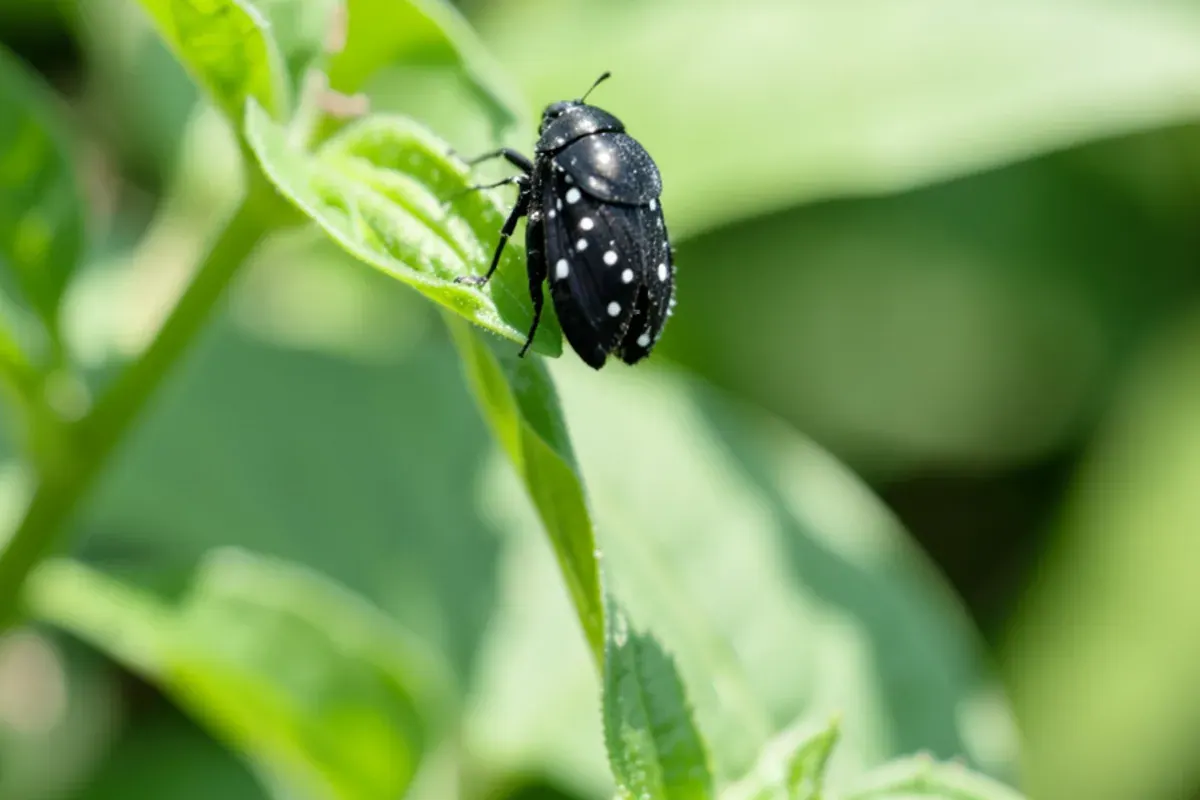
| Early nymph | Hatch from late April into June | Small, black with white spots, wingless and quick to hop |
| Late nymph | Early to mid summer | Larger, with a red patch added to the black and white |
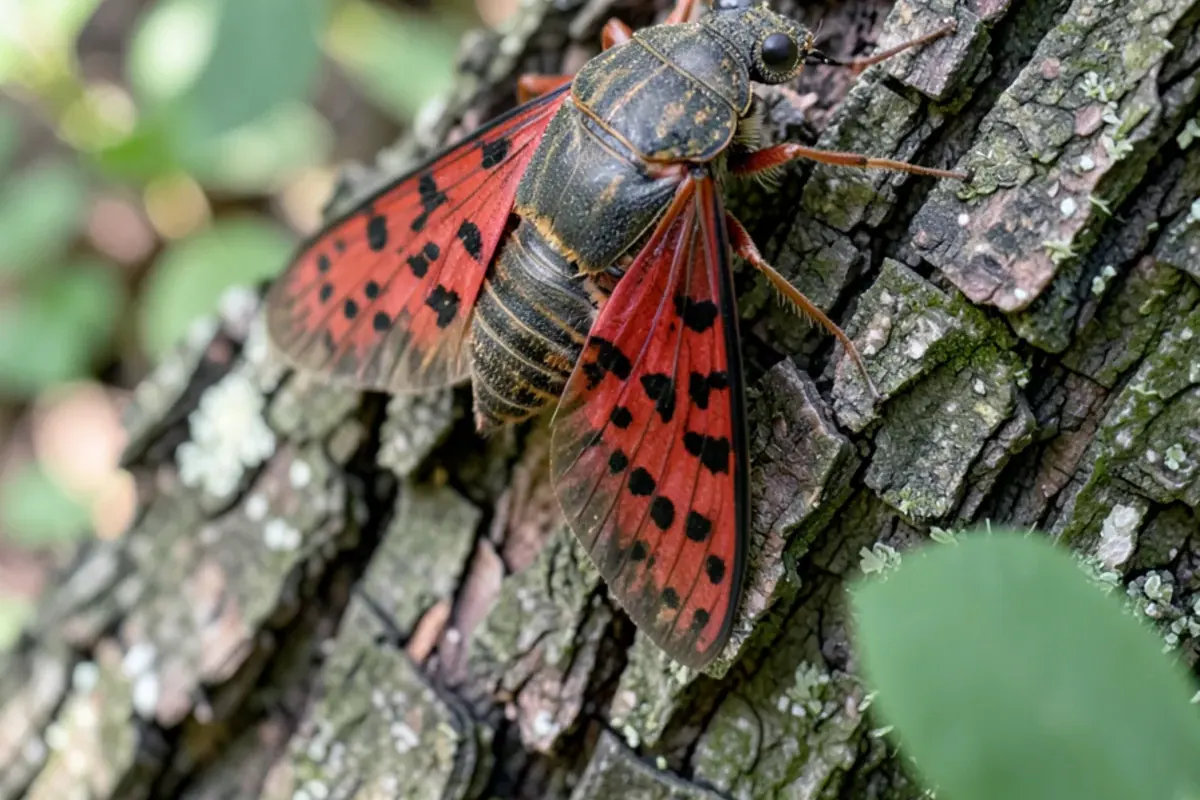
| Adult | Mid summer into fall | About an inch long, gray forewings with black spots, red hindwings visible when it flies |
OSU notes that most lanternflies in Ohio are in the fourth nymph stage or are adults by summer. Adults can be confused with moths at a glance, but the spotted forewings and red underwings are the giveaway.
What do old egg masses look like in winter?
OSU Extension describes egg masses as grayish and mud-like. They darken and crack with age, so a weathered one on a fence post in January can look like a patch of dried mud. Eggs are laid from late fall through the first freeze, on trees, stones, vehicles, yard furniture and other smooth surfaces.
Why does tree of heaven matter?
Tree of heaven, Ailanthus altissima, is the spotted lanternfly's primary host according to ODA. It is a fast-growing invasive tree that sprouts in fence lines, alleys, vacant lots and along railroad tracks, which is why lanternflies often show up first near rail corridors and industrial edges. The insect feeds on many other plants too, including grapes, hops and apples.
If you have a tree you cannot identify, a county Extension office can help before you cut or treat anything. Removing the wrong tree does nothing for lanternflies, and chemical treatment of a large tree is not a casual project.

What should you check before you drive or move outdoor items?
Lanternflies spread long distances by hitchhiking. Egg masses stick to vehicles, campers, farm equipment and outdoor furniture, and OSU Extension advises checking vehicles and objects carefully before leaving a quarantine zone. With the whole state now under quarantine, the habit applies to a trip from Columbus to a state park as much as to a long haul.
- Walk around the car, truck or trailer and look at the wheel wells, bumpers, roof rack and mirrors.
- Check the side of any camper, grill cover or patio furniture that sat outside for a season.
- Look on stacked stone, pavers and garden items before loading them.
- Leave firewood where it is. OSU says never to move it, since egg masses can ride on bark.
- Inspect the garage door and the underside of the bumper after a drive through a heavily infested area.
How do you tell lanternfly damage from other yard problems?
OSU lists weeping sap, honeydew, adults, nymphs and egg masses as the signs to watch for. A sticky film with black mold on shrubs or a deck can come from lanternflies, but aphids and scale insects leave the same sooty mold. If you cannot see lanternflies or egg masses, ask your county Extension office to identify the cause before you buy any product.
What problems do lanternflies cause at home?
The harm falls on plants more than on people. Lanternflies feed on sap and excrete a sugary liquid called honeydew, which coats leaves, decks and cars and can grow a black mold. OSU also notes that honeydew attracts wasps and hornets, so heavy infestations can bring more stinging insects to a yard.
- Honeydew and black mold on shrubs, patios, outdoor furniture and parked cars
- More wasp and hornet activity near trees where lanternflies feed
- Stress on grapevines and ornamentals in heavy populations
- Egg masses stuck to outdoor furniture, stones and vehicles
Lanternflies do not bite people or pets, and they do not infest the inside of a house. If bugs are crowding your siding in fall, that is a different problem, and our post on stink bugs and boxelder bugs in central Ohio covers it.
Where we stand on lanternflies
Spotted lanternfly is a question for ODA and OSU first, and their guidance is more reliable than anything we could add. Our work starts where lanternflies leave off: the wasps, hornets and other insects the honeydew can draw to a yard.
What we do see are the side effects. A yard with a heavy infestation can draw wasps to the honeydew, and that is a question we can help with. If you are getting more insects around the house in general, our insect control page lists what we handle.
Calling an exterminator is not worth it for a few nymphs on a tree or a single egg mass on a stone. The insect does not enter homes, and a pest call will not solve a tree of heaven problem along a rail line or alley. It does make sense to call when honeydew has drawn a wasp or hornet nest to a deck, or when something indoors looks like a lanternfly and is not.
We also ask callers who think they have a lanternfly to describe it or send a photo before assuming. Plenty of bugs in Columbus yards look dramatic and turn out to be ordinary. Our stink bug control page explains the common look-alike fall visitors.
Related questions
Is spotted lanternfly in Columbus?
Yes. Franklin County was part of ODA's county quarantine before the statewide order, and the insect is established in the area. ODA also said in 2025 that it would begin treating for it in Franklin County, according to Ohio State University. You are likely to see nymphs in spring and summer and adults from mid summer into fall.
Can I report spotted lanternfly in Ohio?
ODA says it no longer encourages the public to report sightings. Earlier it used the Ohio Plant Pest Reporter. Check the ODA website for current wording, and use ODA's Spotted Lanternfly Management Guide for what to do on your property.
Do spotted lanternflies bite or harm people?
No. They feed on plants and do not bite or sting, and they do not infest homes. The trouble is honeydew, which makes a sticky, moldy mess on leaves, decks and cars, and attracts wasps and hornets. The harm falls mostly on grapes, orchards and trees.
What does the statewide lanternfly quarantine mean for homeowners?
Very little in daily life, based on ODA's announcement. The quarantine controls how nursery stock and trees move out of Ohio, requiring a compliance agreement, permit or inspection certificate. It is aimed at growers and shippers. Read ODA's full order if you buy or sell trees.
What should I do if I find a spotted lanternfly egg mass in Columbus?
Start with ODA's Spotted Lanternfly Management Guide, since the agency no longer asks residents to report sightings. Egg masses are gray, mud-like patches that darken and crack with age. Check cars, trailers and patio furniture before a trip, and leave firewood where it is. Your county Extension office can confirm an identification.
For official guidance, go to the Ohio Department of Agriculture and your OSU Extension office. If lanternfly honeydew has brought wasps or other insects to your yard, read our insect control page or call (209) 563-1650 and tell us what you are seeing. We serve homes across Columbus.
Sources
- Ohio State University Buckeye Yard and Garden Line, Ohio Department of Agriculture Issues Statewide Quarantine to Combat Spotted Lanternfly (February 17, 2026)
- Ohio State University Buckeye Yard and Garden Line, ODA Expands Spotted Lanternfly Quarantine Area (2025)
- Ohio State University Extension, Spotted Lanternfly factsheet ANR-83
- Ohio State University Extension, Spotted Lanternfly factsheet ANR-83 (egg mass appearance, vehicle checks, signs, firewood)
Questions about this? Call the shop.
Tell us what you are seeing and we will tell you what happens next.
- Serving Columbus since 1990
- 4.5★ from 55 Google reviews
- Owner-run, based on Dunning Rd
- One-time or recurring service
Boydes Exterminating Co, 1967 Dunning Rd, Columbus, OH 43219