

Insect Control
Mosquito Season in Central Ohio: Month by Month
Mosquito season in central Ohio runs from the first warm stretch in spring to the first hard frost in fall, with the heaviest pressure from June through August. The exact dates move with the weather, but the pattern is steady enough to plan around.
- Serving Columbus since 1990
- 4.5★ from 55 Google reviews
- Owner-run, based on Dunning Rd
- One-time or recurring service
This guide goes month by month, then covers what breeds mosquitoes in a Columbus-area yard and what to do at each stage. Water is the common thread, and most of the fixes cost nothing.
When does mosquito season start and end in Ohio?
There is no fixed start date, because mosquitoes respond to temperature and rain. In a mild spring, the first adults appear in March or April, mostly females that overwintered in basements, sheds and hollow logs. By late May most yards have a steady population, and the season holds until nights stay cold in October.
A wet June matters more than a hot one. Rain fills every container and low spot, and eggs laid earlier hatch as soon as water covers them. A dry spell slows breeding, but a storm resets it within days.
Where do mosquitoes spend the winter in Franklin County?
A study of Culex pipiens in Ohio, published in Parasites & Vectors in 2023, collected mosquitoes from culverts and parks in Franklin County. By early October most of the Culex in the culverts had entered diapause, a resting state, and nearly all had left it by mid-March. Storm drains, culverts, crawl spaces and sheds are the shelters to think about when the first warm week arrives.

Want a yard plan before June?
Tell us the lot size, the shade and any water nearby. We will explain what a visit covers and what it will not.
- Serving Columbus since 1990
- 4.5★ from 55 Google reviews
- Owner-run, based on Dunning Rd
- One-time or recurring service
What happens each month in central Ohio?
This calendar is a general guide for Franklin and Delaware counties, not a forecast. Local health departments publish current trapping results, so check them during the season.
| Month | What is happening | What to do |
|---|---|---|
| March to April | Overwintered adults emerge on warm days | Clean gutters, check for pooling in low spots |
| May | Spring rain fills containers, larvae start developing | Empty and scrub bird baths, buckets, saucers weekly |
| June | Numbers climb, daytime biters become common | Trim shrubs, screen rain barrels, flip kiddie pools |
| July to August | Peak season, hot weather speeds each life cycle | Repeat the weekly dump, use repellent at dusk and dawn |
| September | Numbers stay high while West Nile risk continues | Keep dumping water, repair screens |
| October | Cold nights end most activity | Clean gutters of leaves, store containers upside down |
Hot weather shortens the time from egg to biting adult to about a week, which is why July can feel worse than May even with the same amount of standing water.

Why are there so many mosquitoes in Columbus yards?
On Orkin's 2024 list of top mosquito cities, Columbus ranked No. 32. That ranking reflects treatment volume, not bites, but it matches what we hear. The area has reservoirs and creeks close to its suburbs, and the soil holds water.
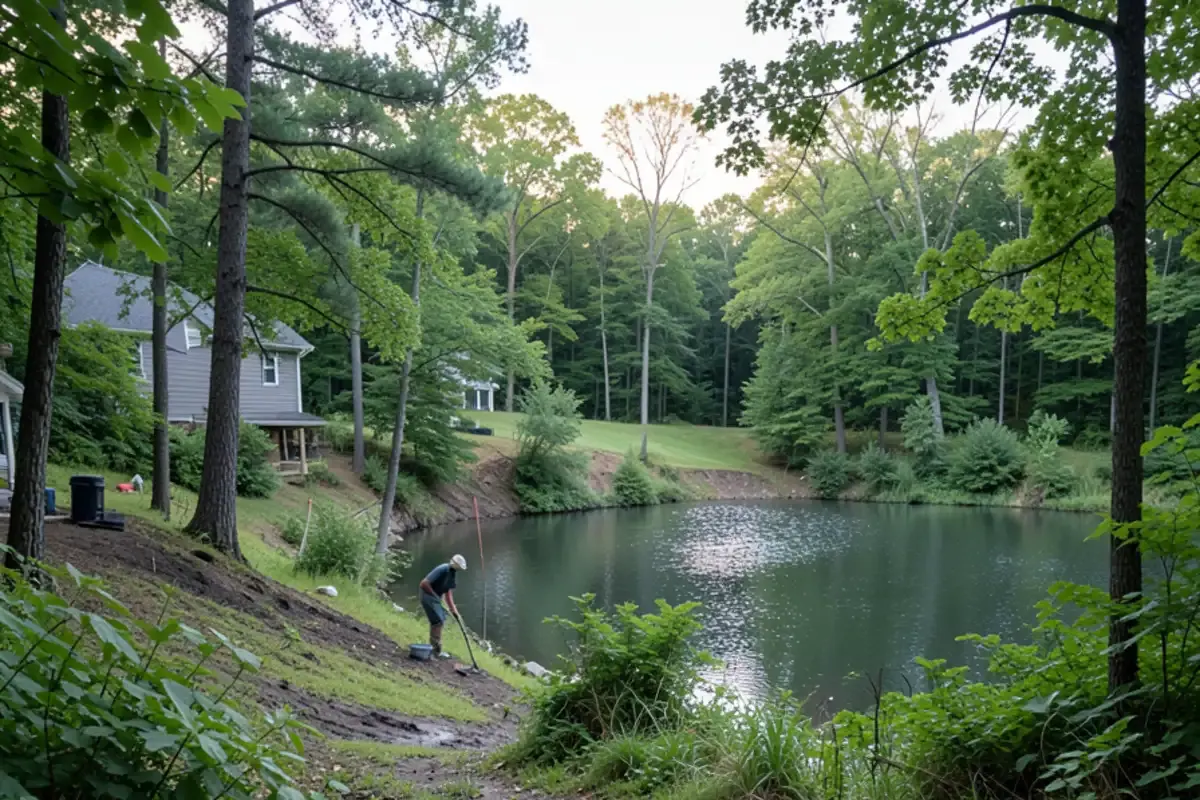
Westerville sits just west of Hoover Reservoir, and Galena sits at the north end of it. Yards in both towns back onto low ground, wooded edges and drainage ditches, where adult mosquitoes rest in the shade by day. Even a well-kept lot can draw them from the neighbor's water or a nearby creek.
Local news reported in August 2025 that Columbus Public Health described that summer's West Nile activity as the highest the state had seen since 2012. Franklin County Public Health traps mosquitoes weekly and publishes its results, so the local data are worth reading before you plan an outdoor event.
What breeds mosquitoes in your own yard?
Any water that sits for about a week can grow mosquitoes, and the amount can be tiny. The usual suspects are easy to miss.
- Clogged gutters and the low end of a downspout extension
- Bird baths, planter saucers, pet bowls and buckets
- Kiddie pools, tarps, wheelbarrows and old tires
- Low spots in the lawn where rain pools after a storm
- Rain barrels without a tight screen, and ornamental ponds without moving water
- Hollow fence posts, boat covers and toys left outside
Two kinds of mosquito matter most to homeowners. The house mosquito, Culex, breeds in dirty standing water and bites at dusk and overnight, and it is the one that carries West Nile virus. The Asian tiger mosquito breeds in small containers and bites in the daytime. Both depend on the same chores.
When is West Nile risk highest in central Ohio?
The same Parasites & Vectors paper notes that human West Nile cases in Ohio typically occur from mid-June to late October, with a peak in mid-August. Most infected people have no symptoms, but a small share become seriously ill, so the timing is worth knowing.
That window explains the advice in the calendar above. Repellent at dusk matters most in July through September, when Culex numbers and the virus both run high. The Asian tiger mosquito, which Ohio State's entomology department lists as common across Ohio, bites during the day and is a nuisance biter, so daytime protection counts too.
A cold snap does not close the season on its own. Mosquitoes that are still biting in October are often nuisance species, and a hard frost is the real end point.
What can you do at each stage of the season?
Habits do more than any single treatment, and the first month of the season sets the tone. Keep the early work simple and repeat it.
- Walk the property after the first spring rainLook for pooled water, clogged gutters and anything that holds a cup of water.
- Dump and scrub containers weeklyScrubbing matters, since larvae and eggs cling to the sides.
- Cut the places adults restTrim dense shrubs and mow tall grass near the patio.
- Use a repellent outdoorsColumbus health agencies point to EPA-registered products containing DEET, picaridin, IR3535 or oil of lemon eucalyptus. Follow the label.
- Decide whether you want a yard planA yard treatment lowers numbers where you treat, and the rest depends on your neighbors' water.
What we tell homeowners about yard treatment
Treatment helps, but it is half the job. A mosquito yard plan reduces adults on resting surfaces and treats breeding spots, and it will not seal off a property from the neighborhood. We say that up front so no one expects a bug-free evening.
We start by walking the yard with you and asking about pets, children, bees, ponds and gardens, then plan around them. Products go on per label directions, and you get the re-entry time from the label. Flowering plants and active bees change how we work.
Know the limits. Treatment does little in a yard where a neighbor's pond, a clogged storm inlet or a dumpster full of rain water is producing the mosquitoes, and no product removes that source. On a small lot with no water of your own and no shade, your money may go further on a fan for the patio, a screened porch and a weekly dump of containers. We would also tell you to skip a service if the problem is a few bites during one weekend party.
The case for calling is a yard with shade, brush or a creek edge where mosquitoes rise from the grass whenever you walk through. In that setting, a plan that covers resting surfaces and breeding spots on a regular schedule makes sense.
Follow-up visits can run biweekly, monthly, bimonthly or as needed. The right rhythm depends on shade, brush and how close the property is to water. Our mosquito and tick control page explains what each visit covers, and pricing is explained before work starts.
Related questions
When do mosquitoes start in Ohio?
Usually March or April on the first warm days, when overwintered females come out. Numbers build through May and June as rain fills containers, and the season peaks in July and August. A cold spring pushes the start later, and a warm wet one brings it forward.
When is mosquito season over in Columbus?
Activity drops after the first frosts in October, and the first hard freeze ends it for the year. September can still be busy, and West Nile risk continues into early fall. Keep emptying standing water until nights stay cold.
Why are mosquitoes so bad near Hoover Reservoir?
Wet ground, shade and standing water along the shore give mosquitoes places to breed and rest. Backyards in Westerville and Galena near the reservoir often combine that with their own containers and gutters. Clearing your own water helps, but a treatment is limited by what comes from nearby.
How long does mosquito treatment last?
It depends on the product, the weather and the property. Heavy rain can shorten how long a treatment holds, and shaded, wooded lots often need a closer rhythm. Our visits can be biweekly, monthly, bimonthly or as needed, and we explain the plan before work starts.
Are mosquitoes in Ohio active in fall?
Yes, until a hard frost. Culex mosquitoes keep biting while nights stay mild, and human West Nile cases in Ohio run to late October. Culex then shelter in culverts, crawl spaces and sheds. Empty containers through October and clear leaf-clogged gutters before the first cold week in Westerville or Galena.
Plan the work around the calendar and the season gets easier. See our insect control page for the full list, read about mosquito and tick control, or call (209) 563-1650 to talk through your yard. We serve Westerville, Galena and the surrounding area.
Sources
- Orkin, Top Mosquito Cities 2024 (Columbus No. 32)
- Franklin County Public Health, mosquito surveillance and prevention
- Spectrum News, Columbus West Nile infections, August 2025
- Parasites & Vectors (2023), Culex pipiens diapause in Ohio and timing of human West Nile cases
- Ohio State University Entomology, Bite Site: mosquitoes (Asian tiger mosquito common in Ohio)
Questions about this? Call the shop.
Tell us what you are seeing and we will tell you what happens next.
- Serving Columbus since 1990
- 4.5★ from 55 Google reviews
- Owner-run, based on Dunning Rd
- One-time or recurring service
Boydes Exterminating Co, 1967 Dunning Rd, Columbus, OH 43219