
Stinging Insect Removal
DIY vs Professional Wasp Nest Removal
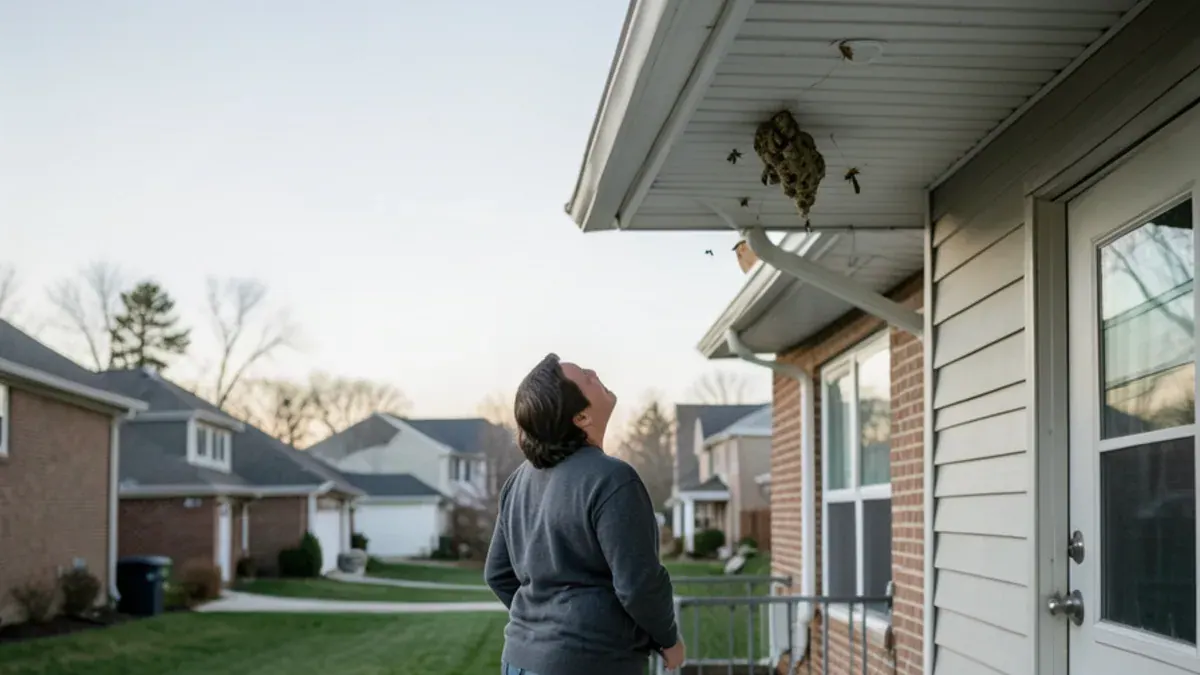
Should I remove a wasp nest myself? Sometimes, if the nest is small, low, in the open and nobody in your household is allergic to stings. Skip the do-it-yourself route when the nest is above a stepladder's reach, hidden in a wall or the ground, or built by hornets or yellow jackets.
- Serving Columbus since 1990
- 4.5★ from 55 Google reviews
- Owner-run, based on Dunning Rd
- One-time or recurring service
This guide helps you size up the nest, explains what a can of wasp spray can and cannot do, and marks the point where the sting risk outweighs the savings.
When can you handle a wasp nest yourself?
Every one of these has to be true. If one is missing, make the call instead.
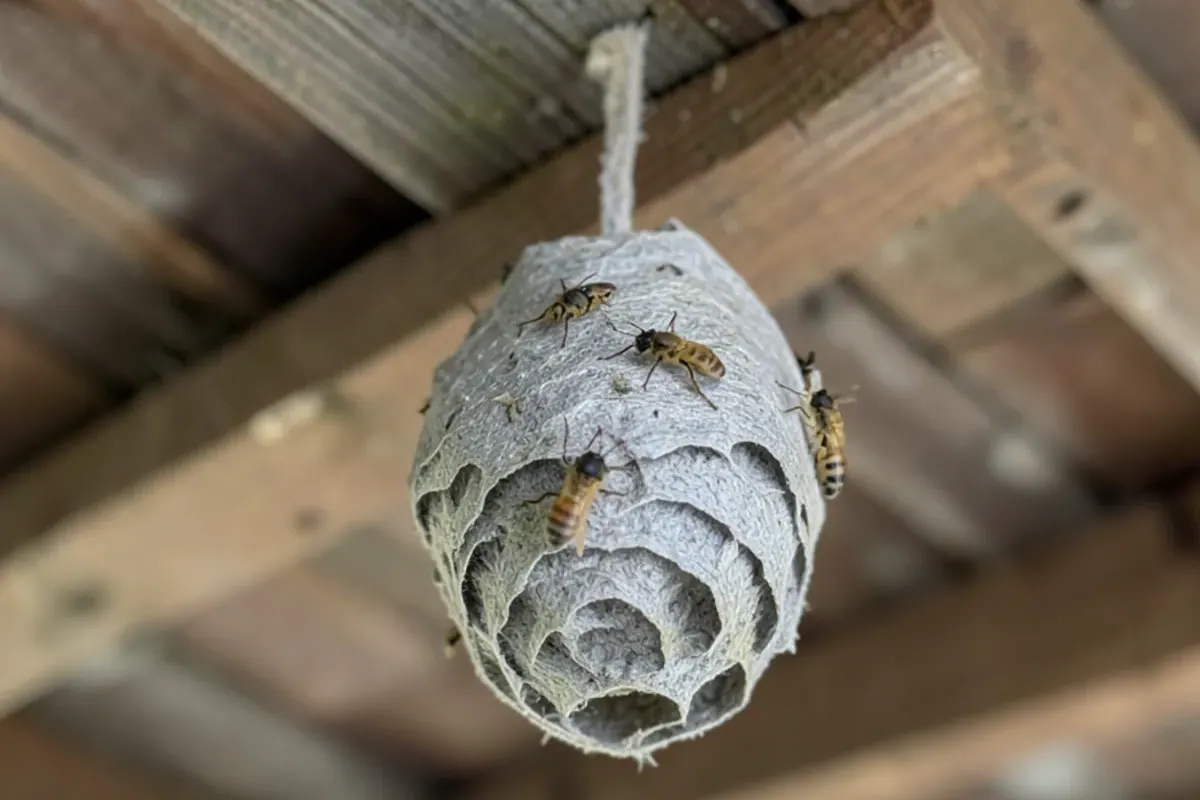
- The nest is small, about golf ball to baseball size, and you can see the whole thing.
- It hangs in the open, such as under a low eave or on a shed rafter, and you can stand on firm ground to reach it.
- Nobody in the household, and nobody who visits, has a known sting allergy.
- You have identified the insect as a paper wasp, not a hornet or a yellow jacket.
- You have a clear exit path, and no kids or pets will wander near the spot.
What should you do before you pick up the can?
- Read the whole label. It sets the distance, the target and where the product may be used.
- Put on long sleeves, long pants, gloves, closed shoes and a hat, and tuck the cuffs in.
- Move kids, pets and anyone with a sting allergy indoors, and close the windows near the nest.
- Plan your exit path and check that the door you will use is unlocked.
- Decide in advance that you will leave the area the moment you finish, and not stay to look.
If any step feels like a stretch, that is the answer. Call instead.
Not sure the nest is a DIY job?
Describe where it sits and how big it is. We will tell you which side of the line it falls on.
- Serving Columbus since 1990
- 4.5★ from 55 Google reviews
- Owner-run, based on Dunning Rd
- One-time or recurring service
DIY or professional: which nests belong in which column?
| Situation | DIY realistic? | Why |
|---|---|---|
| Small open comb at head height | Maybe | Reachable from the ground, few insects |
| Nest above a ladder's first few rungs | No | A fall plus an angry colony is a bad pairing |
| Gray enclosed ball in a tree or shrub | No | Hornets defend it hard and sting repeatedly |
| Steady traffic into a hole in the lawn | No | Yellow jacket colony with many defenders |
| Wasps entering a gap in a wall or soffit | No | You cannot see or reach the nest itself |
| Anyone in the home with a sting allergy | No | One sting can become a medical emergency |
Not sure what you have? Our guide to telling wasps, hornets and yellow jackets apart walks through the nest shapes.
What goes wrong when homeowners spray a nest?
Most failures come from the same few mistakes. They are easy to make because the nest looks smaller than the colony behind it.
- Too close. A can that throws a stream needs distance, and people step closer than the label allows.
- Wrong target. Spraying the visible comb while the entrance sits on the other side leaves wasps free to swarm out.
- Blocking the exit. Wasps that find their main entrance sealed look for another way out, and sometimes that route leads into the house.
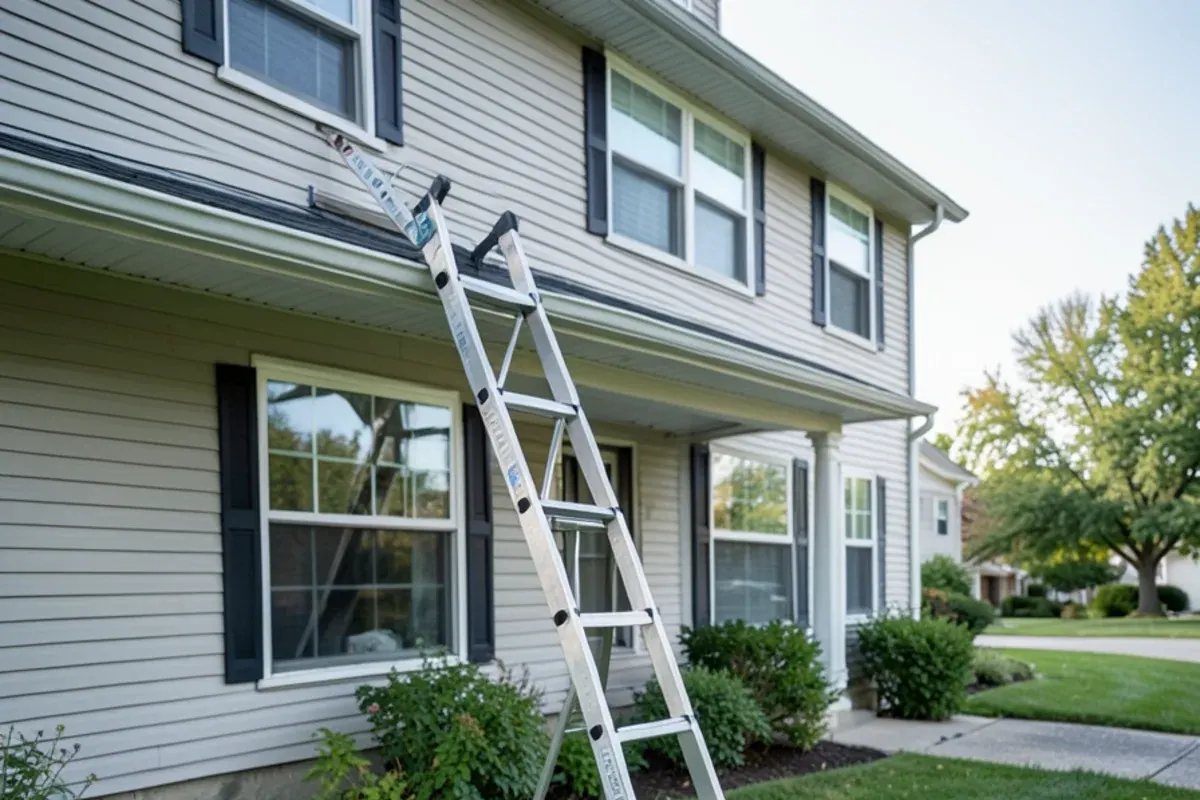
- A bad ladder. The fall is often what sends people to the hospital, not the sting.
- Wrong product. Not every spray is labeled for wasps, and the label directions control how a product may be used.
Is nighttime the right time to knock down a nest?
Fewer wasps fly after dark, so dusk or early morning is the usual advice. The catch is that the whole colony is home, a light draws them toward you and you are working on a ladder or uneven ground in poor visibility.
If you go ahead anyway, read the label first, wear long sleeves and closed shoes, keep a door close behind you and leave the area after you spray. Wait a day before you check the nest. A nest knocked down while insects are still inside releases them at once.
What should you expect in the week after you spray a nest?
A treated nest does not go quiet at once. Wasps out foraging when you sprayed will come home to an empty or dying nest and may circle the spot for a day or two. Stay away from it during that time and keep kids off that side of the yard.
Check from a distance each morning. If traffic fades, the colony is done. If it holds steady after a few days, you may have a second entrance or a second nest that you missed. Read the label before any second application for any rule on repeat applications. A nest that keeps going is a good point to call us, with a photo in hand.
Wait until nothing is moving before you take the nest down, then bag it. An empty paper nest is just paper. One with live insects inside is a risk.
What does a professional visit add?
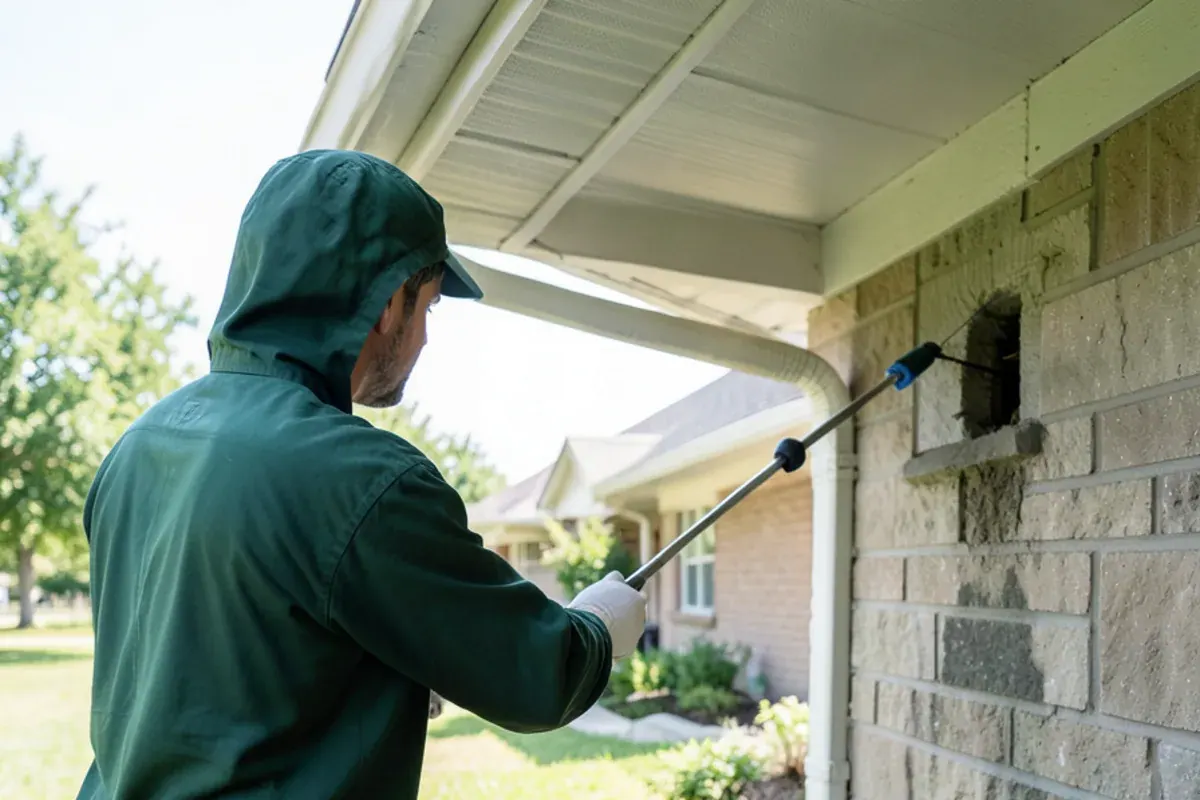
Experience, protective gear and a method for the exact nest. We confirm what built it, find the real entrance and approach from the direction that keeps people clear. We ask about allergies, pets and children before the visit, and products are applied per label directions.
We also look for what you cannot see: a second nest in the same eave, a colony in the wall behind the visible one or a ground nest beside the shed. Wasp spray at the front door does nothing for any of them. Our wasp nest removal page lists the visit step by step.
What does a professional visit not do?
A visit does not remove every risk, and insects may return next year. A new queen can pick the same eave in spring. A nest inside a wall may call for a second visit, and a nest on a neighbor's property is theirs to deal with. We tell you which of those apply to your case before the work starts.
What we say when people ask about DIY
We tell people the truth even when it means they do not need us. A small comb you can see from the ground, and a household with no allergies, is a reasonable DIY job. We would rather you handle that than pay for a visit.
What we steer people away from is the ladder, the dark and the hornet nest. Those three produce the stories we hear after the fact. If you are on the fence, call and describe the nest. We will tell you which side of the line it falls on, and if we can fit a visit in, we will say so.
Do-it-yourself has a fair price, which is a few minutes of risk, and a professional visit has a fair price too. The comparison is not just money. It is the cost of a missed target against the cost of a fall, a swarm and an emergency room visit. For a golf-ball nest at waist height and a household with no allergies, the numbers favor you. For anything above the reach of a stepladder, they do not.
Calling is not worth it in two cases. One is an empty nest after a hard freeze, since the colony is gone and the paper can come down with a pole. The other is a nest far from any path, such as the back of a tool shed you never open. Leave it, keep people away, and it will die off on its own.
Related questions
Does hardware store wasp spray actually work?
On a small, open paper wasp nest, a product labeled for wasps and used per its label directions can work. It does less against a large nest, a hornet colony or a nest hidden in a wall, where the spray never reaches the entrance. Read the label before you buy.
Can I knock the nest down once the wasps are gone?
Yes, after you are sure the nest is empty. Wait a day or two after treatment and watch from a distance for traffic. Then knock it down with a long pole or scrape it off, and bag it. Never touch a nest that still has insects moving in or out.
What if I get stung while spraying?
Walk away from the nest and wash the area. Watch yourself for the next few minutes. If you have trouble breathing, swelling of the face or throat, or dizziness, call 911 right away. Even people who have never reacted before can have a serious reaction.
How fast can a wasp nest be removed in Grove City?
Grove City is about 20 minutes from our Dunning Rd base, and a same-day visit happens when the schedule allows. Calling early in the day improves the odds. If today is full, we offer the next opening, and we say so on the call.
Is it okay to leave a wasp nest alone?
Yes, if it is far from doors, paths and play areas and nobody in the household has a sting allergy. The colony dies at the first hard freeze and the nest is not reused. Near a door or a patio, leave it alone only until someone can treat it, and keep people away from that spot in the meantime.
If the nest fails any of the checks above, call before you pick up a ladder. Our stinging insect removal page shows what a visit involves, and (209) 563-1650 reaches us directly. We serve Grove City, the Scioto Grove side of the southwest suburbs and the rest of Columbus, and we will tell you plainly whether your nest is a DIY job.
Sources
Questions about this? Call the shop.
Tell us what you are seeing and we will tell you what happens next.
- Serving Columbus since 1990
- 4.5★ from 55 Google reviews
- Owner-run, based on Dunning Rd
- One-time or recurring service
Boydes Exterminating Co, 1967 Dunning Rd, Columbus, OH 43219