

Bed Bug Control
Bed Bug Bites: Pictures, Signs and What to Do
Bed bug bites pictures usually show small, red, itchy bumps on skin that was uncovered at night, often in a line or a cluster. Looks alone cannot confirm bed bugs, though, because mosquitoes, fleas and other causes leave marks that look similar, and some people show no reaction at all.
- Serving Columbus since 1990
- 4.5★ from 55 Google reviews
- Owner-run, based on Dunning Rd
- One-time or recurring service
This article is general information, not medical advice. For any reaction, see a doctor. Below we cover what the marks tend to look like, what separates them from lookalikes and the evidence in the home that tells you more than any bite.
What do bed bug bites look like?
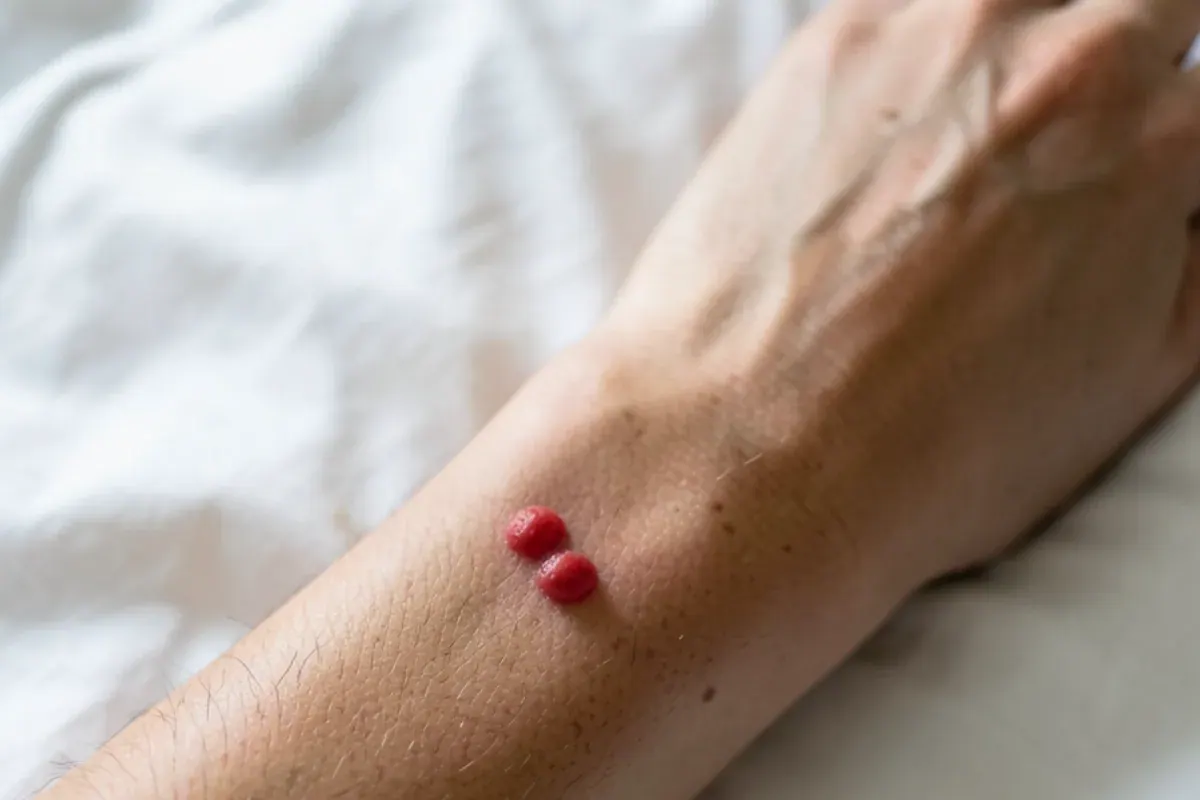
Typical marks are small, raised, red bumps, often with a darker or lighter center. They show up on the face, neck, arms, hands and legs, because those areas are exposed while you sleep. Many people notice them on waking.
Marks sometimes appear in a row or a tight group of three or more. That pattern is a clue, not proof. Skin tone changes how redness shows, so on darker skin the bumps may look purple, brown or just slightly raised. The images in this article are illustrations meant to show common patterns, and your skin may look different.
Waking up with marks and not sure why?
Tell us what you found around the bed. We will walk you through an inspection and what it can and cannot tell you.
- Serving Columbus since 1990
- 4.5★ from 55 Google reviews
- Owner-run, based on Dunning Rd
- One-time or recurring service
How can you tell bed bug bites from other bites?
Bites are among the weakest evidence of bed bugs, so use them to prompt a closer look, not a conclusion. Here is how the common suspects usually compare.
| Cause | Where marks tend to show | Other clues |
|---|---|---|
| Bed bugs | Skin uncovered during sleep, such as arms, neck and face | Rust-colored spots, shed skins, bugs in mattress seams |
| Mosquitoes | Anywhere exposed, indoors or out | Buzzing, bites after time outdoors, a mosquito in the room |
| Fleas | Often ankles and lower legs | Pets with scratching, tiny jumping insects |
| Mites | Varies, often waist, wrists or skin folds | Itch unrelated to bedding, a rash that persists |
| Non-insect causes | Anywhere | Allergies, skin conditions, new soaps or fabrics |
Because the possibilities are many, a doctor is the right person to say what a rash is. We can only say whether bed bugs are in the room.
Why do some people have no bed bug bites at all?
Reactions vary. Some people develop welts within hours, others take a day or more, and some never develop a visible reaction. That means two people in the same bed can have very different skin, and an unmarked sleeper is not proof that the bed is clear.
It also means a sleeper who reacts may be unsure whether marks are from this week or last. If you wake with new marks and are unsure of the cause, look for the other signs in the next section and book an inspection if you find any.
How long after a bite do marks appear?
The CDC says most people notice bite marks one to several days after the bite, and in some people marks take up to 14 days to appear. That delay makes bites a poor clock. The mark you see this morning may come from a night last week, so it cannot tell you which bed, hotel or trip it came from. Room evidence has no such lag.
What signs of bed bugs should you look for in the room?
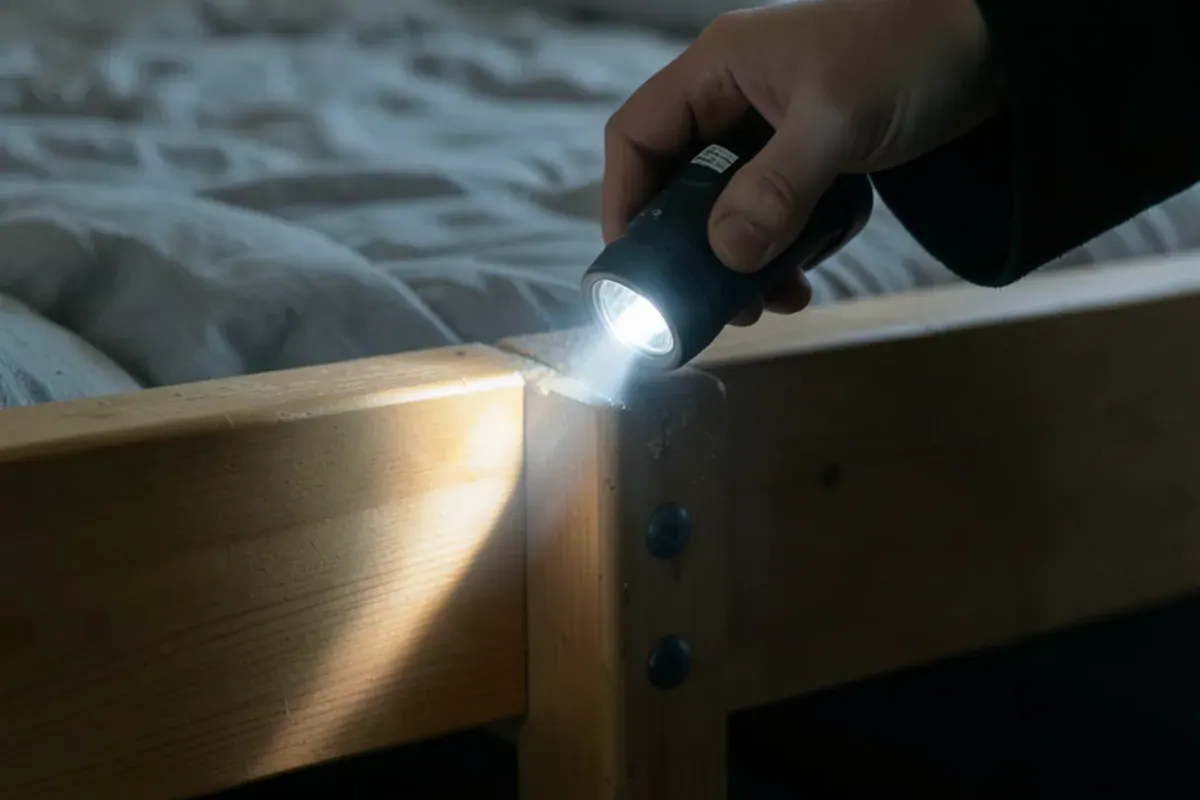
Evidence in the room is more reliable than marks on skin. Use a flashlight and check in this order, starting where you sleep.
- Mattress seams, piping, tags and the corners of the box spring.
- The headboard and bed frame joints, especially crevices.
- Sheets and pillowcases, for tiny rust-colored or reddish spots.
- Dark ink-like specks that smear on fabric, wood and paper.
- Shed skins, which look like pale, hollow, bug-shaped shells.
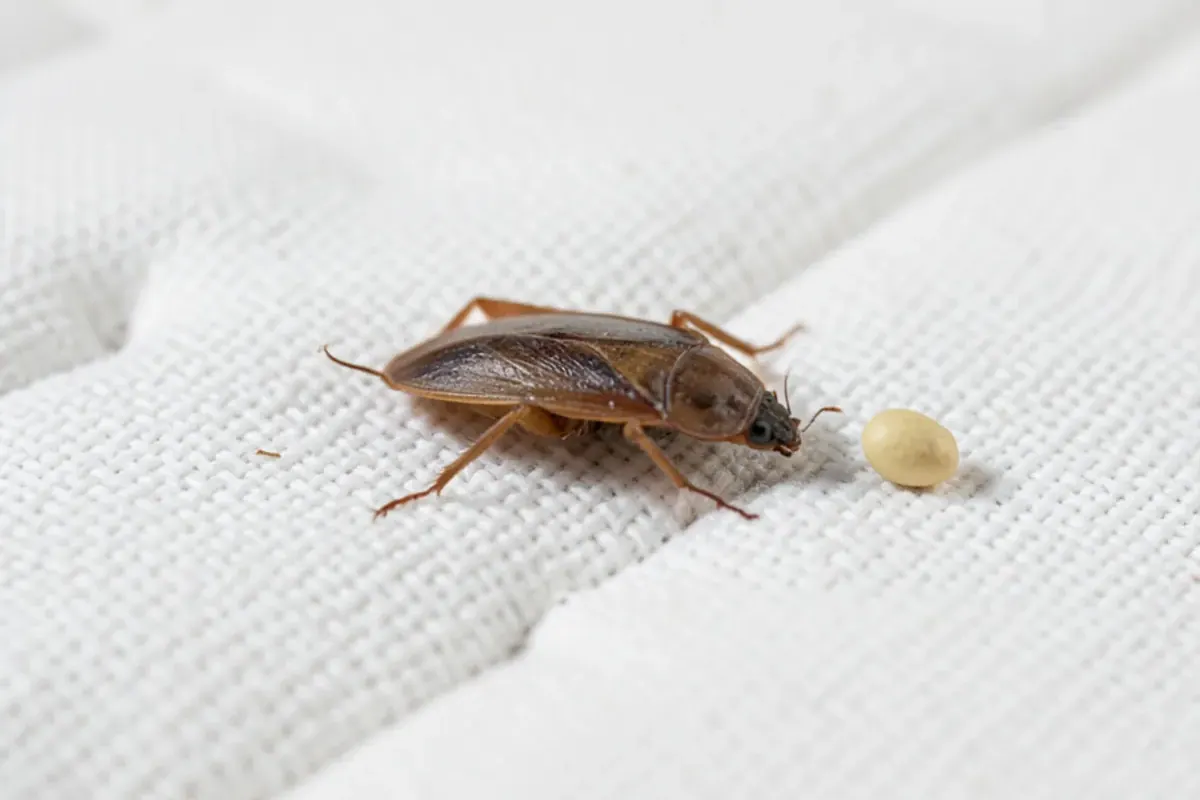
- Live bugs, which are flat, brown and about the size of an apple seed as adults.
A sweet, musty odor can show up in rooms with larger populations. Our bed bug inspection page explains how we go through a home when signs turn up.
How far from the bed should you look?
The CDC says bed bugs tend to live within about 8 feet of where people sleep, though they can travel more than 100 feet in a night. Start at the bed, then widen the search to these spots in order:
- Nightstands and dressers within arm's reach of the bed, including drawer joints.
- Baseboards and carpet edges along the wall behind the headboard.
- Upholstered chairs and couches where you sit or nap, especially seams and under cushions.
- Behind loose wallpaper, picture frames and outlet covers near the bed.
- Curtain folds and luggage kept near the sleeping area.
Do bed bugs spread disease, and do bites need treatment?
The CDC says bed bugs are not known to spread diseases to people. They cause itching and lost sleep, and scratching can lead to infection. The CDC adds that bites usually need no medical treatment, and it suggests keeping the area clean, avoiding scratching and asking a health care provider about an antihistamine for itching.
That is general public health guidance, not advice for your skin. See a doctor if you think you are having an allergic reaction. The CDC lists enlarged bite marks and painful swelling at the bite site as possible signs, and anaphylaxis, though rare, is an emergency.
The takeaway for the home is separate from the skin. A bite that is not dangerous can still point to an infestation that grows, so look at the room the same week you notice marks.
What should you do if you think you have been bitten?
For the skin, see a doctor or other health care provider, especially for severe itching, swelling, signs of infection or any reaction that worries you. If you have trouble breathing or swelling of the face or throat, call 911. We cannot advise on skin symptoms, and we do not want you to rely on a pest company for them.
For the home, do not spray or move bedding between rooms. Save a bug or photograph what you find, then call us. If you are in a rental, tell the landlord in writing as soon as you have evidence, as our guide to bed bugs in Columbus rentals explains.
Why we do not diagnose by bites
People send us photos of arms and legs and ask if it is bed bugs. We tell them we cannot say from skin, and neither can anyone else with confidence. The marks are a reason to look, and the looking is what settles it.
So we start at the bed and work outward, checking seams, joints, baseboards and furniture. We also ask where you travel, what furniture came in recently and who shares walls with you. We provide documentation after an inspection, which is useful for a landlord and for your own records.
If we find nothing, that is good news, and it saves you from a treatment you did not need. If we find bugs, we explain the options before work starts.
We tell callers what a photo can and cannot do. A clear photo of a bug on a seam is worth more than ten photos of an arm, and a photo of a rust-colored spot beside a seam is worth more than a description. Take pictures with something for scale, like a coin.
Calling us is not worth it for a single mark with no other sign. If the bed, frame and nearby furniture show nothing and the marks stop within a week or two, a doctor is the better call for a persistent rash. Call us when you find a bug, a shed skin or spots, or when new marks keep arriving.
Related questions
Do bed bug bites always show up in a line?
No. Some people get marks in a row or tight cluster, but plenty see single bumps or scattered spots, and others show nothing at all. A line of bites is a clue worth noting, not proof of bed bugs. Check the mattress seams and bed frame for spots and shed skins to find out more.
Can I diagnose bed bugs from bite pictures?
Not reliably. Photos of bites look similar to mosquito, flea and mite marks, and skin tone changes how they appear. A doctor can say what a rash is, and an inspection can say whether bed bugs are in the room. Physical evidence like live bugs or spots on bedding is far more useful.
Do bed bugs bite only at night?
They are most active when people are asleep and still, which is why marks often appear overnight, but they can bite during the day if a person is resting nearby and the bugs are hungry. Bed bugs hide in seams and joints during the day, so a sleeping adult in a dark room is their usual target.
Should I see a doctor for bites?
Yes, for any reaction you are unsure about, including severe itching, swelling or signs of infection. A doctor can say what the marks are and what to do for your skin, which we cannot. If you have trouble breathing or swelling of the face or throat, call 911 right away.
Can bed bug bites take days to show up?
Yes. The CDC says most people notice marks one to several days after a bite, and in some people marks take up to 14 days to appear. A mark today may come from a trip or a night well before it. That delay is why we check the room for bugs and spots instead of working back from the skin.
If you are waking up with marks, look at the room as well as your skin. Start with our bed bug control overview, learn what a bed bug inspection covers and call (209) 563-1650 to book a visit. We serve all of Columbus. For your skin, see a doctor.
Sources
- U.S. EPA, Bed Bugs: Do-it-Yourself Bed Bug Control
- U.S. Centers for Disease Control and Prevention, Bed Bugs FAQs
- Ohio Department of Health, bed bug guidance
- CDC, About Bed Bugs (not known to spread disease; marks appear 1 to several days after a bite, up to 14 days; within about 8 feet of sleeping areas; signs of infestation)
Questions about this? Call the shop.
Tell us what you are seeing and we will tell you what happens next.
- Serving Columbus since 1990
- 4.5★ from 55 Google reviews
- Owner-run, based on Dunning Rd
- One-time or recurring service
Boydes Exterminating Co, 1967 Dunning Rd, Columbus, OH 43219